• HOME
  • NEWS
  • EXPLORE
    • CAREER
      • Companies
      • Jobs
    • EVENTS
    • iGEM
      • News
      • Team
    • PHOTOS
    • VIDEO
    • WIKI
  • BLOG
  • COMMUNITY
    • FACEBOOK
    • INSTAGRAM
    • TWITTER
Saturday, February 7, 2026
BIOENGINEER.ORG
No Result
View All Result
  • Login
  • HOME
  • NEWS
  • EXPLORE
    • CAREER
      • Companies
      • Jobs
        • Lecturer
        • PhD Studentship
        • Postdoc
        • Research Assistant
    • EVENTS
    • iGEM
      • News
      • Team
    • PHOTOS
    • VIDEO
    • WIKI
  • BLOG
  • COMMUNITY
    • FACEBOOK
    • INSTAGRAM
    • TWITTER
  • HOME
  • NEWS
  • EXPLORE
    • CAREER
      • Companies
      • Jobs
        • Lecturer
        • PhD Studentship
        • Postdoc
        • Research Assistant
    • EVENTS
    • iGEM
      • News
      • Team
    • PHOTOS
    • VIDEO
    • WIKI
  • BLOG
  • COMMUNITY
    • FACEBOOK
    • INSTAGRAM
    • TWITTER
No Result
View All Result
Bioengineer.org
No Result
View All Result
Home NEWS Science News Biology

From the somatic cell to the germ cell

Bioengineer by Bioengineer
June 8, 2017
in Biology
Reading Time: 2 mins read
0
Share on FacebookShare on TwitterShare on LinkedinShare on RedditShare on Telegram
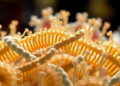
IMAGE

Credit: Photo: Thomas Kunz

An international scientific consortium including the Freiburg plant biologist Prof. Dr. Thomas Laux has discovered a regulatory pathway that turns plants' ordinary somatic cells into germ cells for sexual reproduction. The researchers recently published their findings in the scientific journal Science.

In contrast to humans and animals, plants do not set aside a specialized cell lineage (germline) for the future production of gametes during early embryogenesis. Instead, the germ cells of plants are established de novo from somatic cells in the floral reproductive organs, the stamens and carpels. To this end, the selected cells switch their cell division mode from mitosis, cell proliferation maintaining the chromosome number, to meiosis, the division that reduces the number of chromosomes and where genetic recombination occurs. Plants have therefore evolved strategies to enable somatic cells to switch to germline fate and to do so in the right place and at the right time.

Laux and colleagues have identified multiple genes in the model organism Arabidopsis thaliana that give the start signal for switching from mitose to meiose. The starting point for the findings presented in Science are mutants that create multiple germ cells instead of a singular one in each ovule. Key of the newly discovered pathway is the limitation of activity of the transcription factor WUSCHEL, which Laux's team had identified several years ago as an important regulator of pluripotent stem cells that are able to develop into every cell type in the organism. The involvement of WUSCHEL in creating germ cells is a discovery that provides molecular evidence for the longstanding hypothesis derived from paleobotanical studies that the reproductive ovules and the shoot meristem have evolved from the same precursor organ in ancient plants. The newly discovered regulatory mechanism shows how plants are able to limit switching to the germ cell program so that only a single germ cell emerges, while the surrounding cells take on other tasks.

Thomas Laux is professor at the Institute of Biology III and member of the excellence cluster BIOSS Centre for Biological Signalling Studies at the University of Freiburg.

###

Original publication:

Xin'Ai Zhao, Jonathan Bramsiepe, Matthias Van Durme, Shinichiro Komaki,Maria Ada Prusicki, Daisuke Maruyama, Joachim Forner, Anna Medzihradszky,Erik Wijnker, Hirofumi Harashima, You Lu, Anja Schmidt, Daniela Guthörl,Rosa Sahún Logroño, Yonsheng Guan, Gaetan Pochon, Ueli Grossniklaus, Thomas Laux,Tetsuya Higashiyama, Jan U. Lohmann, Moritz K. Nowack, Arp Schnittger (2017): RETINOBLASTOMA RELATED1mediates germline entryin Arabidopsis In: Science. DOI: 10.1126/science.aaf6532

Contact:

Institute of Biology III / BIOSS Centre for Biological Signalling Studies
University of Freiburg

Media Contact

Prof. Dr. Thomas Laux
[email protected]
49-761-203-2943

Startseite

Related Journal Article

http://dx.doi.org/10.1126/science.aaf6532

############

Story Source: Materials provided by Scienmag
Share12Tweet8Share2ShareShareShare2

Related Posts

Florida Cane Toad: Complex Spread and Selective Evolution

Florida Cane Toad: Complex Spread and Selective Evolution

February 7, 2026
New Study Uncovers Mechanism Behind Burn Pit Particulate Matter–Induced Lung Inflammation

New Study Uncovers Mechanism Behind Burn Pit Particulate Matter–Induced Lung Inflammation

February 6, 2026

DeepBlastoid: Advancing Automated and Efficient Evaluation of Human Blastoids with Deep Learning

February 6, 2026

Navigating the Gut: The Role of Formic Acid in the Microbiome

February 6, 2026
Please login to join discussion

POPULAR NEWS

  • Robotic Ureteral Reconstruction: A Novel Approach

    Robotic Ureteral Reconstruction: A Novel Approach

    82 shares
    Share 33 Tweet 21
  • Digital Privacy: Health Data Control in Incarceration

    63 shares
    Share 25 Tweet 16
  • Study Reveals Lipid Accumulation in ME/CFS Cells

    57 shares
    Share 23 Tweet 14
  • Breakthrough in RNA Research Accelerates Medical Innovations Timeline

    53 shares
    Share 21 Tweet 13

About

We bring you the latest biotechnology news from best research centers and universities around the world. Check our website.

Follow us

Recent News

Decoding Prostate Cancer Origins via snFLARE-seq, mxFRIZNGRND

Digital Health Perspectives from Baltic Sea Experts

Florida Cane Toad: Complex Spread and Selective Evolution

Subscribe to Blog via Email

Enter your email address to subscribe to this blog and receive notifications of new posts by email.

Join 73 other subscribers
  • Contact Us

Bioengineer.org © Copyright 2023 All Rights Reserved.

Welcome Back!

Login to your account below

Forgotten Password?

Retrieve your password

Please enter your username or email address to reset your password.

Log In
No Result
View All Result
  • Homepages
    • Home Page 1
    • Home Page 2
  • News
  • National
  • Business
  • Health
  • Lifestyle
  • Science

Bioengineer.org © Copyright 2023 All Rights Reserved.