• HOME
  • NEWS
  • EXPLORE
    • CAREER
      • Companies
      • Jobs
    • EVENTS
    • iGEM
      • News
      • Team
    • PHOTOS
    • VIDEO
    • WIKI
  • BLOG
  • COMMUNITY
    • FACEBOOK
    • INSTAGRAM
    • TWITTER
Thursday, May 14, 2026
BIOENGINEER.ORG
No Result
View All Result
  • Login
  • HOME
  • NEWS
  • EXPLORE
    • CAREER
      • Companies
      • Jobs
        • Lecturer
        • PhD Studentship
        • Postdoc
        • Research Assistant
    • EVENTS
    • iGEM
      • News
      • Team
    • PHOTOS
    • VIDEO
    • WIKI
  • BLOG
  • COMMUNITY
    • FACEBOOK
    • INSTAGRAM
    • TWITTER
  • HOME
  • NEWS
  • EXPLORE
    • CAREER
      • Companies
      • Jobs
        • Lecturer
        • PhD Studentship
        • Postdoc
        • Research Assistant
    • EVENTS
    • iGEM
      • News
      • Team
    • PHOTOS
    • VIDEO
    • WIKI
  • BLOG
  • COMMUNITY
    • FACEBOOK
    • INSTAGRAM
    • TWITTER
No Result
View All Result
Bioengineer.org
No Result
View All Result
Home Headlines

From C-H to C-C at room temperature

Bioengineer.org by Bioengineer.org
January 27, 2018
in Headlines, Health, Science News
Reading Time: 1 min read
0
Share on FacebookShare on TwitterShare on LinkedinShare on RedditShare on Telegram
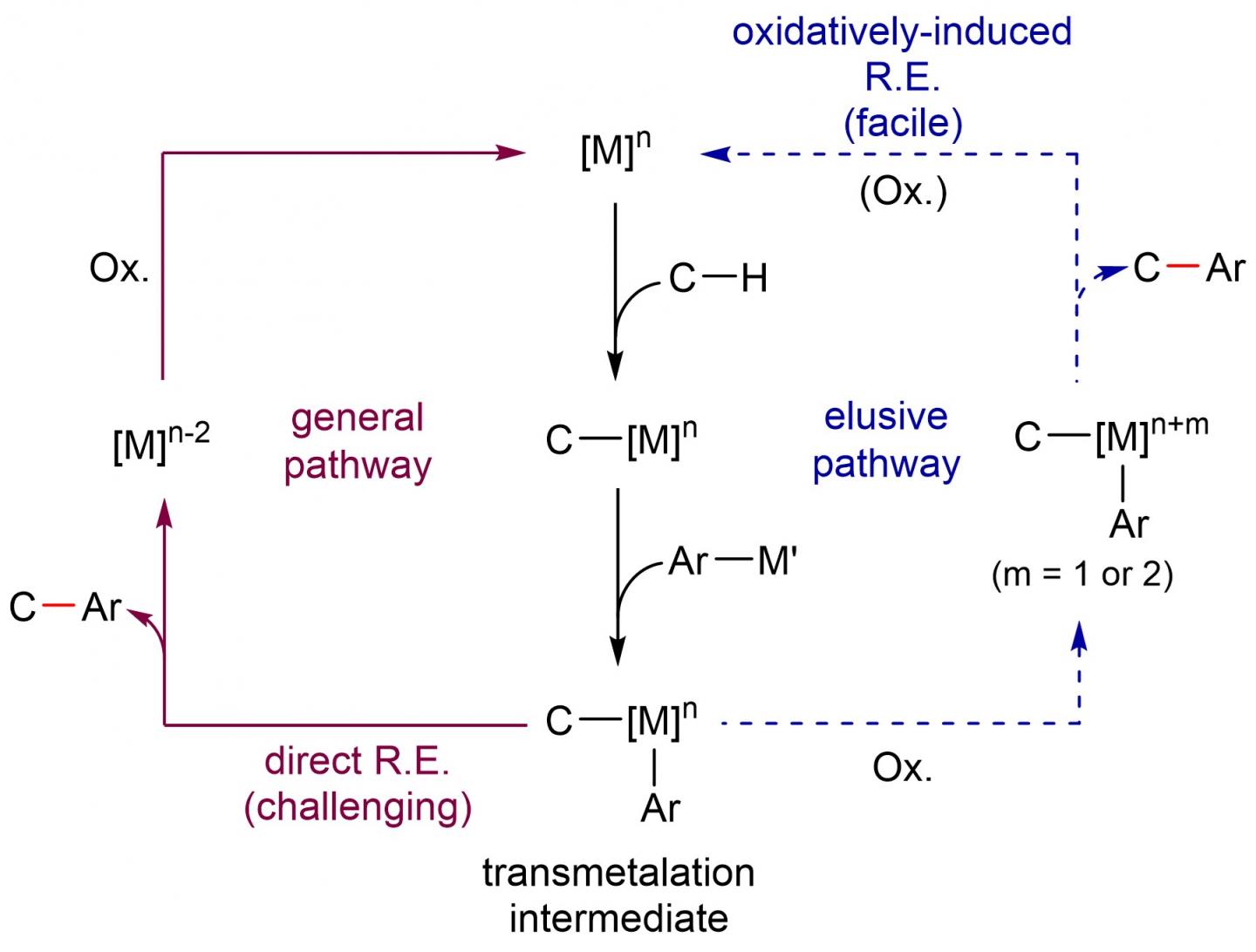
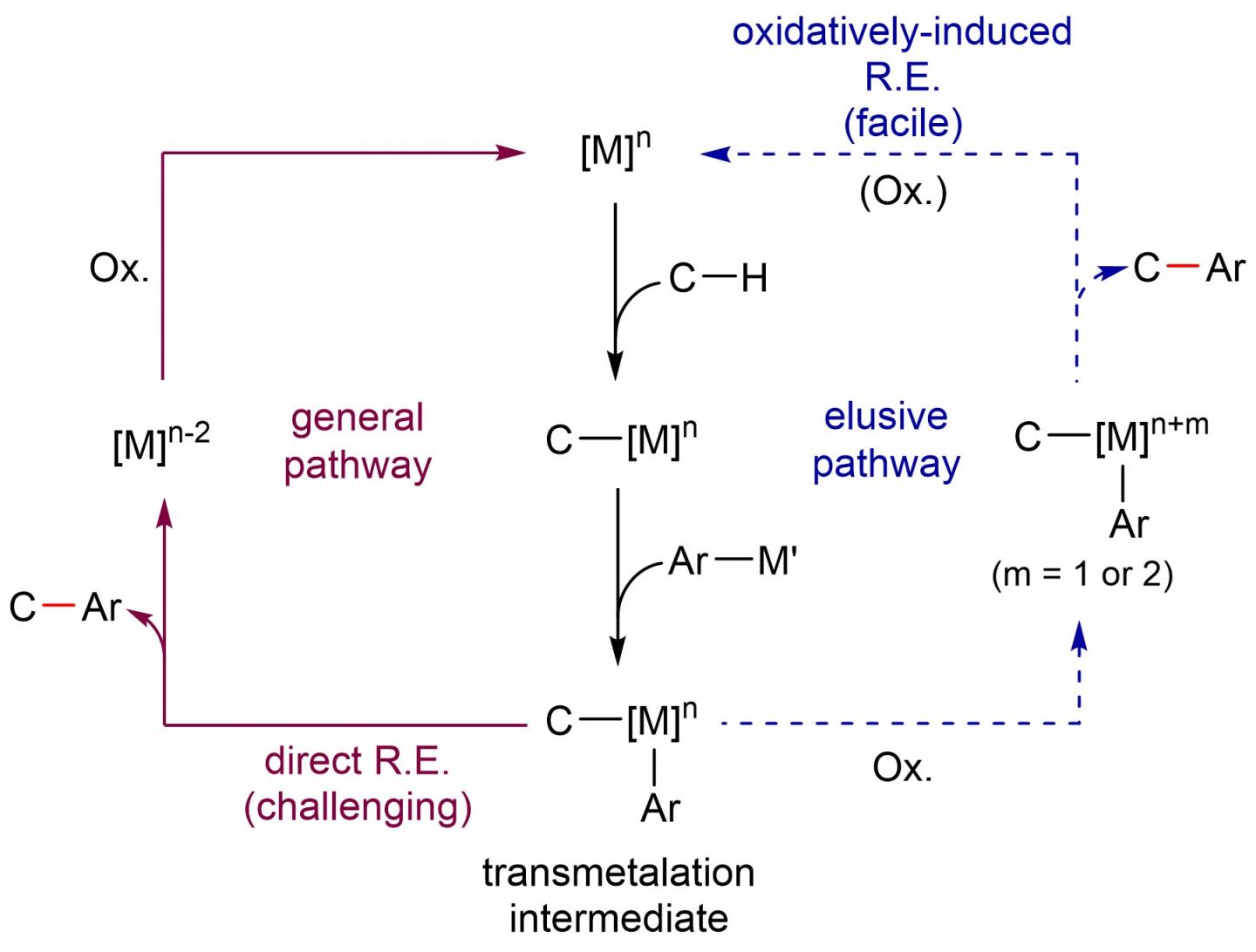
IMAGE

Credit: IBS, published in Nature Chemistry

Carbon-carbon (C-C) bonds make up the skeleton of all organic molecules. However, creating such ubiquitous C-C bonds artificially is still a complicated task. In particular, since several molecules used in medicine, pharmacology and material chemistry contain aryl groups, devising a way to efficiently and selectively introduce this chemical group is a major goal for organic chemists. Currently, most arylation reactions require harsh reaction conditions, including high temperatures and excess additives.

Scientists at the Center for Catalytic Hydrocarbon Functionalization, within the Institute for Basic Science (IBS, South Korea), devised a method to selectively introduce aryl groups into C-H bonds at room temperature. Published in Nature Chemistry, the study also clarifies the details of this reaction, which turned out to be different from the conventional idea.

In simple terms, the procedure consists of three main steps. Firstly, the iridium catalyst activates the C-H containing substrate. Secondly, the arylsilane attacks the metal, creating an intermediate molecule. The team crystallized such intermediate and demonstrated that oxidizing the iridium center of the intermediate (third step) is beneficial to achieve a low energy arylation reaction.

The proposed reaction mechanism was verified with electroparamagnetic resonance, cyclic voltametry and computer simulations. "Developing more efficient and environmetally benign oxidation system is our next goal," concludes Kwangmin Shin, first author of the study.

###

Media Contact

Jung Gyu Kim
[email protected]
@IBS_media

http://www.ibs.re.kr/en/

Related Journal Article

http://dx.doi.org/10.1038/nchem.2900

Share12Tweet8Share2ShareShareShare2

Related Posts

Enamel Proteins Reveal Insights from Six Homo erectus — Medicine

Enamel Proteins Reveal Insights from Six Homo erectus

May 14, 2026

New Global Study Reveals Challenges in Combating High Blood Pressure Effectively

May 13, 2026

Ultra-Faint Primitive Galaxy Forms During Reionization

May 13, 2026

New Study Finds Significant Weight Gain More Than Doubles Risk of Certain Cancers

May 13, 2026
Please login to join discussion

POPULAR NEWS

  • Research Indicates Potential Connection Between Prenatal Medication Exposure and Elevated Autism Risk

    842 shares
    Share 337 Tweet 211
  • New Study Reveals Plants Can Detect the Sound of Rain

    729 shares
    Share 291 Tweet 182
  • Salmonella Haem Blocks Macrophages, Boosts Infection

    62 shares
    Share 25 Tweet 16
  • Breastmilk Balances E. coli and Beneficial Bacteria in Infant Gut Microbiomes

    57 shares
    Share 23 Tweet 14

About

We bring you the latest biotechnology news from best research centers and universities around the world. Check our website.

Follow us

Recent News

Enamel Proteins Reveal Insights from Six Homo erectus

New Global Study Reveals Challenges in Combating High Blood Pressure Effectively

Ultra-Faint Primitive Galaxy Forms During Reionization

Subscribe to Blog via Email

Enter your email address to subscribe to this blog and receive notifications of new posts by email.

Join 82 other subscribers
  • Contact Us

Bioengineer.org © Copyright 2023 All Rights Reserved.

Welcome Back!

Login to your account below

Forgotten Password?

Retrieve your password

Please enter your username or email address to reset your password.

Log In
No Result
View All Result
  • Homepages
    • Home Page 1
    • Home Page 2
  • News
  • National
  • Business
  • Health
  • Lifestyle
  • Science

Bioengineer.org © Copyright 2023 All Rights Reserved.