• HOME
  • NEWS
  • EXPLORE
    • CAREER
      • Companies
      • Jobs
    • EVENTS
    • iGEM
      • News
      • Team
    • PHOTOS
    • VIDEO
    • WIKI
  • BLOG
  • COMMUNITY
    • FACEBOOK
    • INSTAGRAM
    • TWITTER
Wednesday, August 19, 2026
BIOENGINEER.ORG
No Result
View All Result
  • Login
  • HOME
  • NEWS
  • EXPLORE
    • CAREER
      • Companies
      • Jobs
        • Lecturer
        • PhD Studentship
        • Postdoc
        • Research Assistant
    • EVENTS
    • iGEM
      • News
      • Team
    • PHOTOS
    • VIDEO
    • WIKI
  • BLOG
  • COMMUNITY
    • FACEBOOK
    • INSTAGRAM
    • TWITTER
  • HOME
  • NEWS
  • EXPLORE
    • CAREER
      • Companies
      • Jobs
        • Lecturer
        • PhD Studentship
        • Postdoc
        • Research Assistant
    • EVENTS
    • iGEM
      • News
      • Team
    • PHOTOS
    • VIDEO
    • WIKI
  • BLOG
  • COMMUNITY
    • FACEBOOK
    • INSTAGRAM
    • TWITTER
No Result
View All Result
Bioengineer.org
No Result
View All Result
Home NEWS Science News Biology

Fourteen years after the Gulf of Mexico oil spill, endemic fishes face an uncertain future

Bioengineer by Bioengineer
April 18, 2024
in Biology
Reading Time: 3 mins read
0
Prosanta Chakrabarty
Share on FacebookShare on TwitterShare on LinkedinShare on RedditShare on Telegram

The 2010 Gulf of Mexico Deepwater Horizon was the largest accidental oil spill in history. With almost 100 million gallons (379 million liters) of oil combined with dispersants suggested to remain in the Gulf, it is one of the worst pollution events ever. More than a decade later, its long-term effects  are still not fully understood.
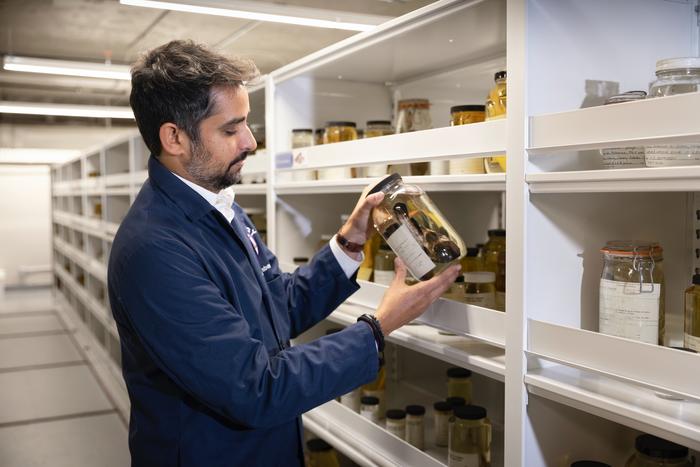
Prosanta Chakrabarty

Credit: Eddy Perez, LSU

The 2010 Gulf of Mexico Deepwater Horizon was the largest accidental oil spill in history. With almost 100 million gallons (379 million liters) of oil combined with dispersants suggested to remain in the Gulf, it is one of the worst pollution events ever. More than a decade later, its long-term effects  are still not fully understood.

In a new study, researchers from Louisiana State University and Tulane University examined the endemic Gulf of Mexico fish species that may have been most impacted by the oil spill to see how their distribution has changed over the years. To get their data, they studied museum specimens from natural history collections, looked at relevant literature, and combed biodiversity databases.

With 1541 fish species known from the region, and 78 endemic fish species, the Gulf of Mexico is one of the most biologically rich and resilient marine environments in the world, but how much of this diversity is still left intact?

The study found that 29 out of the Gulf’s 78 endemic fish species haven’t been reported in museum collections since 2010. The Yucatan killifish, for example, which is considered endangered, was last reported pre-spill, in 2005, off the Yucatán Peninsula.

Six of the non-reported species are considered of greatest concern, because their areas of distribution largely overlap with the affected area – although the authors note that their absence in the Gulf in recent years cannot automatically be attributed to the oil spill.

“Understanding the impacts of catastrophic environmental events such as the 2010 Gulf of Mexico Oil Spill does not end when the wellhead is capped or when the last drops of oil cease to flow. The disaster only begins to end when the data no longer show impacts of the event. We are far from the beginning of the end for the Deepwater Horizon Oil Spill. Lingering chemicals, lost generations of wildlife and a continued ecosystem imbalance may all be factors that prevent an environment from rebounding from such cataclysmic events,” the authors note in their resear article.

However, they also point out that nature’s ability to recover should not be overlooked.

“The Gulf of Mexico continues to face many challenges, from the Dead Zone, to climate change, loss of coast habitats and continued oil spills. Efforts like this report aim to bring attention to vulnerable species that continue to be impacted by human activities and to the unique endemic fauna of the region,” the researchers write in conclusion.


Research article:

Chakrabarty P, Sheehy AJ, Clute X, Cruz SB, Ballengée B (2024) Ten years later: An update on the status of collections of endemic Gulf of Mexico fishes put at risk by the 2010 Oil Spill. Biodiversity Data Journal 12: e113399. https://doi.org/10.3897/BDJ.12.e113399


Journal

Biodiversity Data Journal

DOI

10.3897/BDJ.12.e113399

Article Title

Ten years later: An update on the status of collections of endemic Gulf of Mexico fishes put at risk by the 2010 Oil Spill

Article Publication Date

8-Apr-2024

Share12Tweet8Share2ShareShareShare2

Related Posts

MIT engineers link bacteria to build living transistors

MIT engineers link bacteria to build living transistors

August 18, 2026
New evolutionary discoveries prompt scientists to rethink human ancestor names and classifications

New evolutionary discoveries prompt scientists to rethink human ancestor names and classifications

August 18, 2026

Posterior Transosseous S1 Pedicle Approach Reaches Superior Hypogastric Plexus

August 18, 2026

Study identifies IVF patients most likely to use traditional Chinese medicine

August 18, 2026

POPULAR NEWS

  • Workshop Advances Pediatric Therapeutic Development for Osteosarcoma

    29 shares
    Share 12 Tweet 7
  • Zebrafish Toxicology Needs Clearer Links to Real-World Environmental Risks

    29 shares
    Share 12 Tweet 7
  • Internationally recognized physician-scientist Charles W.M. Roberts named St. Jude president and CEO

    29 shares
    Share 12 Tweet 7
  • Study calls for international rules to protect fish stocks and public health

    29 shares
    Share 12 Tweet 7

About

We bring you the latest biotechnology news from best research centers and universities around the world. Check our website.

Follow us

Recent News

Workshop Advances Pediatric Therapeutic Development for Osteosarcoma

Zebrafish Toxicology Needs Clearer Links to Real-World Environmental Risks

Internationally recognized physician-scientist Charles W.M. Roberts named St. Jude president and CEO

Subscribe to Blog via Email

Enter your email address to subscribe to this blog and receive notifications of new posts by email.

Join 85 other subscribers
  • Contact Us

Bioengineer.org © Copyright 2023 All Rights Reserved.

Welcome Back!

Login to your account below

Forgotten Password?

Retrieve your password

Please enter your username or email address to reset your password.

Log In
No Result
View All Result
  • Homepages
    • Home Page 1
    • Home Page 2
  • News
  • National
  • Business
  • Health
  • Lifestyle
  • Science

Bioengineer.org © Copyright 2023 All Rights Reserved.