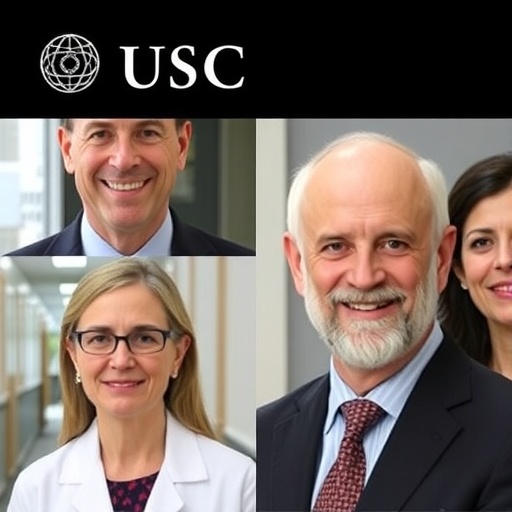
The National Academy of Inventors (NAI) has recently announced the induction of four distinguished faculty members from the Keck School of Medicine of USC as new senior members, a recognition that highlights their groundbreaking contributions to biomedical innovation. These scholars—Paula Cannon, PhD; Alan Epstein, MD, PhD; Heinz-Josef Lenz, MD; and Bodour Salhia, PhD—have been lauded for their exceptional advancement in technologies addressing cancer, HIV, and other critical health challenges. Their election is emblematic of prolonged dedication to driving scientific discovery from laboratory concepts to transformative real-world applications, further strengthened by the robust innovation ecosystem at USC.
NAI senior membership is a prestigious acknowledgment awarded to academic inventors whose technological creations have exhibited significant potential to impact society profoundly. It emphasizes accomplishments in patenting, licensing, and commercializing technologies that bridge scientific ingenuity with societal needs. These scholars’ inclusion underscores not only their individual achievements but also the collaborative spirit of the broader scientific community that underpins these advancements. The 2026 NAI annual conference, to be hosted by USC at the Loews Hollywood Hotel, will officially recognize these innovators, symbolizing the institution’s role as a global hub for academic innovation.
Paula Cannon, a distinguished professor at USC, has forged a pioneering path in gene therapy and cell-based treatment development, particularly targeting HIV/AIDS and various other diseases. Her laboratory’s innovations in gene editing and therapeutic delivery techniques have become foundational to clinical trials, exemplified by a recent HIV/AIDS trial backed by the California Institute for Regenerative Medicine and industry partners. Her current research revolves around engineering B cells—immune cells responsible for antibody production—to function as targeted therapeutic antibody factories, extending the paradigm established by CAR T-cell therapies. This approach harnesses the body’s immune arsenal in novel ways, potentially revolutionizing treatments for infectious diseases, cancer, and autoimmune conditions.
Cannon emphasizes the pragmatic development cycle of her work, acknowledging the extended trajectory from invention to clinical impact. Her efforts exemplify the integration of academic research with patentable technologies that can be licensed and further developed by industry. Central to this progress is USC’s comprehensive innovation infrastructure, including the Stevens Center for Innovation and the MESH Academy, which facilitate the transition of foundational science into viable therapeutics and foster interdisciplinary collaboration. Cannon’s vision illustrates a model where intricate scientific discovery synergizes with meticulous translational pathways.
Alan Epstein’s career spans nearly four decades of innovative work in monoclonal antibodies and other cancer-fighting technologies. His expertise lies in the development of custom-designed antibodies that have become staples in treating cancers and autoimmune diseases. Epstein is currently focused on a cutting-edge project enhancing antibody therapies by conjugating them with bacterial DNA fragments that can potentiate immune cell activation. Such molecular complementation seeks to enhance the immune system’s innate ability to target malignancies more effectively, marking a significant conceptual progression built upon longstanding fundamental research.
Epstein’s scientific journey underscores the increasing necessity for collaborative networks in biomedical innovation. Throughout his career, he has leveraged partnerships across pathology, radiology, and pharmaceutical sciences at USC, embodying a multidisciplinary approach essential to modern biomedical breakthroughs. He also acknowledges the essential role of committed research personnel who embody resilience and technical acumen in translating complex scientific ideas into practical solutions. Epstein’s reflections highlight the evolving landscape of scientific research where collaboration multiplies impact and accelerates discovery.
Heinz-Josef Lenz, a University Professor of Medicine and Cancer Biology, delves deep into the molecular characterization of colorectal cancer. His research seeks to decode the molecular signatures that define tumor behavior, enabling predictive diagnostics, targeted therapeutics, and personalized treatment regimens. By integrating advanced analytical tools including artificial intelligence with clinical tissue profiling, Lenz identifies previously underexplored biochemical pathways that can serve as therapeutic targets. His work exemplifies the fusion of computational biology with experimental oncology to inform next-generation cancer therapies and precision medicine.
Lenz’s strategy of moving fluidly between clinical observations and laboratory investigations exemplifies the bidirectional flow of knowledge essential for translating scientific insights into patient benefit. His collaborative partnerships extend beyond the biomedical sciences to include engineering and data science faculties at USC, creating a multidisciplinary nexus that leverages diverse expertise. Joint projects, such as novel drug combinations that augment the efficacy of standard chemotherapy with targeted molecular inhibitors, illustrate the practical outcome of this synergy, positioning USC at the forefront of innovating cancer treatment modalities.
Bodour Salhia’s research focuses on the development of liquid biopsies for cancer detection, a transformative diagnostic approach that captures circulating tumor DNA from blood samples. This non-invasive technique promises earlier diagnosis, more accurate disease monitoring, and reduced dependency on invasive tissue biopsies. Salhia’s unique contribution lies in her focus on epigenetic markers—chemical modifications that regulate gene activity without changing the DNA sequence—as opposed to purely genetic mutations. This nuanced approach enhances the sensitivity and specificity of cancer detection assays, especially for ovarian and breast cancers.
Salhia’s entrepreneurial spirit complements her scientific endeavors. She founded CpG Diagnostics, a startup dedicated to commercializing blood-based cancer diagnostics derived from her patented epigenetic technology. These tests aim to detect residual disease post-treatment and differentiate benign from malignant tumors, filling significant clinical gaps. Additionally, her engagement with patient communities via the Bench with Bedside Initiative promotes research transparency and participant involvement, fostering a reciprocal relationship that drives clinical research and patient hope alike.
These four academics embody the transformative power of university-driven innovation ecosystems, where cutting-edge research, entrepreneurial ventures, and cross-disciplinary collaboration converge to address some of humanity’s most daunting health challenges. Their work demonstrates key principles in modern biomedical innovation: driving inventions from concept through patenting and licensing, harnessing the immune system in novel ways, leveraging molecular and computational biology for precision medicine, and applying epigenetic insights to revolutionize diagnostics. As senior members of the NAI, they exemplify how sustained academic endeavor spurs real-world impact, underscoring USC’s commitment to shaping the future of health care technologies.
As the 2026 NAI conference approaches, the Keck School of Medicine’s spotlighted innovators stand as exemplars of the potent blend of scientific creativity, clinical insight, and entrepreneurial rigor essential for advancing human health. Their stories resonate broadly not only within academic and medical circles but also across industries and patient communities eager for breakthroughs. Through steadfast dedication and collaborative spirit, these four leaders continue to propel the boundaries of medicine, translating visionary science into tangible hope.
Subject of Research: Gene and cell therapies, monoclonal antibodies, colorectal cancer molecular profiling, and liquid biopsy diagnostics for cancer detection.
Article Title: USC Innovators Named Senior Members of the National Academy of Inventors for Pioneering Advances in Cancer and HIV Therapies
News Publication Date: Not explicitly stated; inferred 2024
Web References:
– Keck School of Medicine of USC: https://keck.usc.edu
– National Academy of Inventors: https://www.academyofinventors.org
– CpG Diagnostics: https://www.cpgdiagnostics.com
– Bench with Bedside Initiative: https://thebenchwithbedsideinitiative.usc.edu
Image Credits: Don Milici
Keywords: Gene therapy, cell therapy, HIV/AIDS, monoclonal antibodies, cancer diagnostics, colorectal cancer, liquid biopsy, epigenetics, biomedical innovation, academic inventors, USC, National Academy of Inventors
Tags: 2026 NAI annual conference USCacademic innovation in healthcareacademic inventors patenting successbiomedical technology commercializationcancer technology advancementscollaboration in medical researchHIV research innovationsKeck School of Medicine biomedical innovationNational Academy of Inventors Senior Membersscientific discovery to real-world applicationtransformative health technologiesUSC innovation ecosystem