


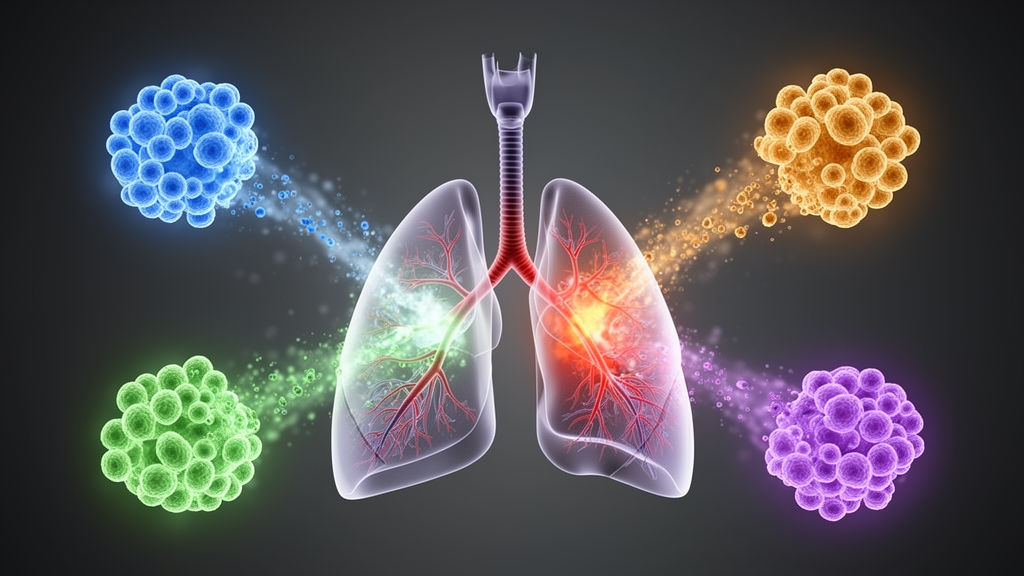
In some of these patients the lung disease suddenly worsens, causing acute respiratory failure that frequently requires intensive care. A new Perspective article published in Critical Care argues that these acute exacerbations, abbreviated AE-SARD-ILD, are too often treated with templates borrowed from other conditions, and proposes a new framework built around four physiological phenotypes instead.
They argue that this approach overlooks the heterogeneity of the underlying pathological processes. According to the article, AE-SARD-ILD encompasses distinct patterns of respiratory mechanics, pulmonary vascular involvement, reversibility and treatment response, so management based solely on the underlying rheumatic disease or on the radiological pattern may be inadequate.
Instead of classifying patients only by their rheumatic diagnosis or imaging-based fibrotic pattern, the proposed integrated clinical, radiological and mechanical framework identifies four dominant, potentially overlapping physiological phenotypes. These arise from the interaction between the chronic pulmonary substrate and the superimposed acute insult: a fibrotic or UIP-like phenotype, an inflammatory or ARDS-like phenotype, a pulmonary hypertension-dominant phenotype, and a diffuse alveolar haemorrhage-dominant phenotype. The authors emphasize that these categories are not mutually exclusive and may overlap in individual patients.
The practical purpose of the framework is to give clinicians a physiological rationale for selecting, titrating and escalating respiratory support, both non-invasive and invasive. The phenotypes are also intended to guide control of excessive respiratory drive and the integration of immunomodulatory therapies, pulmonary vascular treatments and extracorporeal support strategies. Because the four phenotypes differ in reversibility and expected treatment response, the authors suggest they could support individualized respiratory management, dynamic prognostication and time-limited trials of intensive care, in which the benefit of continued critical support is periodically reassessed.
Important limitations accompany the proposal. The article is a Perspective, a review and position piece rather than a study reporting new patient data, and its recommendations rest on a synthesis of current evidence rather than on prospective testing of the framework itself. The authors state explicitly that prospective validation is required before phenotype-based assessment can be considered an established standard of care. Readers should therefore treat the four-phenotype model as a structured proposal for future research and clinical reasoning, not as a validated treatment algorithm. Even so, the article offers a concrete way of thinking about a rare but severe complication: instead of asking only which rheumatic disease a patient has or how their chest imaging looks, clinicians could ask which physiological process is dominating the acute deterioration, and tailor respiratory support and drug therapy to that process.
Subject of Research: Physiological phenotypes guiding respiratory and intensive care management of acute exacerbation of autoimmune rheumatic disease-associated interstitial lung disease
Article Title: Acute exacerbation of systemic autoimmune rheumatic disease-associated interstitial lung disease: integrated pathophysiology and respiratory care
Article References: Tonelli, R., Orlandi, M., Cuculo, A., Lodeserto, A., Michelacci, S., Keller Sarmiento, L., Moretti, A., Samarelli, A. V., Raineri, G., Cerri, S., Giuggioli, D., Marchioni, A., & Clini, E. (2026). Acute exacerbation of systemic autoimmune rheumatic disease-associated interstitial lung disease: integrated pathophysiology and respiratory care. Critical Care. https://doi.org/10.1186/s13054-026-06395-x
Image Credits: AI Generated
DOI: 10.1186/s13054-026-06395-x
Keywords: interstitial lung disease, autoimmune rheumatic disease, acute exacerbation, acute respiratory failure, intensive care, physiological phenotypes, pulmonary hypertension, diffuse alveolar haemorrhage, ARDS, non-invasive ventilation, respiratory mechanics, perspective article
News Source: Barbara Leach. (October 29, 2026). Four Physiological Phenotypes May Guide Intensive Care in Autoimmune Lung Disease Flare-Ups. Scienmag.



