• HOME
  • NEWS
  • EXPLORE
    • CAREER
      • Companies
      • Jobs
    • EVENTS
    • iGEM
      • News
      • Team
    • PHOTOS
    • VIDEO
    • WIKI
  • BLOG
  • COMMUNITY
    • FACEBOOK
    • INSTAGRAM
    • TWITTER
Saturday, February 7, 2026
BIOENGINEER.ORG
No Result
View All Result
  • Login
  • HOME
  • NEWS
  • EXPLORE
    • CAREER
      • Companies
      • Jobs
        • Lecturer
        • PhD Studentship
        • Postdoc
        • Research Assistant
    • EVENTS
    • iGEM
      • News
      • Team
    • PHOTOS
    • VIDEO
    • WIKI
  • BLOG
  • COMMUNITY
    • FACEBOOK
    • INSTAGRAM
    • TWITTER
  • HOME
  • NEWS
  • EXPLORE
    • CAREER
      • Companies
      • Jobs
        • Lecturer
        • PhD Studentship
        • Postdoc
        • Research Assistant
    • EVENTS
    • iGEM
      • News
      • Team
    • PHOTOS
    • VIDEO
    • WIKI
  • BLOG
  • COMMUNITY
    • FACEBOOK
    • INSTAGRAM
    • TWITTER
No Result
View All Result
Bioengineer.org
No Result
View All Result
Home NEWS Science News Biology

Forests on the radar

Bioengineer by Bioengineer
October 21, 2019
in Biology
Reading Time: 2 mins read
0
IMAGE
Share on FacebookShare on TwitterShare on LinkedinShare on RedditShare on Telegram

IMAGE

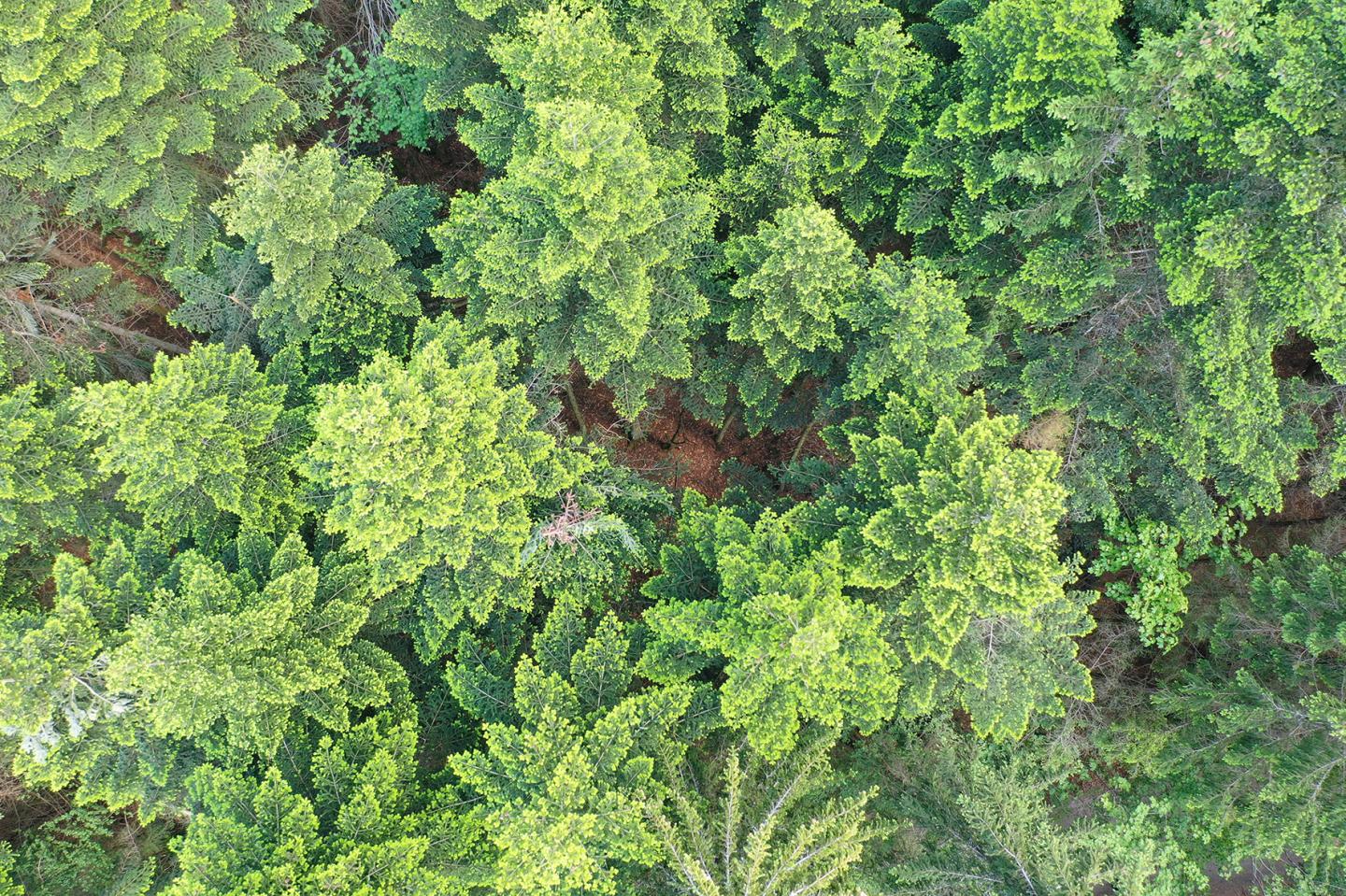
Credit: Bavarian Forest National Park


The quantity and diversity of plants and animals, especially insects, is decreasing, also in Germany. For this reason, science would like to see opportunities to document the biodiversity of the planet as extensively and comprehensively as possible. In this way, it could be determined whether measures against the insect dieback are effective or not.

Satellite data are well suited for this purpose. “So far, however, they have hardly been used. Scientists were of the opinion that there were no freely available data that would provide sufficientresults,” says Professor Jörg Mueller from the Biocenter of Julius-Maximilians-Universität (JMU) Würzburg in Bavaria, Germany. This is not true. Radar data available free of charge can be used very well to monitor biodiversity from space.

This was reported by Mueller’s colleague Dr. So-yeon Bae with an international team in Nature Communications. The South Korean landscape ecologist has shown in the research project DFG Biodiversity Exploratories that radar data from satellites are surprisingly well suited for describing the diversity of vertebrates, plants and fungi in forests, as well as the smallest insects and spiders. This is despite the fact that radar data are relatively coarse and despite the fact that forests with their highly dynamic and complex three-dimensional structure represent a particular challenge for monitoring biodiversity.

Twelve species groups analysed in five forest areas

The JMU-led research team compared two methods. In five forest areas, whose biodiversity was very well known by by ground truths, twelve species groups were analysed – on the one hand with high-resolution laser scanning data and on the other hand with coarser radar data.

The results were astounding: “The free radar data provide comparably good results and are sometimes even superior to the laser,” says Dr. Bae. Her conclusion: “Remote sensing is ready to carry out biodiversity monitoring from space throughout Germany. Now only better, standardized biodiversity data have to be collected on the ground nationwide”. This would require spatially distributed mapping of species diversity in all forest habitats in Germany.

###

Media Contact
Joerg Mueller
[email protected]
49-931-318-3378

Original Source

https://go.uniwue.de/forestradar

Related Journal Article

http://dx.doi.org/10.1038/s41467-019-12737-x

Tags: BiodiversityBiologyEcology/EnvironmentEntomologyForestry
Share12Tweet8Share2ShareShareShare2

Related Posts

New Study Uncovers Mechanism Behind Burn Pit Particulate Matter–Induced Lung Inflammation

New Study Uncovers Mechanism Behind Burn Pit Particulate Matter–Induced Lung Inflammation

February 6, 2026

DeepBlastoid: Advancing Automated and Efficient Evaluation of Human Blastoids with Deep Learning

February 6, 2026

Navigating the Gut: The Role of Formic Acid in the Microbiome

February 6, 2026

AI-Enhanced Optical Coherence Photoacoustic Microscopy Revolutionizes 3D Cancer Model Imaging

February 6, 2026
Please login to join discussion

POPULAR NEWS

  • Robotic Ureteral Reconstruction: A Novel Approach

    Robotic Ureteral Reconstruction: A Novel Approach

    82 shares
    Share 33 Tweet 21
  • Digital Privacy: Health Data Control in Incarceration

    63 shares
    Share 25 Tweet 16
  • Study Reveals Lipid Accumulation in ME/CFS Cells

    57 shares
    Share 23 Tweet 14
  • Breakthrough in RNA Research Accelerates Medical Innovations Timeline

    53 shares
    Share 21 Tweet 13

About

We bring you the latest biotechnology news from best research centers and universities around the world. Check our website.

Follow us

Recent News

Palmitoylation of Tfr1 Drives Platelet Ferroptosis and Exacerbates Liver Damage in Heat Stroke

Oxygen-Enhanced Dual-Section Microneedle Patch Improves Drug Delivery and Boosts Photodynamic and Anti-Inflammatory Treatment for Psoriasis

Scientists Identify SARS-CoV-2 PLpro and RIPK1 Inhibitors Showing Potent Synergistic Antiviral Effects in Mouse COVID-19 Model

Subscribe to Blog via Email

Enter your email address to subscribe to this blog and receive notifications of new posts by email.

Join 73 other subscribers
  • Contact Us

Bioengineer.org © Copyright 2023 All Rights Reserved.

Welcome Back!

Login to your account below

Forgotten Password?

Retrieve your password

Please enter your username or email address to reset your password.

Log In
No Result
View All Result
  • Homepages
    • Home Page 1
    • Home Page 2
  • News
  • National
  • Business
  • Health
  • Lifestyle
  • Science

Bioengineer.org © Copyright 2023 All Rights Reserved.