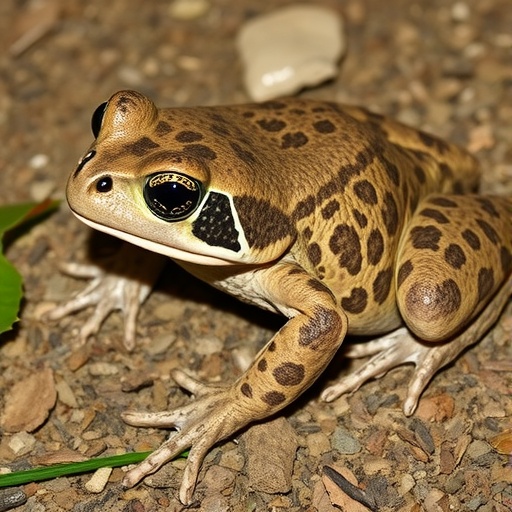
Invasive species offer a unique window into the mechanisms of rapid evolution and adaptation, especially as they colonize new environments that often differ drastically from their native habitats. Among these, the cane toad (Rhinella marina) has long served as a model organism for studying the dynamics of biological invasions, range expansions, and evolutionary change. However, less attention has been paid to its close relative, Rhinella horribilis, which has also established populations almost simultaneously in Florida, USA. A recent groundbreaking study employing cutting-edge genomic techniques sheds light on the genetic and ecological factors that facilitated this neotropical amphibian’s successful colonization of a temperate climate far outside its native range.
By sequencing 280 individual cane toads using double-digest restriction-associated DNA sequencing (ddRAD), researchers have provided one of the most comprehensive genetic assessments of R. horribilis’ invasion in Florida. This high-resolution genetic data allowed for meticulous analysis of introduction history, population structure, and signs of adaptation to the novel environment. The team’s work challenges previous assumptions and enriches our understanding of how invasive species surmount ecological barriers to thrive and spread in new territories.
One prevailing question the study tackled was whether Florida’s R. horribilis population stemmed from a single introduction event or multiple, cryptic ones. Invasive species often enter new regions through repeated introductions from diverse source populations, which can amplify genetic variation and adaptive potential. Contrary to this expectation, the genetic data robustly support a scenario of a single introduction. This finding implies that the population’s subsequent expansion in Florida was driven predominantly by intrinsic genetic variation present at the outset rather than multiple waves of external genetic input.
Further scrutiny of the population structure revealed a surprisingly complex pattern of gene flow across the species’ rapidly expanding range. Despite the cane toad’s swift geographical spread, genetic analyses found no evidence of isolation by distance—commonly expected when gene flow diminishes with increasing geographic separation—nor by environmental heterogeneity. This suggests that individual toads maintain connectivity across broad swaths of territory, allowing for widespread genetic mixing and maintenance of diversity, which is critical for adaptability in a new and challenging environment.
Moreover, the research delved deeply into selective pressures operating on the Florida population by conducting redundancy analysis aimed at detecting climate-associated genetic variants. Florida’s climate, notably cooler and more variable than R. horribilis’ native neotropical environment, imposes novel selective regimes. The findings identify genomic loci responding to gradients of precipitation, temperature fluctuations, and urbanization—three crucial ecological variables. These climate-associated genetic variants likely underpin physiological and behavioral modifications enabling the species to cope with the climatic stressors unfamiliar to their native populations.
In contrast to expectations from theoretical models of invasion biology, the study did not find evidence for a distinct “dispersal phenotype” at the expanding range edge. Limb length, a morphological trait often linked to enhanced mobility and dispersal capacity in amphibians, remained consistent across the range. This suggests that instead of evolving specialized dispersal adaptations during expansion, the species’ success hinges more on genetic connectivity and plasticity, rather than morphological specialization, allowing it to exploit different microhabitats without the need for rapid morphological evolution.
The pattern of range-wide gene flow conveyed through this research has profound implications for conservation biology and invasion management. Maintenance of genetic diversity via gene flow enhances the population’s capacity to adapt quickly to heterogeneous environments, potentially complicating control efforts. In the case of Florida’s R. horribilis, the genetic reservoir present within the population appears sufficient to support rapid evolutionary responses to local selective challenges, a feature that may explain its invasive success.
This study’s methodology itself marks a leap forward, leveraging the power of ddRAD sequencing to generate fine-scale genomic data at a population level. This approach enables detection of subtle but meaningful adaptive shifts and population genetic patterns within relatively short evolutionary timescales. The capacity to link genetic variation with ecological gradients and morphological traits furnishes a potent toolset to elucidate the intertwined dynamics of invasion and adaptation.
Beyond ecological and evolutionary insights, these findings inform preventative strategies aimed at invasive species management. Recognizing that a single introduction event can supply sufficient genetic diversity to sustain successful invasion underscores the importance of stringent biosecurity measures and early detection, which remain pivotal in mitigating the impacts of such species before genetic diversification and adaptive potential become entrenched.
Interestingly, the study’s revelation that urbanization exerts detectable selective pressures adds an often overlooked dimension to invasion biology. Urban environments, with their unique climatic conditions and habitat fragmentation, may act as selective arenas shaping the genetic landscape of invasive species. This points to the necessity of integrating anthropogenic factors into predictive models of invasion dynamics and adaptation.
The absence of isolation by environment also challenges classical ecological paradigms predicting divergent selection and local adaptation in heterogeneous landscapes. Instead, the gene flow-mediated homogenization observed here suggests that evolutionary responses may be more polygenic and dispersed, relying on range-wide genetic networks rather than localized genomic islands of adaptation. Such dynamics highlight the complexity of studying evolutionary processes in rapidly expanding invasive populations.
The focus on morphological traits like limb length, in the context of dispersal evolution, directs attention to the nuanced interplay between phenotype and genotype in new environments. The lack of evidence for a “dispersal phenotype” could stem from inherent constraints, or alternatively, gene flow may counteract divergent selection at range edges, preventing phenotypic specialization. This intriguing finding invites further research into the balance of selective pressures and gene flow during invasions.
In sum, this holistic investigation integrates genetic, ecological, and morphological data to paint a detailed portrait of R. horribilis’ complex range expansion in Florida. The study elucidates how strong gene flow, standing genetic diversity from a singular introduction, and selection on climate-associated loci collectively enable the species to flourish in non-native habitats. This multifaceted adaptive strategy underscores the formidable resilience and versatility of invasive species.
As climate change and globalization increase the frequency and intensity of biological invasions worldwide, understanding the genomic and ecological underpinnings of successful establishment becomes ever more critical. Studies such as this pave the way for more precise predictions of invasion outcomes and more effective biodiversity preservation strategies. The case of Florida’s cane toad exemplifies nature’s capacity for rapid adaptation and expansion, often outpacing human efforts to contain ecological disruptions.
The insights gleaned from the Florida R. horribilis invasion contribute broadly to evolutionary biology, conservation genetics, and invasive species science. They challenge established models, introduce new conceptual frameworks, and highlight the imperative for integrative approaches in addressing biological invasions. By untangling the complexities of range expansion at both genetic and ecological levels, this research advances our fundamental understanding of evolutionary processes in the Anthropocene.
Importantly, the revelations about the absence of multiple introductions and the presence of selection along environmental gradients underscore how even modest genetic variation introduced once can fuel remarkable evolutionary change. This concept aligns with emerging views on the evolutionary potential of small founding populations and has broad implications for informing management policies surrounding invasive species.
In conclusion, the extensive genetic analyses and ecological correlations provided by this study demystify the adaptive journey of R. horribilis in Florida and emphasize the intricate biological frameworks enabling invasive species to succeed. This work stands as a milestone in invasion genomics and sets a precedent for future studies aiming to decipher the evolutionary mysteries of non-native organisms thriving in novel environments.
Subject of Research: Evolutionary genomics and invasion biology of the Florida cane toad (Rhinella horribilis)
Article Title: Complex range expansion and selective regime in the introduced Florida cane toad
Article References:
Mittan-Moreau, C.S., Trumbo, D. & Zamudio, K.R. Complex range expansion and selective regime in the introduced Florida cane toad. Heredity (2026). https://doi.org/10.1038/s41437-026-00823-y
Image Credits: AI Generated
DOI: 10.1038/s41437-026-00823-y
Keywords: Rhinella horribilis, invasive species, range expansion, genetic diversity, gene flow, adaptation, climate-associated selection, morphological evolution, ddRAD sequencing, Florida invasion, urbanization effects, dispersal phenotype
Tags: amphibian invasion dynamicsbiological invasions researchcane toad evolutionecological factors in colonizationFlorida invasive speciesgenomic techniques in ecologyintroduction history of cane toadsneotropical amphibians adaptationpopulation genetics of toadsrange expansion of invasive speciesRhinella horribilis genetic studytemperate climate adaptation