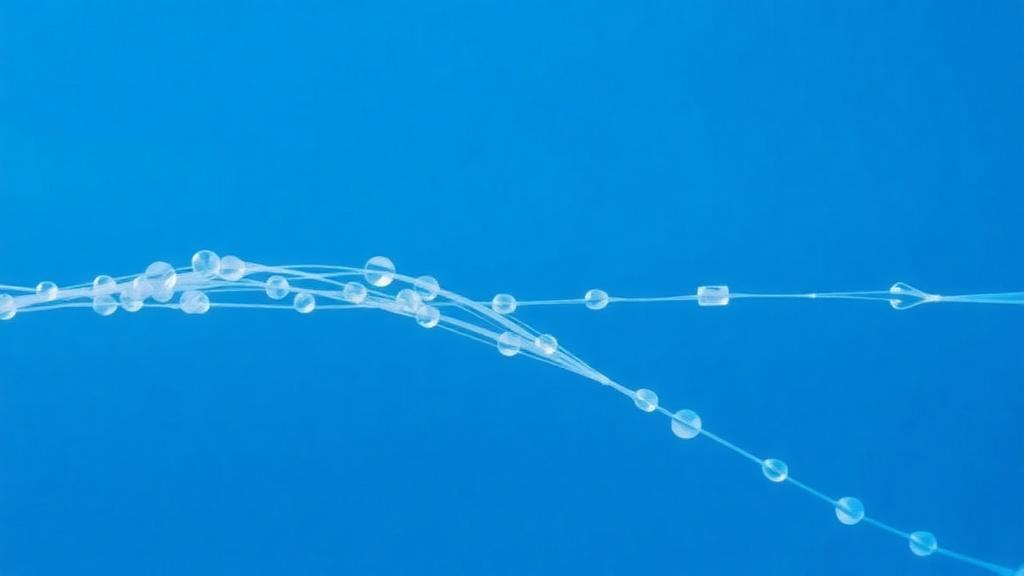
In laboratories around the world, electrospinning researchers spend countless hours chasing perfection. When a polymer solution is stretched into nanofibers by a high-voltage electric field, the gold standard is a smooth, continuous, bead-free mat. Beads strung along the fibers like pearls on a necklace are traditionally dismissed as defects, the telltale sign of a solution too dilute or a process poorly tuned. A new study published in Results in Chemistry flips that orthodoxy on its head. A team of researchers led by Richa Ranjan and Manigandan Sabapathy has shown that the very morphology electrospinners try so hard to eliminate can be deliberately engineered into a powerful weapon against pharmaceutical pollution, specifically the stubborn antibiotic chloramphenicol.
Chloramphenicol is a broad-spectrum antibiotic that has become a poster child for a growing class of environmental contaminants known as active pharmaceutical ingredients. These compounds slip into rivers, lakes, and groundwater through hospital effluents, pharmaceutical plant discharges, improperly discarded medications, landfill leachate, and urban runoff. Detected universally at trace concentrations ranging from nanograms to micrograms per liter, they resist conventional treatment. Chloramphenicol is particularly worrying because of its limited biodegradability, cytotoxicity, potential to drive antimicrobial resistance, and capacity for endocrine disruption even at vanishingly low levels. Standard remedies, from biological degradation and coagulation to ozonation and activated carbon adsorption, each carry drawbacks: they can be compound-specific, energy-intensive, incomplete, or prone to generating toxic transformation products.
The core challenge, the authors note, lies in the complex physicochemical behavior of pharmaceuticals in water. Many behave as weak acids whose charge state shifts with pH, turning from neutral molecules into negatively charged species as acidity drops. That shift can trigger electrostatic repulsion between contaminant and adsorbent, gutting removal efficiency. At trace levels, weak driving forces and competition from natural organic matter and coexisting ions compound the problem. What is needed, the researchers argue, is a multifunctional, magnetically recoverable adsorbent that can grab antibiotics quickly, selectively, and repeatedly under realistic conditions.
Enter iron oxide. Magnetite, or Fe3O4, has long attracted attention in water treatment because it does double duty: it adsorbs contaminants and, thanks to its magnetic character, can be pulled out of treated water with a simple magnet, eliminating the need for filtration or centrifugation. But bare magnetic nanoparticles come with a notorious flaw. They aggregate, clumping together and sacrificing the very active surface area that makes them useful, while also being awkward to handle and reuse. Embedding them in a polymer matrix solves much of this, providing structural stability and dispersing the particles across a larger working surface.
The team’s material is a composite of polystyrene, cellulose acetate, and Fe3O4 nanoparticles, dubbed PS+CA@Fe3O4. Fabrication begins with dissolving polystyrene and cellulose acetate in warm dimethylformamide, then dispersing the nanoparticles with vigorous stirring followed by ten minutes of probe sonication to break up agglomerates. The homogeneous suspension is then electrospun: pushed through an 18-gauge needle at 1.8 milliliters per hour under a 12-kilovolt electric field toward a rotating drum collector positioned 12 centimeters away. After roughly two to two-and-a-half hours of collection and an overnight vacuum dry at 40 degrees Celsius, the result is a fluffy, cotton-like magnetic polymeric adsorbent rather than the dense membrane most electrospinning studies aim to produce.
The deliberate choice to operate at low polymer concentration is the study’s central insight. Insufficient chain entanglement means the spinning jet cannot sustain a continuous, smooth fiber, so bead-on-string morphology emerges instead. Where conventional wisdom sees failure, the researchers see function. The spherical bead domains act as localized adsorption microenvironments rich in accessible surface, while the connecting nanofibers maintain structural connectivity throughout the network. The resulting low-density, loosely packed three-dimensional architecture offers a variety of pore sites, reduced packing density, and shortened diffusion pathways, all of which accelerate mass transfer and give chloramphenicol molecules more chances to encounter active sites on the polystyrene, cellulose acetate, and magnetite components.
A battery of characterization techniques backs up the design. Field-emission scanning electron microscopy revealed the interwoven fibrous network studded with bright-contrast spots indicating well-dispersed Fe3O4. Fourier-transform infrared spectroscopy confirmed the coexistence of all three components, with a fingerprint band near 540 to 600 wavenumbers marking Fe-O stretching from embedded magnetite. X-ray diffraction showed sharp peaks matching the spinel cubic magnetite phase with no impurity phases such as maghemite or hematite, while the amorphous polymer matrix showed up only as a featureless baseline. X-ray photoelectron spectroscopy found the surface composed of roughly 90.68 percent carbon, 6.87 percent oxygen, and 2.45 percent iron, consistent with a polymer-dominated surface carrying iron-containing species. Nitrogen adsorption measurements classified the material as mesoporous, with a BET surface area of 19.36 square meters per gram, an average pore diameter of 31.36 nanometers, and a pore volume of 0.167 cubic centimeters per gram.
Two further measurements illuminate why the material works so fast. Contact angle tests showed pristine polystyrene fibers are strongly hydrophobic at 135.09 degrees, but the composite drops to 85.50 degrees, a shift the authors attribute to oxygen-containing cellulose acetate groups. That enhanced wettability lets water move freely through the structure, speeding delivery of contaminant molecules to active sites. Meanwhile, vibrating sample magnetometry recorded saturation magnetization of about 84 electromagnetic units per gram for pure Fe3O4 and about 48 for the composite, the reduction reflecting dilution by the nonmagnetic polymer. Crucially, both samples showed negligible remanence and low coercivity, a soft-magnetic, near-superparamagnetic character that means the spent adsorbent can be recovered cleanly with a magnet and will not clump together on its own.
Adsorption performance lived up to the architectural promise. In batch experiments across initial chloramphenicol concentrations of 50 to 120 parts per million, removal climbed rapidly within the first 30 to 40 minutes, reaching roughly 70 to 80 percent for all concentrations before plateauing as available sites filled. Kinetic modeling told a clear mechanistic story: the pseudo-second-order model fit superbly, with correlation coefficients between 0.9971 and 0.9997 across the full concentration range, while the pseudo-first-order model lagged behind. That pattern points to chemisorption, surface-controlled uptake governed by site availability, likely through pi-pi stacking between the aromatic rings of polystyrene and the antibiotic, hydrogen bonding between chloramphenicol’s hydroxyl and amide groups and cellulose acetate’s oxygen functionalities, and possible electrostatic interactions. Diffusion analysis with Boyd’s model suggested external film diffusion and surface adsorption jointly control the rate, with intraparticle diffusion playing a secondary role. Equilibrium data were best described by the Langmuir isotherm, indicating predominantly monolayer adsorption, with a maximum capacity of 22.42 milligrams per gram, a figure that edges out biochars, modified clays, molecularly imprinted magnetic chitosan polymers, and carbon nanotubes reported in the literature, which top out between 10 and 21.35 milligrams per gram.
The authors are candid about the limits of their evidence. The XPS analysis was survey-level and performed only on the pristine adsorbent, so the proposed molecular interactions, while chemically plausible, remain to be confirmed by post-adsorption spectroscopy, and no direct control comparison against bead-free fibers of identical composition was included. Still, the conceptual contribution stands on its own: a defect-to-function design philosophy that treats electrospinning’s morphological instability as a tunable engineering variable rather than a nuisance. The adsorbent also showed excellent reusability and stability in the study, and its magnetic recovery addresses one of the biggest practical headaches of nanoparticle-based water treatment. The researchers caution that chloramphenicol served as a single model contaminant, and that testing in mixed pharmaceutical systems, real wastewater matrices, and continuous-flow modules is the necessary next step. If those trials succeed, the lesson of this work could ripple far beyond one antibiotic: sometimes the fastest route to a better material is not eliminating the flaw, but learning what the flaw is for.
Subject of Research: Electrospun magnetic polystyrene-cellulose acetate nanofibrous adsorbents for chloramphenicol removal from water
Article Title: Exploiting electrospinning-induced bead-on-string morphology for enhanced surface accessibility and chloramphenicol adsorption onto magnetic nanofibrous adsorbents
Article References: Ranjan, R., Kullappan, M., Gumfekar, S. P., & Sabapathy, M. (2026). Exploiting electrospinning-induced bead-on-string morphology for enhanced surface accessibility and chloramphenicol adsorption onto magnetic nanofibrous adsorbents. Results in Chemistry, 31, Article 103918. https://doi.org/10.1016/j.rechem.2026.103918
Image Credits: AI Generated
DOI: 10.1016/j.rechem.2026.103918
Keywords: electrospinning, bead-on-string morphology, chloramphenicol, magnetic adsorbent, Fe3O4 nanoparticles, water treatment, pharmaceutical pollution, adsorption kinetics, polystyrene, cellulose acetate, nanofibers, antimicrobial resistance
News Source: Bethany Barker. (October 11, 2026). Flawed Fibers, Cleaner Water: Bead-on-String Defects Turned Into Antibiotic Traps. Scienmag.