• HOME
  • NEWS
  • EXPLORE
    • CAREER
      • Companies
      • Jobs
    • EVENTS
    • iGEM
      • News
      • Team
    • PHOTOS
    • VIDEO
    • WIKI
  • BLOG
  • COMMUNITY
    • FACEBOOK
    • INSTAGRAM
    • TWITTER
Monday, May 18, 2026
BIOENGINEER.ORG
No Result
View All Result
  • Login
  • HOME
  • NEWS
  • EXPLORE
    • CAREER
      • Companies
      • Jobs
        • Lecturer
        • PhD Studentship
        • Postdoc
        • Research Assistant
    • EVENTS
    • iGEM
      • News
      • Team
    • PHOTOS
    • VIDEO
    • WIKI
  • BLOG
  • COMMUNITY
    • FACEBOOK
    • INSTAGRAM
    • TWITTER
  • HOME
  • NEWS
  • EXPLORE
    • CAREER
      • Companies
      • Jobs
        • Lecturer
        • PhD Studentship
        • Postdoc
        • Research Assistant
    • EVENTS
    • iGEM
      • News
      • Team
    • PHOTOS
    • VIDEO
    • WIKI
  • BLOG
  • COMMUNITY
    • FACEBOOK
    • INSTAGRAM
    • TWITTER
No Result
View All Result
Bioengineer.org
No Result
View All Result
Home NEWS Science News Biology

Fixing the role of nitrogen in coral bleaching

Bioengineer by Bioengineer
June 5, 2017
in Biology
Reading Time: 2 mins read
0
Share on FacebookShare on TwitterShare on LinkedinShare on RedditShare on Telegram
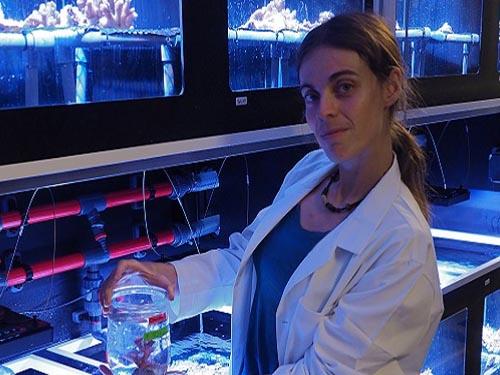
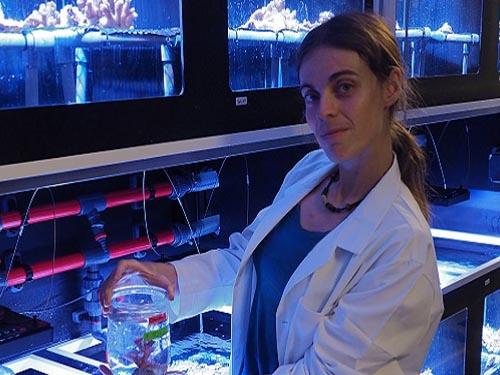
IMAGE

Credit: © 2017 Christian Voolstra

Excess nitrogen is shown to disrupt coral-algae symbiosis, triggering bleaching even in the absence of heat and light stress. With coral bleaching events intensifying as global sea temperatures rise, this is an important finding in the race to understand the mechanisms behind bleaching and ways to reduce the devastating impact on coral reefs1.

"Corals are remarkably adapted to thrive in the sun-lit, nutrient-poor waters of tropical oceans, mainly thanks to their intimate relationship with microscopic algae," said Dr. Claudia Pogoreutz of the Red Sea Research Center at KAUST. "In this relationship, corals regulate the algal growth and activity by limiting their access to nitrogen. This 'blackmailing' results in algae producing energy-rich sugars, through photosynthesis, for the coral animal."

Another microbial group–nitrogen-fixing microbes called diazotrophs–may play a key role in maintaining the productivity of the meta-organism by supplementing it with extra nitrogen for metabolism and growth. However, as increasing amounts of waste water, which is full of sugars and nitrogen, are pumped into our oceans, the delicate balance of this nitrogen cycle is in jeopardy. This could in turn exacerbate bleaching events.

The team, led by KAUST Associate Professor of Marine Science Christian Voolstra and in collaboration with scientists from University of Bremen in Germany, took a unique approach to examining how sugar enrichment and nitrogen disruption can contribute to coral bleaching by studying bleaching in the absence of heat and light stress.

"By working out how other environmental factors induce bleaching, we can identify similarities and previously overlooked processes that might explain what happens during bleaching caused by heat stress," explained KAUST Ph.D. student Nils Rädecker. "Samples from corals were placed in tanks in the KAUST aquaria labs. We added a sugar mixture to some of the tanks while others were kept as controls."

The sugar-enriched environment fueled the nitrogen-fixing microbes with extra energy, meaning they fixed more nitrogen. This excess nitrogen available to the coral animal upset the balance of nitrogen limitation to the algae, causing the breakdown of coral-algae symbiosis and triggering bleaching.

"This is the first study to highlight the importance of microbial processes like nitrogen fixation for coral health, and how disruptions to these processes may pose a previously unidentified threat under certain conditions," said Rädecker.

The researchers hope that highlighting the role of nitrogen in bleaching will prompt authorities worldwide to seriously tackle water pollution. While global climate change is undoubtedly the biggest threat to coral reefs, limiting further damage by cleaning up our oceans could help these fragile ecosystems survive.

###

Media Contact

Michelle D'Antoni
[email protected]

http://kaust.edu.sa/

Original Source

https://discovery.kaust.edu.sa/en/article/365/fixing-the-role-of-nitrogen-in-coral-bleaching http://dx.doi.org/10.1111/gcb.13695

############

Story Source: Materials provided by Scienmag

Share12Tweet8Share2ShareShareShare2

Related Posts

Uncovering C. elegans Immunity via Genetic Screens — Biology

Uncovering C. elegans Immunity via Genetic Screens

May 16, 2026
Single mother must adapt swiftly — the survival of her colony depends on it — Biology

Single mother must adapt swiftly — the survival of her colony depends on it

May 15, 2026

Why Are Nearly Everyone Right-Handed? It Might Be Linked to How We Learned to Walk

May 15, 2026

Excessive Neuronal Activity Initiates Severe Autoimmune Brain Disorder

May 15, 2026
Please login to join discussion

POPULAR NEWS

  • Research Indicates Potential Connection Between Prenatal Medication Exposure and Elevated Autism Risk

    844 shares
    Share 338 Tweet 211
  • New Study Reveals Plants Can Detect the Sound of Rain

    730 shares
    Share 291 Tweet 182
  • Salmonella Haem Blocks Macrophages, Boosts Infection

    62 shares
    Share 25 Tweet 16
  • Breastmilk Balances E. coli and Beneficial Bacteria in Infant Gut Microbiomes

    58 shares
    Share 23 Tweet 15

About

We bring you the latest biotechnology news from best research centers and universities around the world. Check our website.

Follow us

Recent News

AI Tool in Radiotherapy Advances Global Fight to Eradicate Cervical Cancer

Detecting Illicit Bitcoin Transactions with Temporal Graph Learning

New Study Reveals the Massive Economic Impact of Tuberculosis

Subscribe to Blog via Email

Enter your email address to subscribe to this blog and receive notifications of new posts by email.

Join 82 other subscribers
  • Contact Us

Bioengineer.org © Copyright 2023 All Rights Reserved.

Welcome Back!

Login to your account below

Forgotten Password?

Retrieve your password

Please enter your username or email address to reset your password.

Log In
No Result
View All Result
  • Homepages
    • Home Page 1
    • Home Page 2
  • News
  • National
  • Business
  • Health
  • Lifestyle
  • Science

Bioengineer.org © Copyright 2023 All Rights Reserved.