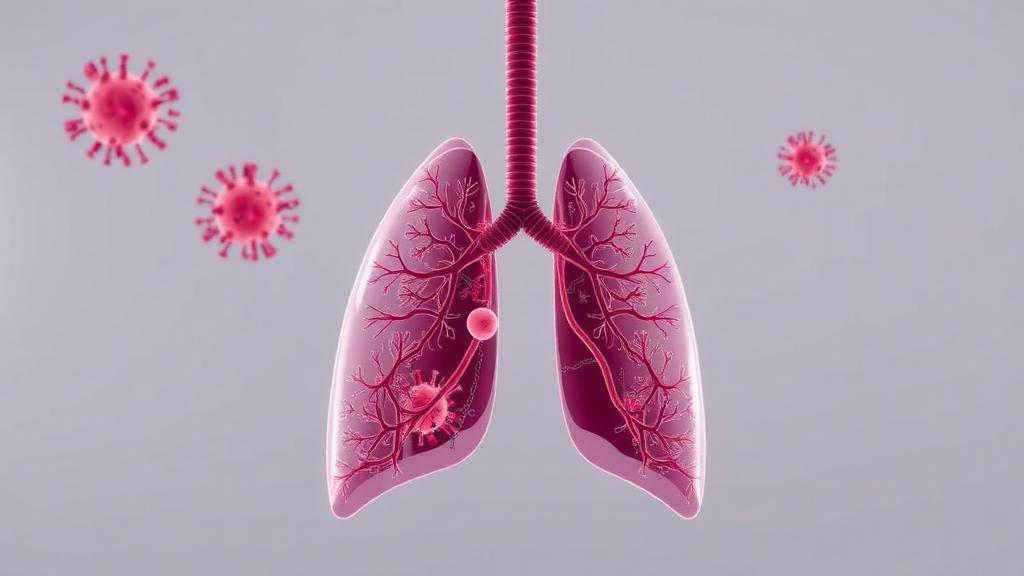
More than six years after the first reports of persistent illness following SARS-CoV-2 infection, Long COVID remains one of the most stubborn puzzles in modern medicine. Millions of people worldwide continue to live with the condition, formally known as post-acute sequelae of SARS-CoV-2 infection, or PASC, and health systems are only beginning to grapple with its long-term consequences. Now a new special issue of the British Journal of Biomedical Science brings together five original research studies that, taken together, sketch a more coherent picture of the syndrome than any single investigation has managed before. The collection spans thoracic imaging, carotid body morphology, serological biomarkers and microbiota-directed treatment, and its editors argue that the shared premise is unmistakable: Long COVID cannot be understood through any single disciplinary lens.
The clinical picture itself helps explain why progress has been so slow. Long COVID is strikingly heterogeneous, with manifestations that include debilitating fatigue, cognitive dysfunction often described as brain fog, and persistent respiratory compromise, all affecting multiple organ systems. Despite intensive research efforts, the underlying pathophysiological mechanisms remain elusive, and that gap in understanding has directly impeded the development of effective therapies. It is precisely this fragmentation that the special issue set out to address, assembling studies that approach the syndrome from complementary angles rather than competing hypotheses.
The first strand of evidence concerns the lungs, where structural damage from acute infection can linger long after the virus itself has cleared. A team led by Garg and colleagues examined survivors of severe COVID-19 acute respiratory distress syndrome and demonstrated that specific imaging patterns on computed tomography correlate with ongoing symptoms. In particular, reticulations and septal thickening, the fine net-like changes that appear when lung architecture is disrupted, were positively associated with symptomatic dyspnoea, the distressing breathlessness that many survivors report. The researchers also found that parenchymal and atelectatic bands, linear scars within the lung tissue, were associated with reduced forced vital capacity, a standard measure of how much air the lungs can hold.
What makes that study significant, the editors note, is that it moves beyond simply documenting that abnormalities persist. By linking individual CT imaging patterns to both symptomatic and functional measures, the work establishes concrete associations between what radiologists see on a scan and what patients actually feel and how well their lungs perform. That kind of correlation is a prerequisite for using imaging as a meaningful clinical tool in follow-up care, rather than as a descriptive curiosity. It also provides a framework for stratifying patients, since different patterns of lung injury may reflect different underlying processes and may therefore respond differently to future treatments.
A companion study in the same issue addresses a practical barrier to long-term lung surveillance: radiation dose. Devkota and colleagues evaluated ultra-low-dose CT, a technique that dramatically reduces radiation exposure compared with standard protocols, in patients recovering from moderate to severe acute COVID-19 pneumonia. Their results showed that ultra-low-dose CT is comparable to standard-dose CT in accurately detecting persistent lung abnormalities. The authors reported a diagnostic accuracy of 95.0 percent overall, rising to 98 percent among non-obese subjects. Those figures matter because repeated surveillance imaging is only feasible, and ethically justifiable, if the cumulative radiation burden can be kept low. A technique that preserves diagnostic performance while cutting exposure makes serial monitoring of recovering patients a far more realistic proposition for clinics and hospitals.
The special issue then widens the anatomical scope, because the abnormalities associated with Long COVID are not confined to the lungs. In a retrospective CT angiography study, Goksu and colleagues identified significantly enlarged carotid bodies in patients previously hospitalized with COVID-19 pneumonia. The carotid bodies are small paired organs at the bifurcation of the carotid arteries that sense hypoxaemia, low oxygen levels in the blood, and modulate sympathetic nervous system activity in response. Enlargement of these structures in post-COVID patients could reflect prolonged chemoreceptor stimulation resulting from the pathophysiological changes of Long COVID, suggesting that the syndrome’s reach extends well past the respiratory system into the machinery that regulates breathing and cardiovascular tone.
The carotid body finding also raises pointed mechanistic questions. These organs are rich in ACE2 receptors, the same molecular doorway that SARS-CoV-2 uses to enter cells, and they are central to chemoreception. That combination leaves open two possibilities that are not mutually exclusive: the enlargement may be the result of direct viral injury to the tissue, or of chronic hypoxic stimulation as the body adapts to persistently disturbed oxygen dynamics, or of both acting in concert. Disentangling those mechanisms will be important, because a viral injury model and a maladaptive stimulation model would point toward very different therapeutic strategies.
Moving from structure to immunology, Kawaguchi and colleagues investigated serological profiles in an effort to identify clinically useful biomarkers for Long COVID’s heterogeneous manifestations. Their study covered 275 patients with Omicron-related Long COVID, a cohort of particular interest because most of the world’s current infections involve Omicron-lineage viruses. The team found that nucleocapsid N-antibody titers were positively associated with acute disease severity and with antiviral immune responses. Conversely, lower titers of antibodies against the spike protein’s S-antigen correlated significantly with memory impairment, the brain fog that is among the most disabling of Long COVID’s neurocognitive symptoms, and with reduced quality of life.
Those results expand understanding of the immunological underpinnings of neurocognitive symptoms and suggest that a blood test capable of flagging patients at risk of cognitive sequelae may one day be feasible. The authors are careful, however, to flag the interpretive pitfalls. Vaccination status and the time elapsed since infection both shape antibody profiles, and any biomarker built on serology must account for those variables before it can be trusted in the clinic. The caution is a reminder that in a post-vaccine, repeatedly exposed population, the immune signature of Long COVID is layered over a complex history of immunological events.
Finally, the issue turns from diagnosis to treatment, and to an organ system that has become a focal point of Long COVID research: the gut. Amoroso and colleagues conducted a randomized, double-blind, placebo-controlled trial in which patients with Long COVID received four weeks of probiotic supplementation or placebo. The probiotic arm achieved a significantly greater reduction in clinically relevant fatigue scores than placebo, with 24.24 percent of treated patients reaching that threshold compared with 6.06 percent on placebo. Crucially, the clinical improvement was accompanied by concurrent changes in gut microbial taxa, in microbiota-associated metabolites and in immune-related pathways, offering a plausible biological mechanism rather than an unexplained statistical signal. The editors caution that the modest sample size warrants restraint, but they describe the result as an exciting indication that gut-directed therapies deserve serious consideration in the Long COVID treatment landscape.
Read as a whole, the five studies converge on a single conclusion that the editors of the issue emphasize: Long COVID is a syndrome of genuine complexity, and no single measurement, organ or discipline will capture it alone. Continued research using diverse and integrated methodologies, spanning imaging, immunological, physiological and microbiome-related measures, will be essential for improving the characterization, monitoring and treatment of the condition. Much remains unresolved in elucidating the underlying causes of Long COVID, let alone alleviating the burden it places on patients and health systems. But the trajectory on display in this collection, from structural imaging that predicts symptoms, to immune markers that track cognitive decline, to microbial interventions that measurably reduce fatigue, illustrates how multidisciplinary work can turn a bewildering syndrome into a set of tractable, testable questions. The British Journal of Biomedical Science has signalled its commitment to serving as a forum for exactly that kind of rigorous, cross-cutting research, and the field will need more of it if the legacy of the pandemic is to be met with answers rather than open questions.
Subject of Research: Multidisciplinary biomedical research on the pathophysiology, biomarkers and treatment of Long COVID
Article Title: Editorial: Long COVID in the biomedical sciences
Article References: Kunnath, A. P., Kavanagh, O., & Tan, S. C. (2026). Editorial: Long COVID in the biomedical sciences. British Journal of Biomedical Science, 83, Article 17822. https://doi.org/10.3389/bjbs.2026.17822
Image Credits: AI Generated
Keywords: Long COVID, PASC, SARS-CoV-2, computed tomography, carotid body, serological biomarkers, brain fog, probiotics, gut microbiome, fatigue, ARDS, British Journal of Biomedical Science
News Source: Morgan Morrow. (October 15, 2026). Five studies map the tangled biology of Long COVID, from lungs to gut. Scienmag.