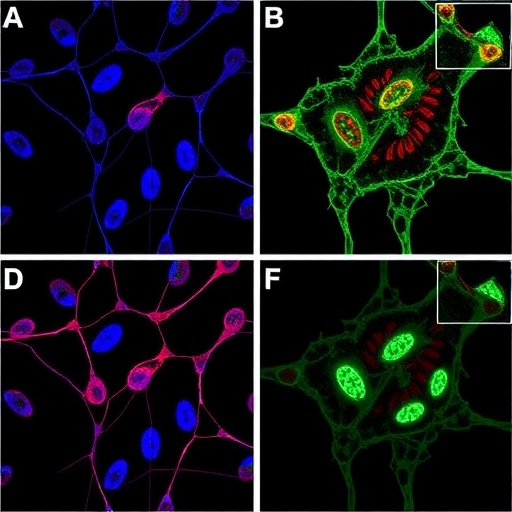
Cancer genomes are riddled with mutations, but the intricate ways these changes sculpt a tumor’s visibility to the immune system have remained enigmatic—until now. A groundbreaking study has revealed that beneath the chaotic surface of mutational variants, cancer cells actually display five dominant patterns of amino acid substitutions. These characteristic “mutation fingerprints” not only trace the origin of DNA damages but also critically shape how effectively the immune system can detect and attack a tumor, fundamentally reshaping our understanding of cancer immunology and treatment response.
Cells acquire mutations through a combination of external environmental insults—such as ultraviolet radiation from sunlight or carcinogens in tobacco smoke—and intrinsic errors during DNA replication and repair. These mutations often result in amino acid substitutions, altering proteins in subtle or profound ways. By meticulously analyzing close to 9,300 cancer genomes spanning various cancer types, researchers uncovered an unexpected order amid this molecular chaos. Nearly every tumor’s mutational landscape is dominated by one of five distinct amino acid substitution signatures, revealing a convergent protein-level consequence amidst vast genomic diversity.
This discovery goes beyond mere classification. Each substitution signature holds a unique code that influences how tumor proteins present themselves to immune cells. Some create neoantigens—novel peptides recognized as foreign by T cells—prompting a strong immune assault on the tumor. Conversely, other patterns generate less immunogenic neoantigens, enabling tumors to remain “cold” and evade immune surveillance, thereby resisting immunotherapies. This paradigm challenges the long-held assumption that the sheer number of mutations (mutational burden) predicts immunotherapy responsiveness, emphasizing instead the qualitative nature of mutational effects at the protein level.
Dr. Szilvia Juhász, leading the Cancer Microbiome Research Group at HCEMM, whose team contributed significantly to the study, explains, “Despite the complexity and diversity of mutational processes across cancers, their protein-level effects boil down to a limited set of recurring signatures. These fingerprints act like molecular barcodes, decisively shaping immune recognition and response to therapy.” Such insights offer a crucial lens for understanding the biological heterogeneity in immune engagement across tumors.
Notably, one particular signature associated with defects in DNA repair mechanisms, compounded by chemical exposures, has profound clinical significance. Tumors dominated by this pattern frequently display poor responses to immune checkpoint inhibitors, even when their mutational burden remains elevated. This dissociation between mutation quantity and immune responsiveness underscores that the functional consequences of mutations — rather than their mere existence — dictate therapeutic outcomes.
Co-first author Dr. Benjamin Papp from the HUN-REN Szeged Biological Research Centre stresses, “Evaluating mutational burden alone paints an incomplete picture. The nuanced, protein-altering consequences of specific mutations are essential for determining why many patients fail to benefit from immune-based therapies.” This reframing encourages a more detailed molecular stratification of tumors beyond simple mutation counting.
An intriguing aspect of the findings is the role of the patient’s own immune genetics in modulating tumor visibility. Variations in human leukocyte antigen (HLA) class I molecules, which present neoantigens on tumor cells, can influence the effectiveness of these distinct mutation fingerprints in engaging T cells. Certain HLA types prevalent in European populations appear to partially overcome the immune invisibility imposed by less immunogenic mutation patterns, suggesting a complex interplay between tumor genomics and host immunogenetics.
This intersection highlights the personalized nature of tumor immunity. Two patients harboring genetically similar tumors might experience starkly different immunotherapy outcomes based on their HLA repertoire and how it interacts with the tumor’s mutational signature. Dr. Máté Manczinger, who heads the Systems Immunology Research Group at the HUN-REN Szeged Biological Research Centre, summarizes, “Integrating tumor genomic profiles with the patient’s immunogenetic background is critical for the next generation of precision immunotherapies.”
Beyond its transformative scientific implications, this study offers tangible clinical and societal benefits. More precise predictions of which tumors will respond to immune checkpoint blockade or other immunotherapies could streamline treatment decisions, reduce exposure to ineffective therapies, and minimize adverse side effects. Early identification of non-responders would expedite alternative strategies, improving patient outcomes and cost-effectiveness in cancer care.
This pioneering research was a collaborative effort among the Systems Immunology Research Group at the HUN-REN Szeged Biological Research Centre, the HCEMM Cancer Microbiome Research Group, and the Evolutionary Systems Biology Research Group at the Biological Research Centre. The work exemplifies the power of interdisciplinary scientific synergy in addressing complex biomedical challenges.
Funded by prestigious grants under the European Horizon 2020 initiative and Hungarian governmental awards, including support from Semmelweis University, the University of Szeged, and the European Molecular Biology Laboratory, the study sets a new benchmark for integrating multi-omic data toward functional immunogenomics. The findings were published on January 28, 2026, in Molecular Systems Biology, marking a significant advance in the field of cancer immunology.
In sum, this research illuminates that a tumor’s immune detectability hinges not on mutation numbers alone but on the distinct protein-level “fingerprints” these mutations encode. This paradigm shift towards a qualitative understanding of mutation-driven immune engagement lays the groundwork for more personalized, effective immunotherapies tailored to both tumor genetic landscapes and patient-specific immune genotypes, heralding a new era in cancer treatment.
Subject of Research: Cells
Article Title: Five dominant amino acid substitution signatures shape tumour immunity
News Publication Date: 28-Jan-2026
Web References: http://dx.doi.org/10.1038/s44320-026-00193-x
Image Credits: Máté Manczinger, HUN-REN Szeged Biological Research Centre (BRC)
Keywords: Cancer immunology, DNA repair, Loss of function mutations, Immunogenicity, Cancer immunotherapy
Tags: amino acid substitution patternscancer immunology advancementscancer treatment response factorsenvironmental causes of mutationsgenomic diversity in tumorsImmune Evasion Mechanismsintrinsic DNA replication errorsmutational landscapes in cancernovel cancer research findingstumor detection by immune systemtumor-specific neoantigensunderstanding tumor immunogenicity