


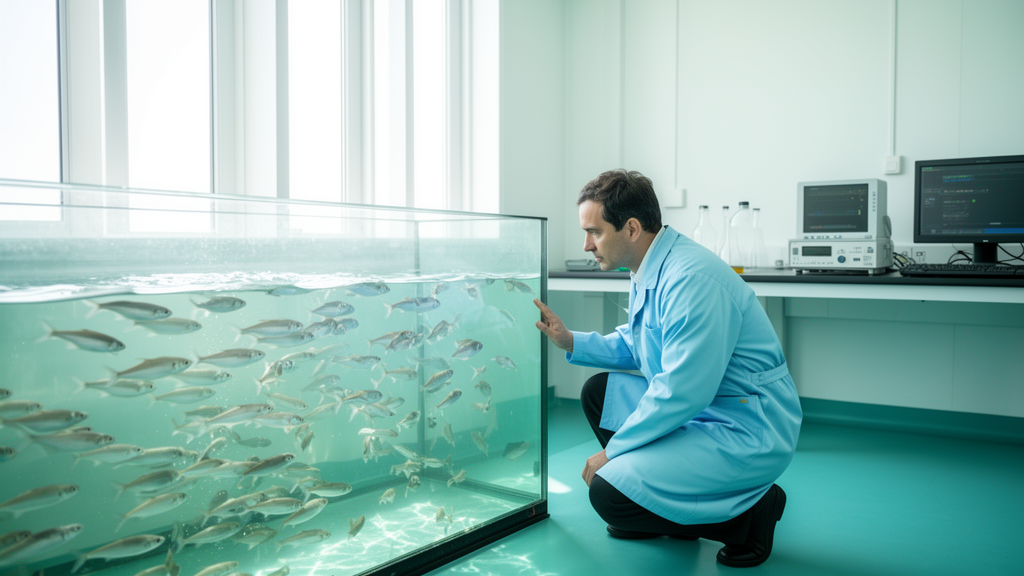
Fish are among the most widely used animals in research and aquaculture, yet many aspects of their welfare remain poorly understood. A perspective article published in Frontiers in Physiology summarizes the outcomes of the Swiss Fish Welfare Symposium 2026, a meeting that brought together researchers, animal caretakers, veterinarians, regulators, and industry representatives to take stock of the field and identify priorities for improving the lives of experimental and farmed fish.
According to the authors, the field has recently undergone a conceptual shift. Welfare was once framed primarily around health and disease prevention, but recent years have seen a shift toward concepts of welfare that include behavior, affective states, cumulative lifetime experiences, and positive welfare.
Several structural challenges dominate the field. The taxonomic diversity of fishes is a current challenge for the field, according to the authors. The dominance of zebrafish as a model species is another challenge the authors identify. The authors also identify the translation of welfare concepts across experimental, applied, and industrial settings as a further challenge.
The symposium participants identified substantial knowledge gaps in several concrete areas: welfare assessment, environmental enrichment, euthanasia methods, pain management and analgesia, and the implementation of evidence-based refinement measures.
A recurring theme of the meeting was the mismatch between idealized research and practical reality. Speakers stressed that recommendations developed under idealized conditions often fail to reflect the practical realities of research facilities and aquaculture systems. Presentations emphasized the need for the development of cumulative and species-specific welfare assessment tools.
The meeting also focused on what drives change within institutions. Participants identified a Culture of Care, improved knowledge exchange, and incentive structures to reward refinement as drivers of change.
More broadly, the symposium revealed what the authors describe as a research field in transition—from compliance-based approaches, in which meeting regulatory requirements defines success, toward a vision of welfare that encompasses both animal and human well-being.
The authors conclude that bridging the gaps between fundamental research, regulation, husbandry practice, and industry is essential if welfare improvements are to be both evidence-based and implementable. As a perspective piece, the article reports the consensus views and priorities identified by symposium participants rather than new experimental findings; its contribution lies in mapping where the field stands, where the evidence is thin, and where future research and institutional effort are most likely to yield concrete gains for fish used in science and aquaculture.
Subject of Research: Fish welfare in research and aquaculture, as summarized from the Swiss Fish Welfare Symposium 2026
Article Title: Advancing experimental fish welfare: insights from the Swiss fish welfare meeting 2026
Article References: Kirchmaier, B., D’Angelo, L., Buatois, A., Delalay, G., Diserens, N., Friedrich, R. W., Lundström-Stadelmann, B., Monteiro, J., Rohrer, Y., Tschirren, L., Voelkl, B., Valentin, G., Zbinden-Hauzenberger, A., Wismer, S., & Adrian-Kalchhauser, I. (2026). Advancing experimental fish welfare: insights from the Swiss fish welfare meeting 2026. Frontiers in Physiology, 17, Article 1917263. https://doi.org/10.3389/fphys.2026.1917263
Image Credits: AI Generated
DOI: 10.3389/fphys.2026.1917263
Keywords: fish welfare, zebrafish, aquaculture, laboratory animals, environmental enrichment, Culture of Care, welfare assessment, euthanasia, analgesia, refinement, animal research, Swiss Fish Welfare Symposium
News Source: Drew Townsend. (October 30, 2026). Fish Welfare Research Shifts From Compliance to Wellbeing, Swiss Symposium Finds. Scienmag.



