More than six decades after scientists first coaxed rainbow trout cells into permanent growth in a laboratory dish, fish cell lines are quietly becoming one of the most versatile tools in modern biology. A comprehensive review published in Blue Biotechnology traces the arc of this field from the landmark establishment of the RTG-2 cell line by Wolf and Quimby in 1962 to a present-day landscape of roughly 700 cell lines derived from species as varied as dwarf gourami, Japanese flounder and the two-spotted astyanax. What began as a niche technique for isolating fish viruses has matured into a platform that touches virology, toxicology, carcinogenesis, drug development, genetic engineering and even the emerging science of cell-based seafood.
The appeal of fish cells rests on several practical advantages over their mammalian counterparts. Fish cell cultures tolerate a wide range of temperatures and hypoxic conditions, making them easier to maintain and adapt to different experimental demands. The zebrafish genome shares roughly 80 percent similarity with the human genome, which positions fish-derived lines as credible models for interdisciplinary biomedical questions. Model organisms such as zebrafish and medaka bring additional strengths: they are highly fecund, spawn frequently under light-controlled conditions, reach sexual maturity in just two to three months, and produce transparent embryos that allow researchers to monitor gene expression in living tissues without sacrificing the animal. Their genomes, which are 20 to 40 percent larger than those of mammals, also make them uniquely suitable for large-scale mutagenesis studies among vertebrates.
Establishing a fish cell line is only the beginning; knowing exactly what is growing in the flask is equally critical. The review emphasizes three intrinsic properties that shape both safety and reliability: the species of origin, the tissue of origin, and the culture status. Species barriers matter because pathogens tend to be host-specific, and cultures genetically closer to humans carry higher risks. Tissue origin matters because cell types differ enormously in natural lifespan, from intestinal cells that survive days to liver cells that persist indefinitely. Culture status matters because primary cultures offer the most faithful representation of in vivo biology but only within a narrow window before they senesce. To confirm identity and provenance, researchers now deploy random amplified polymorphic DNA analysis, microsatellite DNA profiling, and sequencing of mitochondrial 18S and 16S rRNAs, supplemented by proteomic approaches that use two-dimensional gel electrophoresis and protein expression signatures to distinguish one line from another.
One of the field’s central technical challenges is senescence. Normal somatic cells stop dividing after a fixed number of divisions, driven by two intertwined mechanisms: cell-cycle arrest controlled by tumour suppressor pathways such as p16INK4a/Rb and p19ARF/p53, and the progressive shortening of telomeres caused by the end-replication problem during chromosome duplication. Immortalization strategies aim to bypass both. The favoured approach expresses the catalytic telomerase subunit TERT, which rebuilds and maintains telomeres and allows cells to evade replicative senescence while preserving genetic stability and key phenotypic markers. Viral oncogenes, including simian virus-40 and adenovirus E1A and E1B, offer an alternative route across species. In fish, the strategy has a track record: channel catfish leukocyte lines were among the first shown to carry constitutively high telomerase activity, and an immortal grouper cell line from Epinephelus coioides was patented in 2002 after researchers documented characteristic changes in chromosomal distribution, plating efficiency and serum requirements.
Genetic engineering is where fish cell lines are now advancing fastest, though unevenly. CRISPR-Cas9 has transformed genome editing across biology, and fish applications are accumulating: researchers have knocked out myostatin in species ranging from model fish to marine species, disrupted the mstnb gene in Nile tilapia, and used pre-assembled Cas9 ribonucleoprotein complexes to edit medaka cells. The commercial stakes are visible in Japan, where a collaboration involving Kyoto University, Kinki University and Regional Fish Co. applied CRISPR knockout of a muscle-growth inhibitor gene to red sea bream, producing fish with skeletal muscle mass increased up to 17 percent, an edible portion 1.2 to 1.6 times larger than conventional varieties, and roughly 14 percent better feed utilization. Yet the review is candid that fish cell lines lag behind mammalian ones in this arena, largely because transfection efficiency remains low, which limits both gene editing throughput and the use of edited lines for virus production in vaccine development.
In virology and disease management, fish cell lines remain the gold standard. Viruses are obligate intracellular parasites that depend entirely on host cell machinery, so cell cultures are indispensable for detection, identification, propagation, isolation and characterization of piscine pathogens, a point codified in Office International des Epizooties standards. Nine cell lines established from five salmonid species, including CHSE-214 from chinook salmon and RTH-149 from rainbow trout, have been maintained in culture for up to 21 years and underpin much of the research on viral diseases in farmed salmonids. Gill-derived lines have opened organ-specific windows on pathogen biology: RTgill-W1 cells supported high-yield growth of Neoparamoeba pemaquidensis, the agent behind amoebic gill disease, while the RGE-2 line from Atlantic salmon gills was created specifically to study that same infection. Cell lines have likewise enabled work on intracellular parasites such as the microsporidian Loma salmonae and the ectoparasites Ichthyophthirius multifiliis and Amyloodinium ocellatum.
Drug discovery and vaccine development round out the applied portfolio. Cell-based assays built on fish lines allow high-throughput screening of candidate compounds, dose optimization and pharmacological analysis without sacrificing animals. Antiviral screening has produced tangible results: acyclovir proved effective against channel catfish virus in Chinook salmon embryo cells and showed potent activity blocking cyprinid herpesvirus-3 infection in koi fin and common carp brain cells, while exopolysaccharides from the alga Arthrospira platensis reduced the same virus’s multiplication in carp brain cultures. On the vaccine front, a formalin-inactivated vaccine against red sea bream iridovirus was produced from virus grown in grunt fin cells, and several inactivated or attenuated vaccines against iridoviruses and nervous necrosis viruses have reached commercialization. Fish cell cultures infected with engineered baculoviruses can act as miniature protein factories, and because they are more cost-effective than mammalian cultures for large-scale production of biologicals, the review argues they merit far wider use.
Toxicology and cancer research exploit fish cells’ position as genuine sentinels of the aquatic environment. RTgill-W1 cells have been used to evaluate industrial and petroleum refinery wastewater, polycyclic aromatic hydrocarbons, and metals including copper, cadmium, zinc, iron and nickel; work on copper toxicity suggested that viability loss and genotoxicity in trout gill cells may stem partly from reactive oxygen species. Rainbow trout liver cells and hepatoma lines have revealed how compounds such as aflatoxin B1 are biotransformed by cytochrome P450 enzymes into their carcinogenic metabolites, and the RTL-W1 line shows greater sensitivity to PAHs than primary hepatocyte cultures. In cancer biology, fish lines have illuminated procarcinogen activation, DNA repair and the evolution of proto-oncogenes, exemplified by the cloning of a transcriptionally active c-myc homolog in rainbow trout that now serves as a probe for screening fish tumours for chromosomal abnormalities.
The review closes with a forward-looking agenda that spans nutrition science, reproductive biotechnology and cellular agriculture. Myoblast, hepatocyte and adipocyte cultures are dissecting nutrient-sensing pathways such as mTOR and autophagy, while Sertoli and spermatogonial stem cell lines are clarifying the genetic and epigenetic control of sperm development. The boldest vision is cell-based seafood, a concept NASA first floated as a way to grow goldfish muscle protein for long space missions; muscle cell lines from species such as rohu are now being developed as building blocks, though the field still needs serum-free media formulations and bioreactors tailored to fish cells. Realizing this potential, the authors stress, requires solving persistent problems of misidentification, cross-contamination and poor documentation through rigorous authentication, from STR profiling and karyotyping to mycoplasma screening. With fish representing nearly half of all vertebrate species, the untapped reservoir of cell lines may prove as valuable to twenty-first-century biomedicine as it has been to aquaculture.
Subject of Research: Development, characterization and applications of fish cell lines in biotechnology, genetic engineering, toxicology and disease research
Article Title: Beyond the petri dish: fish cell lines pioneering advances in biotechnology, genetic engineering, toxicity and disease solutions
Article References: Mushtaq, M. W., Bhat, I. A., Rather, M. A., Khan, I. A., Bhat, R. A. H., & Iqbal, G. (2025). Beyond the petri dish: fish cell lines pioneering advances in biotechnology, genetic engineering, toxicity and disease solutions. Blue Biotechnology, 2(1), Article 1. https://doi.org/10.1186/s44315-025-00022-0
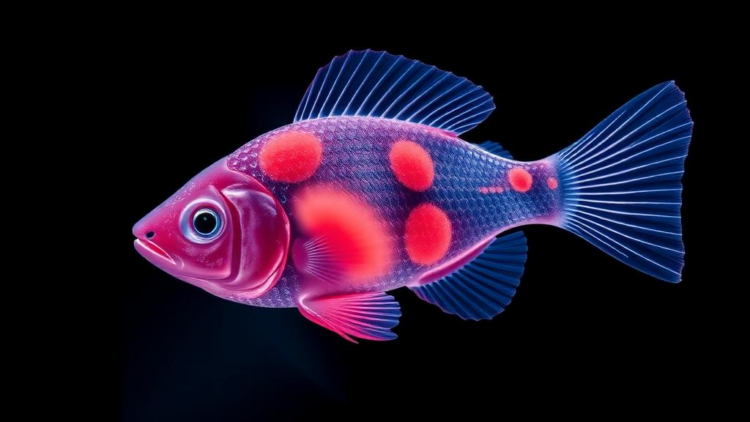
Image Credits: AI Generated
DOI: 10.1186/s44315-025-00022-0
Keywords: fish cell lines, aquaculture, cell culture, CRISPR-Cas9, immortalization, toxicology, virology, vaccine development, zebrafish, genetic engineering, cell-based seafood, carcinogenesis
Cite Scienmag News
APA MLA Chicago
Juliet Wilcox. (October 3, 2026). Fish Cell Lines Move Beyond the Petri Dish to Drive Biotech, Toxicology and Disease Research. Scienmag. https://scienmag.com/fish-cell-lines-move-beyond-the-petri-dish-to-drive-biotech-toxicology-and-disease-research/
Juliet Wilcox. “Fish Cell Lines Move Beyond the Petri Dish to Drive Biotech, Toxicology and Disease Research.” Scienmag, 3 October 2026, https://scienmag.com/fish-cell-lines-move-beyond-the-petri-dish-to-drive-biotech-toxicology-and-disease-research/. Accessed 3 October 2026.
Juliet Wilcox. “Fish Cell Lines Move Beyond the Petri Dish to Drive Biotech, Toxicology and Disease Research.” Scienmag. October 3, 2026. https://scienmag.com/fish-cell-lines-move-beyond-the-petri-dish-to-drive-biotech-toxicology-and-disease-research/
Copy citation Download RIS
Tags: advantages of fish cell cultures over mammalian cellsaquaculturecarcinogenesiscell culturecell-based seafoodcell-based seafood developmentCRISPR-Cas9fish cell culture applicationsfish cell linesfish cell lines for carcinogenesis studiesfish cell lines for drug developmentfish cell lines for toxicology testingfish cell lines in genetic engineeringfish cell lines in virology researchfish-derived cell lines in biotechnologyGenetic Engineeringhistory and evolution of fish cell linesimmortalizationtoxicologyVaccine developmentvirologyzebrafishzebrafish genome similarity to humans