Mucosal surfaces are the front lines of vertebrate immunity, and the mechanism by which antibodies cross the epithelial barrier to patrol those surfaces has long been considered one of immunology’s elegant conserved systems. In mammals, the polymeric immunoglobulin receptor, or pIgR, ferries immunoglobulin M and immunoglobulin A across mucosal epithelia, and this transport was thought to depend absolutely on a small accessory protein called the joining chain, or J-chain. A new study published in Cellular and Molecular Life Sciences by Shun Yang, Luchuan Zhao, Hengchu Ren, Yuanxin Ma, Mengmeng Huang and Hui Fei of Zhejiang Sci-Tech University in Hangzhou now shows that in teleost fish, the bony fish lineage that includes most familiar aquatic species, this rule does not hold. Their structural and biochemical analyses reveal that teleost pIgR and IgM interact directly, without any requirement for the J-chain, through a mechanism that appears to represent a primordial solution to the problem of mucosal antibody transport.
The significance of the finding lies in what it says about evolutionary history. Immunoglobulin M is the most ancient and widely distributed antibody class in jawed vertebrates, playing a central role both in circulating humoral immunity and in mucosal defense. Yet its architecture has shifted considerably over hundreds of millions of years. In mammals, IgM circulates as a pentamer or hexamer of antibody units, and the J-chain acts as a molecular linchpin that both stabilizes the polymer and provides the docking site recognized by pIgR. When pIgR binds a J-chain-containing IgM polymer on the basolateral surface of an epithelial cell, the receptor-antibody complex is internalized, shuttled across the cell, and released at the mucosal surface, where the receptor’s extracellular portion remains attached as the secretory component. That pathway, in the mammalian version, is strictly J-chain dependent.
Teleost fish complicate this tidy picture. Their IgM is not a pentamer but a tetramer, assembled from four antibody units, and earlier work had established that teleost IgM and pIgR can still interact even though the fish joining chain does not appear to mediate the recognition in the way it does in mammals. How a receptor could recognize a polymeric antibody without the accessory chain that mammalian systems rely on remained an open question, and it is precisely this question that the Zhejiang team set out to answer using structural biology and biochemical characterization of the two proteins.
The first surprise concerns the architecture of the receptor itself. Mammalian pIgR is a multi-domain protein, with its extracellular region built from several immunoglobulin-like domains that cooperate to capture polymeric ligands. Teleost pIgR, by contrast, is a stripped-down version comprising only two immunoglobulin-like domains, designated D1 and D2. The researchers showed that this minimal two-domain receptor nevertheless binds directly and specifically to the Cμ4 domain of tetrameric IgM, the constant-region domain that in mammalian systems forms part of the J-chain-dependent recognition surface. Both D1 and D2 contribute to the interaction, meaning that the compact fish receptor uses its entire extracellular apparatus to grip the antibody.
The second and arguably more striking surprise is the stoichiometry of the complex. In mammals, one pIgR molecule engages one IgM polymer in a one-to-one relationship, a monovalent engagement that reflects the single J-chain-dependent docking site on the antibody. The new analyses reveal an unconventional two-to-one arrangement in teleosts: a single IgM tetramer simultaneously engages two pIgR molecules. This multivalent engagement means the fish antibody can be gripped by two receptors at once, a configuration that sharply contrasts with the monovalent mammalian complex and suggests that the ancestral transport system operated with a different geometric logic than the one that evolved later in tetrapods.
Perhaps the most subtle discovery is that the two receptor molecules bound to one IgM tetramer are not interchangeable in the details of their contacts. The two pIgR molecules attach to the tetramer in an approximately symmetrical overall arrangement, occupying equivalent positions on the antibody scaffold. However, when the researchers examined which amino acids actually mediate each interaction, they found that the key residues involved are not entirely identical between the two binding sites. One pIgR molecule relies more heavily on its D1 domain to hold onto the IgM tetramer, while the other depends more on its D2 domain. In other words, the apparent symmetry of the complex conceals an asymmetry at the level of individual atomic contacts, with each receptor exploiting a different portion of its small two-domain toolkit.
This kind of asymmetric multivalency has interesting mechanistic implications. A two-to-one complex in which each receptor uses a different domain-dominant binding mode would be expected to have distinctive avidity properties compared with a one-to-one interaction. Multivalent engagement can increase the overall stability of a complex through avidity effects, because both receptors must disengage simultaneously for the antibody to be released. At the same time, the fact that the two sites use partially distinct residue sets implies a degree of functional specialization within the complex, hinting that the teleost system may fine-tune binding through contributions that are distributed unevenly across the receptor’s two domains rather than concentrated in a single dominant interface.
Placed in an evolutionary frame, the findings sketch a plausible trajectory for how mucosal antibody transport evolved. The teleost mechanism, which dispenses with the J-chain and achieves recognition through direct contacts between a minimal two-domain receptor and the Cμ4 region of a tetrameric IgM, looks like a primordial solution to the transport problem. As vertebrates diversified, the system appears to have been remodeled: the antibody polymerization state changed, the J-chain became an essential adaptor, and the receptor expanded and refined its domain architecture so that a single receptor molecule could recognize a single polymer in a strictly J-chain-dependent fashion. The contrast between the multivalent, J-chain-independent teleost complex and the monovalent, J-chain-dependent mammalian complex therefore delineates two evolutionary endpoints of the same biological function, with the fish system preserving what the authors describe as a primordial interaction mechanism.
The work also carries practical weight beyond evolutionary theory. Teleost fish are enormously important in aquaculture, and mucosal immunity determines how farmed fish resist pathogens at the gill, gut and skin surfaces, the primary entry points for many aquatic pathogens. Understanding precisely how IgM is moved across epithelial barriers in fish could inform vaccine design and disease-control strategies in aquaculture, where mucosal antibody delivery is a key determinant of protective immunity. Moreover, because the Cμ4 domain and the pIgR binding interface are conserved in broad outline across vertebrates, defining the atomic contacts in the fish system may illuminate features of the mammalian interaction that are difficult to isolate when the J-chain dominates the picture.
Technically, the study combined structural analysis with biochemical validation to reach its conclusions, mapping the binding interface to the Cμ4 domain, demonstrating the participation of both D1 and D2, and establishing the two-to-one stoichiometry and the domain-dominant asymmetry of the two bound receptors. The research was supported by the National Natural Science Foundation of China under grant number 32102824, and the article was published open access, received on 30 March 2026, accepted on 1 October 2026 and published on 9 October 2026. By resolving how a minimal receptor grips a tetrameric antibody without the accessory chain that mammals deem indispensable, the study adds a missing chapter to the story of mucosal antibody evolution, showing that the elegant J-chain-dependent system of mammals is not the only way, and probably not the original way, that vertebrates armed their mucosal surfaces with antibody.
Subject of Research: J-chain-independent interaction between teleost pIgR and IgM and its implications for mucosal antibody evolution
Article Title: Interaction mechanism between teleost pIgR and IgM provides new insights on mucosal antibody evolution
Article References: Yang, S., Zhao, L., Ren, H., Ma, Y., Huang, M., & Fei, H. (2026). Interaction mechanism between teleost pIgR and IgM provides new insights on mucosal antibody evolution. Cellular and Molecular Life Sciences. https://doi.org/10.1007/s00018-026-06478-6
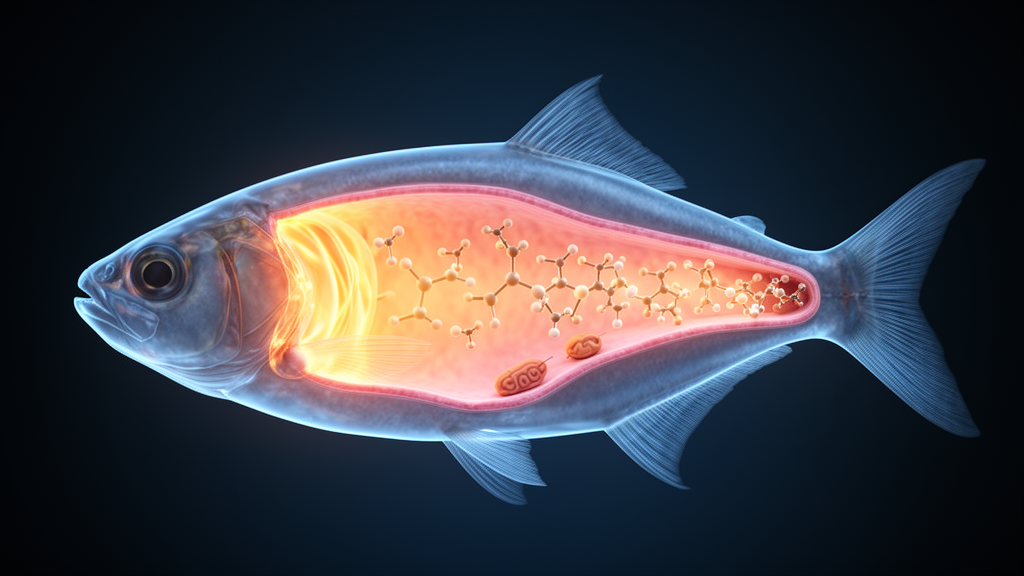
Image Credits: AI Generated
DOI: 10.1007/s00018-026-06478-6
Keywords: immunoglobulin M, polymeric immunoglobulin receptor, teleost, joining chain, mucosal immunity, Cμ4 domain, protein structure, stoichiometry, evolution, antibody transport, secretory immunity, aquaculture
News Source: Kristina Jarvis. (October 9, 2026). Fish Antibody Transport Reveals an Ancient Secret of Mucosal Immunity. Scienmag.