The ability to regulate body temperature, a trait all mammals and birds have today, may have evolved among some dinosaurs early in the Jurassic period about 180 million years ago, suggests a new study led by UCL and University of Vigo researchers.
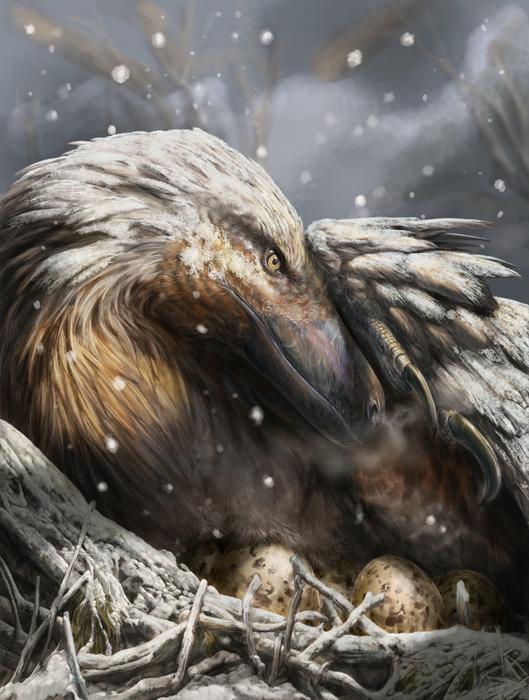
Credit: Davide Bonadonna/Universidade de Vigo/UCL
The ability to regulate body temperature, a trait all mammals and birds have today, may have evolved among some dinosaurs early in the Jurassic period about 180 million years ago, suggests a new study led by UCL and University of Vigo researchers.
In the early 20th century, dinosaurs were considered slow-moving, “cold-blooded” animals like modern-day reptiles, relying on heat from the sun to regulate their temperature. Newer discoveries indicate some dinosaur types were likely capable of generating their own body heat but when this adaptation occurred is unknown.
The new study, published in the journal Current Biology, looked at the spread of dinosaurs across different climates on Earth throughout the Mesozoic Era (the dinosaur era lasting from 230 to 66 million years ago), drawing on 1,000 fossils, climate models and the geography of the period, and dinosaurs’ evolutionary trees.
The research team found that two of the three main groupings of dinosaurs, theropods (such as T. rex and Velociraptor) and ornithischians (including relatives of the plant eaters Stegosaurus and Triceratops), moved to colder climates during the Early Jurassic, suggesting they may have developed endothermy (the ability to internally generate heat) at this time. In contrast, sauropods, the other main grouping which includes the Brontosaurus and the Diplodocus, kept to warmer areas of the planet.
Previous research has found traits linked to warm-bloodedness among ornithischians and theropods, with some known to have had feathers or proto-feathers, insulating internal heat.
First author Dr Alfio Alessandro Chiarenza, of UCL Earth Sciences, said: “Our analyses show that different climate preferences emerged among the main dinosaur groups around the time of the Jenkyns event 183 million years ago, when intense volcanic activity led to global warming and extinction of plant groups.
“At this time, many new dinosaur groups emerged. The adoption of endothermy, perhaps a result of this environmental crisis, may have enabled theropods and ornithischians to thrive in colder environments, allowing them to be highly active and sustain activity over longer periods, to develop and grow faster and produce more offspring.”
Co-author Dr Sara Varela, of the Universidade de Vigo, Spain, said: “Theropods also include birds and our study suggests that birds’ unique temperature regulation may have had its origin in this Early Jurassic epoch.
“Sauropods, on the other hand, which stayed in warmer climates, grew to a gigantic size at around this time – another possible adaptation due to environmental pressure. Their smaller surface area to volume ratio would have meant these larger creatures would lose heat at a reduced rate, allowing them to stay active for longer.”
In the paper, the researchers also investigated if sauropods might have stayed at lower latitudes to eat richer foliage unavailable in colder polar regions. Instead, they found sauropods seemed to thrive in arid, savannah-like environments, supporting the idea that their restriction to warmer climates was more related to higher temperature and then to a more cold-blooded physiology. During that time, polar regions were warmer, with abundant vegetation.
The Jenkyns event occurred after lava and volcanic gasses erupted from long fissures in the Earth’s surface, covering large areas of the planet.
Co-author Dr Juan L. Cantalapiedra, of the Museo Nacional de Ciencias Naturales, Madrid, Spain, said: “This research suggests a close connection between climate and how dinosaurs evolved. It sheds new light on how birds might have inherited a unique biological trait from dinosaur ancestors and the different ways dinosaurs adapted to complex and long-term environmental changes.”
The study involved researchers from UCL, University of Vigo, the University of Bristol and the Museo Nacional de Ciencias Naturales in Madrid, and received funding from the European Research Council, the Spanish Ministry of Research, the Natural Environment Research Council and the Royal Society.
Journal
Current Biology
DOI
10.1016/j.cub.2024.04.051
Method of Research
Data/statistical analysis
Subject of Research
Not applicable
Article Title
Early Jurassic origin of avian endothermy and thermophysiological diversity in dinosaurs
Article Publication Date
15-May-2024