For decades, the harsh reality of organ transplantation has been a lifelong commitment to immunosuppressive medications—drugs that prevent the body’s immune system from rejecting a newly transplanted liver but at significant cost to the patient’s overall health. Now, an extraordinary leap forward, pioneered by teams at the University of Pittsburgh and UPMC, illuminates a promising path toward immune tolerance in liver transplant recipients. In a groundbreaking phase I/IIa clinical trial, these researchers have demonstrated the potential to safely and effectively wean patients off immunosuppressants entirely by harnessing the donor’s immune cells to “educate” the recipient’s immune system, marking a pivotal milestone in transplantation medicine.
The clinical trial, recently detailed in Nature Communications, embraced a profound scientific concept: preconditioning the recipient’s immune system to accept the donor organ as self rather than foreign. This approach centers around the infusion of donor-derived regulatory dendritic cells (DCregs) into the recipient prior to liver transplantation. Derived from monocytes filtered from the donor’s bloodstream, these specialized immune cells modulate the recipient’s immune reactions, promoting a state of tolerance toward the donor liver tissue. Forty-one years after the late Dr. Thomas Starzl’s visionary insights into transplant tolerance, this clinical investigation rekindles hope that immunosuppressant elimination could become the norm for many recipients.
Liver transplantation, unlike many other organ transplants, uniquely benefits from the organ’s inherent regenerative ability. Healthy donors can safely give a portion of their liver to recipients, with both regenerating to functional volumes post-surgery—a biological marvel that enables living-donor liver transplantation (LDLT). UPMC leads the nation in this field, having conducted 89 living-donor liver transplants in 2025 alone. Yet, despite the regenerative power of the liver, post-transplant immunosuppression remains a universal necessity to prevent devastating organ rejection.
Immunosuppressive drugs, while lifesaving, come at an immense physiological price. Their long-term administration is frequently linked to kidney damage, increased vulnerability to infections and malignancies, metabolic derangements like diabetes, and overall diminished quality of life. Recognizing this, the team led by Distinguished Professor Angus Thomson and clinical director Abhinav Humar endeavored to explore the feasibility of instilling immune tolerance through a novel cellular therapy. This approach represents a paradigm shift, moving away from blanket immune suppression toward tailored immune system education.
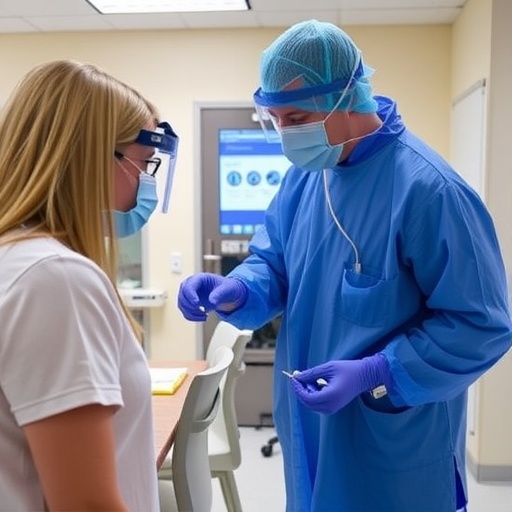
The trial recruited 13 LDLT patients, who received an infusion of DCregs harvested from their respective donors approximately one week before their scheduled transplant surgery. These regulatory dendritic cells possess the unique ability to induce immune “calmness” by controlling the activation of T cells that are typically responsible for organ rejection. By delivering this cellular therapy ahead of transplantation, the team sought to prime the recipient’s immune system to tolerate the new liver, effectively instructing it to recognize the graft as part of the self.
One year post-transplant, the patients underwent rigorous immunological testing to assess their eligibility for immunosuppressive drug tapering. Of the 13 patients, 8 were deemed fit for gradual withdrawal, with 4 successfully achieving complete cessation of immunosuppressants. Among these, 3 patients have remained off immunosuppressive therapy for over three years without any signs of organ rejection—an unprecedented breakthrough demonstrating the therapy’s long-term potential. This yields a rate of tolerance induction of 37.5% in the withdrawal-eligible cohort, significantly higher than the historical 13% seen in similar patients not receiving the cell infusion.
While these outcomes are undeniably promising, the researchers are cautious to emphasize that the present results are preliminary and exploratory. The trial’s small size and early-phase design preclude definitive conclusions regarding the therapy’s efficacy. Nonetheless, the findings lay an essential foundation for larger, randomized controlled trials designed to compare DCreg infusion head-to-head with the current standard of care, potentially revolutionizing liver transplantation protocols.
The research team also envisions several innovative directions for future exploration. One hypothesis is that administering DCregs post-transplant, rather than exclusively before, may enhance immunological outcomes. They also contemplate utilizing DCregs from deceased donors to expand the therapy’s accessibility. Moreover, investigating alternative immunosuppressive drugs that might synergize more effectively with DCregs could optimize tolerogenic induction. These avenues may substantially improve the proportion of recipients who can safely discontinue immunosuppressants.
This study underscores the deep collaborative ethos driving transplantation science forward. Led by Angus Thomson and Abhinav Humar, the UPMC and University of Pittsburgh teams integrate expertise in surgery, immunology, and clinical translational research. Their commitment honors the legacy of Dr. Thomas Starzl, who three decades ago first championed the dream of immune tolerance in transplantation. Now, the dream edges closer to clinical reality, offering the transplant community, and most importantly patients, new hope for minimizing lifelong drug burdens and enhancing post-surgical health.
The implications of this work extend beyond liver transplantation. The ability to induce durable immune tolerance through tailored cellular therapies may herald a new era for organ transplantation at large, mitigating the need for lifelong immunosuppression across multiple organ systems. Furthermore, this approach could illuminate pathophysiological mechanisms and therapeutic opportunities within numerous immune-mediated diseases where tolerance induction remains a coveted goal.
As the team advances plans for more extensive clinical trials, they invite collaboration with other transplantation centers worldwide to expedite and broaden application of this transformative strategy. The potential to significantly reduce morbidity associated with immunosuppressive drugs through scientifically precise immune system education represents a monumental stride for translational medicine, with ripple effects expected throughout immunology and regenerative science.
In summary, this pioneering phase I/IIa trial demonstrates that donor-derived regulatory dendritic cell infusion prior to living-donor liver transplantation is feasible, safe, and capable of enabling immunosuppressant withdrawal in a meaningful subset of recipients. With continued refinement and validation through rigorous clinical studies, this approach could ultimately redefine the standard of care in organ transplantation, transforming the lives of countless patients grappling with the dual challenges of organ failure and the burdens of immunosuppression.
Subject of Research: Living-donor liver transplantation, immune tolerance induction, regulatory dendritic cell therapy, immunosuppressant withdrawal
Article Title: Donor-derived regulatory dendritic cell infusion and early immunosuppressive drug withdrawal in living-donor liver transplantation: a phase I/IIa trial
News Publication Date: 17-Apr-2026
Web References:
https://doi.org/10.1038/s41467-026-71280-8
https://www.upmc.com/services/transplant/services/living-donor/liver
https://stiresearch.health.pitt.edu/
https://enterprises.upmc.com/
References:
Humar, A., Thomson, A., et al. (2026). Donor-derived regulatory dendritic cell infusion and early immunosuppressive drug withdrawal in living-donor liver transplantation: a phase I/IIa trial. Nature Communications. https://doi.org/10.1038/s41467-026-71280-8
Image Credits: UPMC
Keywords: Organ transplantation, living-donor liver transplant, immune tolerance, immunosuppression withdrawal, regulatory dendritic cells, dendritic cell therapy, translational medicine, immunology, clinical trials, transplant immunology, regenerative medicine, cellular therapy
Tags: donor-derived regulatory dendritic cellsimmune system education for transplant acceptanceimmune tolerance in liver transplantationimmunosuppressant withdrawal in organ transplantsinnovative liver transplant treatmentsliver transplant clinical trialmonocyte-derived dendritic cells therapyphase I/IIa transplant trial resultsreducing immunosuppression side effectstransplant immunology advancementsUniversity of Pittsburgh transplant studyUPMC liver transplant research