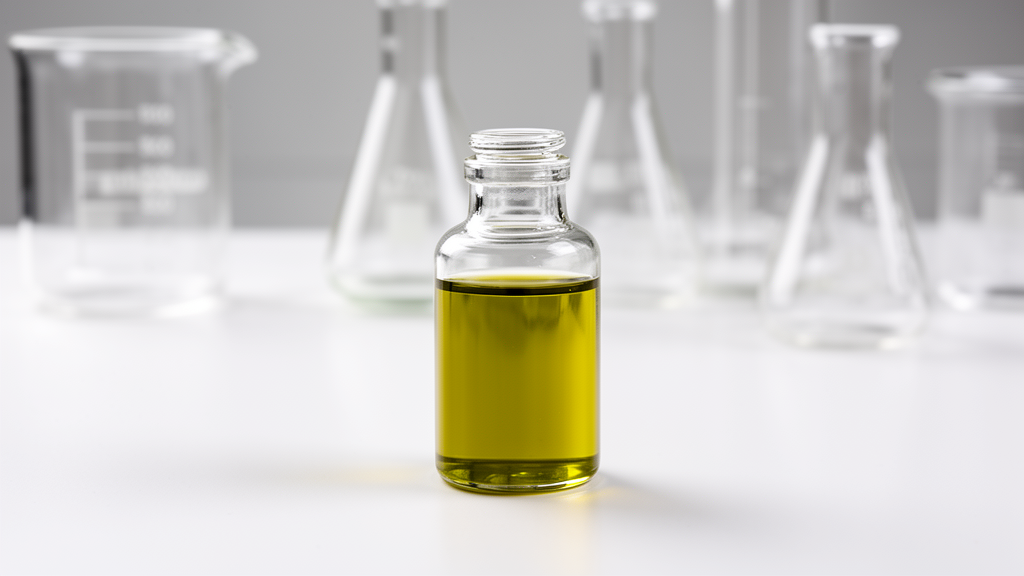
Manufactured in accordance with international standard ISO 33405, the material establishes certified mass fractions of 1.44 micrograms per kilogram for benzo[a]pyrene and 7.33 micrograms per kilogram for the sum of four priority polycyclic aromatic hydrocarbons. These concentrations reflect significant contamination levels while remaining below European Union maximum thresholds set under Commission Regulation 2023/915, which specifies 2 micrograms per kilogram for benzo[a]pyrene and 10 micrograms per kilogram for the congener sum. BAM-A001 directly addresses a long-standing deficiency in food testing infrastructure, providing laboratories with an authentic matrix standard to validate analytical methods and support compliance monitoring across international supply chains. Designed for method development and quality assurance, the reference material enables official inspection authorities and testing facilities to verify analytical accuracy under real-world testing conditions.
Olive oil represents an essential culinary foodstuff consumed globally for thousands of years, with extra virgin grades commanding high esteem for nutritional quality. Over the past sixty years, worldwide olive oil production has tripled, reaching approximately 3.57 million tons during the 2024/2025 harvest season according to the International Olive Council, with Spain contributing forty percent of total global supply. Despite its nutritional reputation, olive oil remains vulnerable to various chemical residues, including heavy metals, pesticides, and persistent organic pollutants. Among these, polycyclic aromatic hydrocarbons pose particularly grave concerns for food safety and human health. Because of their lipophilic characteristics, these airborne and environmental contaminants deposit onto olive surfaces and co-extract into the oil during mechanical processing and extraction.
Toxicological evaluations have established that several polycyclic aromatic hydrocarbons exhibit mutagenic or carcinogenic properties, posing clear hazards to human health. In response, European authorities established statutory thresholds to protect consumers against dietary exposure. Commission Regulation (EC) No 1881/2006 initially set a maximum limit for benzo[a]pyrene in vegetable oils in 2006. Following recommendations from the European Commission’s Scientific Committee on Food, regulators introduced a broader four-marker system in Commission Regulation (EC) No 835/2011, establishing a maximum level of 10 micrograms per kilogram for the sum of benzo[a]pyrene, benz[a]anthracene, benzo[b]fluoranthene, and chrysene, alongside the individual benzo[a]pyrene cap of 2 micrograms per kilogram. These four priority hydrocarbons belong to substances presumed to have carcinogenic potential for humans under category 1B classification. Reconfirmed by Commission Regulation (EC) No 2023/915, these thresholds operate alongside Commission Regulation (EC) No 836/2011, which mandates that analytical control procedures achieve a limit of quantification of 0.9 micrograms per kilogram for each compound.
Quantifying trace hydrocarbons in vegetable oils presents substantial analytical difficulties caused by sample composition. Olive oil contains more than sixty percent fat, while target hydrocarbons exhibit pronounced lipophilic character, reflected in benzo[a]pyrene having a negative octanol-water partition coefficient logarithm of minus 6.35. Separating non-polar trace analytes from abundant lipid matrices requires rigorous clean-up steps to protect chromatography instruments and maintain measurement sensitivity. Official food control laboratories are legally required to employ validated methods to guarantee accuracy, repeatability, and reproducibility, making certified reference materials indispensable. However, existing certified materials for polycyclic aromatic hydrocarbons have historically centered on environmental matrices like soils, sediments, and atmospheric dust. Food-grade reference materials remained confined to niche matrices such as mussel tissue or whey protein, or addressed only isolated analyte pairs. Before BAM-A001, no certified reference material offered certified mass fractions for all four regulated hydrocarbons in an olive oil matrix, forcing testing laboratories to rely on oil spiking experiments.
To manufacture BAM-A001, researchers screened fifty-two commercial extra virgin olive oils purchased in Berlin, Germany, representing multiple European production regions. Analysis identified two retail oils containing relevant natural contamination levels and compatible congener patterns. The team procured eleven half-liter bottles of each product, visually inspected all twenty-two containers to ensure freedom from particulates or cloudiness, and combined them into a single eleven-liter flask. The blended liquid formed a clear, dark green mixture. To prevent oxidative degradation, researchers purged the bulk mixture with argon gas for five hours. Empty twenty-milliliter amber glass vials were likewise flushed with argon prior to dispensing. An automated dispenser distributed fourteen milliliters of oil into each vial, producing a total batch of 779 units. Vials were immediately sealed with crimp caps featuring butyl and polytetrafluoroethylene liners, labeled sequentially according to filling order, and stored at minus twenty degrees Celsius in laboratory freezers.
Sample extraction followed accredited BAM procedure BAM-1.7-PV043, utilizing two distinct preparation routes to avoid single-method bias. The primary approach employed molecularly imprinted polymers in solid-phase extraction format, marking its first application in reference material production. In this procedure, half a milliliter of oil was mixed gravimetrically with one hundred microliters of deuterated internal standard solution and four hundred microliters of cyclohexane, loaded onto conditioned polymer columns, washed with cyclohexane, and eluted with ethyl acetate before reconstitution in toluene. The alternative procedure utilized liquid-liquid extraction followed by gel permeation chromatography, analogous to official European standard methods EN 16619 and EN 16621. Three grams of oil were repeatedly extracted with acetonitrile using vortex mixing, ultrasonication, and centrifugation at 3800 revolutions per minute, followed by fractionation through Bio-Beads S-X3 columns. Both cleanup techniques proved highly effective, but molecularly imprinted polymers consumed significantly less organic solvent, equipment, and processing time while achieving comparable extraction efficiency.
Chromatographic quantification was conducted using gas chromatography coupled to mass spectrometry operated in single ion monitoring mode to enhance detection sensitivity and suppress background interference. Quantifications utilized stable isotope dilution analysis, recognized as a primary ratio measurement method, pairing target compounds with matching deuterated internal standards from commercial mixtures. Calibration curves were constructed from at least six concentration levels using certified reference standard SRM 2260a from the National Institute of Standards and Technology. In parallel, researchers conducted secondary characterization for toxic trace metals to account for European rules limiting lead in fats and oils to 0.1 milligrams per kilogram. Seven subsamples of each base oil underwent automated microwave digestion in an ULTRACLAVE system using subboiling nitric acid at 255 degrees Celsius and 160 bar.
Homogeneity testing assessed analyte distribution across the 779-unit batch in accordance with ISO 33405 requirements. Ten units were equidistantly selected across the filling sequence and analyzed in triplicate under repeatability conditions on a single day. All thirty extracts were quantified in randomized sequence using a single calibration line to isolate filling effects from measurement drift. Statistical evaluation via one-way analysis of variance at a significance level of alpha equals 0.05 using eCerto software demonstrated that P-values for all four hydrocarbons exceeded 0.05, confirming no statistically significant variation between vials. Individual compounds displayed excellent consistency, such as chrysene exhibiting an overall mean of 3.16 micrograms per kilogram. Because within-bottle variance slightly exceeded between-bottle variance—a typical outcome for non-polar analytes dissolved in oil—researchers used the minimum variance formula sbb,min to define inhomogeneity uncertainty. The homogeneity evaluation confirmed that BAM-A001 maintains sample uniformity provided analytical laboratories observe a minimum sample intake of 0.5 milliliters.
Material stability was examined through an isochronous accelerated aging study exposing sample units to temperatures from plus 4 to plus 60 degrees Celsius over durations ranging from one week to twelve months, referencing them against control units stored at minus twenty degrees Celsius. Measured recoveries hovered near one hundred percent across all test conditions, with linear trend analysis demonstrating no significant degradation. Evaluated through Arrhenius kinetic modeling, activation energies reached 64.0 kilojoules per mole for benz[a]anthracene and 52.8 kilojoules per mole for benzo[a]pyrene, aligning with values reported for stable organic compounds. Projected deterioration curves indicated that concentrations would remain within certified uncertainty bounds for 190 months for benz[a]anthracene and 160 months for benzo[a]pyrene at plus 4 degrees Celsius, and over one thousand months at minus twenty degrees Celsius. These findings justified setting long-term instability uncertainty to zero, establishing a post-shipment shelf-life of two years when stored at plus 4 degrees Celsius or colder, and permitting ambient transport without refrigerated shipping.
Certification and value assignment were finalized through an in-house study across three independent BAM laboratories, fulfilling requirements established in ISO 17034, ISO 33401, and ISO 33405. Fifteen units were randomly selected, with each workplace analyzing five units in four replicates using separate calibrations and sample preparations, generating sixty data points per congener. Relative combined uncertainties combined contributions from characterization, between-bottle homogeneity, and calibration standard purity, while stability uncertainty was set to zero. Expanded uncertainties were calculated using a coverage factor of k equals two, corresponding to an approximate ninety-five percent confidence level under Guide to the Expression of Uncertainty in Measurement principles. Certified mass fractions were assigned at 1.44 micrograms per kilogram for benzo[a]pyrene and 7.33 micrograms per kilogram for the PAH-4 sum, establishing BAM-A001 as an essential quality control benchmark that bolsters food safety while laying methodological foundations for future reference materials addressing emerging contaminants like per- and polyfluoroalkyl substances.
Subject of Research: Development and certification of reference material BAM-A001 for polycyclic aromatic hydrocarbons in olive oil
Article Title: Development of a certified reference material for polycyclic aromatic hydrocarbons (PAH) in olive oil
Article References: Sommerfeld, T., Lisec, J., Jung, C., Mauch, T., Riedel, J., Recknagel, S., Penk, S., Buttler, S., Richter, S., & Koch, M. (2026). Development of a certified reference material for polycyclic aromatic hydrocarbons (PAH) in olive oil. Analytical and Bioanalytical Chemistry. https://doi.org/10.1007/s00216-026-06826-2
Image Credits: AI Generated
DOI: 10.1007/s00216-026-06826-2
Keywords: BAM-A001, certified reference material, polycyclic aromatic hydrocarbons, PAH-4, benzo[a]pyrene, chrysene, benz[a]anthracene, benzo[b]fluoranthene, extra virgin olive oil, molecularly imprinted polymers, stable isotope dilution analysis, gas chromatography mass spectrometry, Commission Regulation 2023/915, gel permeation chromatography, ISO 33405, trace element analysis, food safety testing
News Source: Bethany Barker. (November 25, 2026). First Certified Reference Material Produced for Four Priority Hydrocarbons in Olive Oil. Scienmag.