


A new study of the BRICS-11 countries reports that financial technology and green energy are associated with lower carbon dioxide emissions, while natural resource rents and economic growth are linked to higher emissions. The research, published in Energy, Sustainability and Society, analysed data from 1990 to 2023 using advanced panel econometric techniques.
The BRICS-11 group of countries is among the largest contributors to global CO2 emissions, and the study’s authors frame their analysis against escalating environmental challenges such as sea level rise, droughts and floods driven by rising temperatures. They argue that substantial climate action measures are needed in these economies to pursue carbon neutrality and mitigate human-induced climate change and environmental degradation.
Methodologically, the study employed the CS-ARDL estimator and the Augmented Mean Group (AMG) test as a robustness check. A Westerlund cointegration test confirmed a stable long-run relationship among the variables examined, and cross-sectional dependence tests highlighted significant interdependencies across the countries in the panel.
According to the CS-ARDL model, in the long run a 1% rise in financial technology (FIN) is associated with a 0.116% reduction in CO2 emissions, while green energy (GEN) lowers emissions by 0.151%. The authors state that these results underscore the role of digital finance and green energy in enhancing environmental quality.
The same model found that natural resource rents (NRR) and economic growth (GDP) increase emissions, by 0.196% and 0.312% respectively for a 1% rise. The authors emphasise that these figures point to the environmental consequences of resource dependency and economic expansion in the BRICS-11 countries.
The AMG robustness check supported the direction of these findings with somewhat different magnitudes. Under this estimator, FIN and GEN reduced CO2 emissions by 0.162% and 0.122% respectively, while NRR and GDP increased emissions by 0.151% and 0.188% respectively. The consistency of signs across the two estimators is presented as strengthening the study’s conclusions.
On the basis of these results, the authors highlight what they describe as an urgent need for policy interventions that promote financial digitalisation and green energy investment to curb CO2 emissions in the BRICS-11 countries. They suggest governments should adopt sustainable resource management practices and ensure that economic growth is decoupled from environmental degradation through technological advancements and regulatory frameworks.
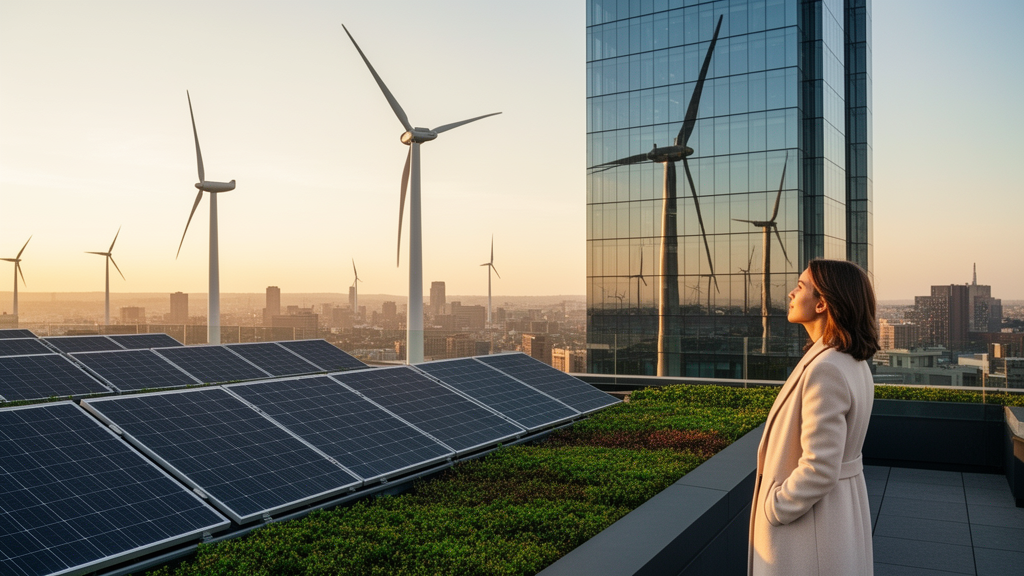
The study also notes that expanding power generation from renewable sources such as wind and solar could meet a significant share of energy demands while substantially reducing CO2 emissions. As an observational econometric analysis of historical panel data, the research identifies long-run associations among the studied variables rather than experimentally tested causal effects, and its findings apply to the BRICS-11 countries over the 1990 to 2023 period examined.
Subject of Research: The impact of financial technology, green energy, natural resource rents and economic growth on CO2 emissions in the BRICS-11 countries
Article Title: Driving the green transition: the impact of Fintech, green energy and natural resources on lowering CO2 emissions in the BRICS-11 countries
Article References: Wang, J., & Liu, Z. (2026). Driving the green transition: the impact of Fintech, green energy and natural resources on lowering CO2 emissions in the BRICS-11 countries. Energy, Sustainability and Society. https://doi.org/10.1186/s13705-026-00605-8
Image Credits: AI Generated
DOI: 10.1186/s13705-026-00605-8
Keywords: CO2 emissions, BRICS-11, fintech, green energy, natural resource rents, economic growth, CS-ARDL, AMG, cointegration, climate policy, carbon neutrality, Energy, Sustainability and Society
News Source: Sloane Callahan. (October 29, 2026). Fintech and green energy linked to lower CO2 emissions across BRICS-11 countries. Scienmag.



