• HOME
  • NEWS
  • EXPLORE
    • CAREER
      • Companies
      • Jobs
    • EVENTS
    • iGEM
      • News
      • Team
    • PHOTOS
    • VIDEO
    • WIKI
  • BLOG
  • COMMUNITY
    • FACEBOOK
    • INSTAGRAM
    • TWITTER
Thursday, October 29, 2026
BIOENGINEER.ORG
No Result
View All Result
  • Login
  • HOME
  • NEWS
  • EXPLORE
    • CAREER
      • Companies
      • Jobs
        • Lecturer
        • PhD Studentship
        • Postdoc
        • Research Assistant
    • EVENTS
    • iGEM
      • News
      • Team
    • PHOTOS
    • VIDEO
    • WIKI
  • BLOG
  • COMMUNITY
    • FACEBOOK
    • INSTAGRAM
    • TWITTER
No Result
View All Result
Bioengineer.org
No Result
View All Result
Home NEWS Science News Health

Final-Year Dentistry Students in UAE Show Gaps in Adverse Drug Reaction Reporting Knowledge

by
October 29, 2026
in Health
Reading Time: 2 mins read
0
Final-Year Dentistry Students in UAE Show Gaps in Adverse Drug Reaction Reporting Knowledge

Final-Year Dentistry Students in UAE Show Gaps in Adverse Drug Reaction Reporting Knowledge

Share on FacebookShare on TwitterShare on LinkedinShare on RedditShare on Telegram

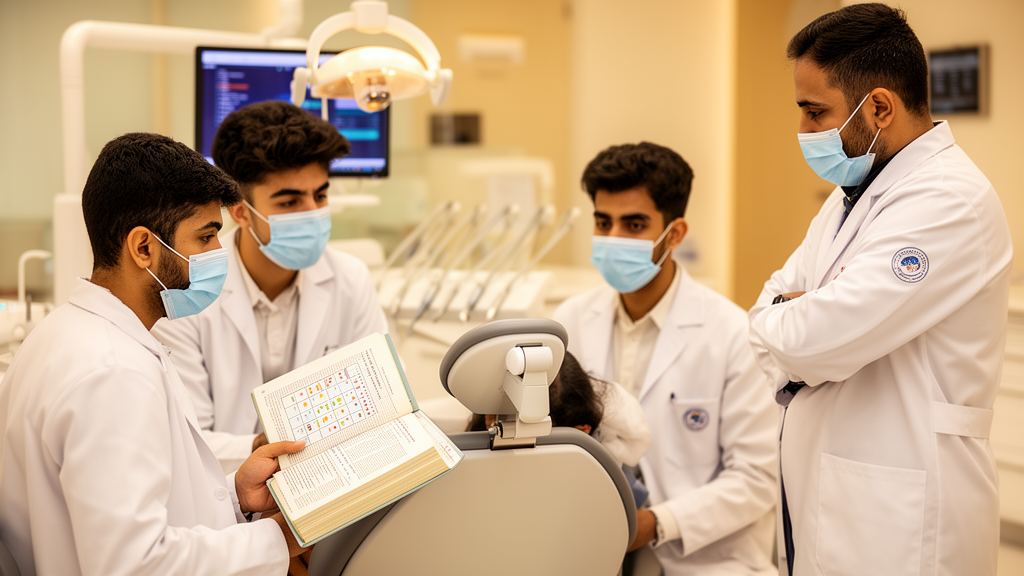
Final-year dentistry students at Ajman University in the United Arab Emirates hold positive attitudes toward pharmacovigilance, but their knowledge and practice of adverse drug reaction (ADR) reporting fall short, according to a cross-sectional survey published in BMC Medical Education. The study, conducted among students in their final year of the dental program, found that only 48 percent of the 152 participants knew the definition of pharmacovigilance, and fewer than half, 40.8 percent, knew the location of the national pharmacovigilance center in the UAE.

The researchers used a validated, reliability-tested, close-ended structured questionnaire with a Cronbach alpha of 0.813, distributed through Google Forms. The instrument covered four sections: demographics, knowledge, attitude and practice. Data were analyzed with descriptive and inferential statistics, including the Mann–Whitney U-test for demographic associations and multiple linear regression, with a significance threshold of 0.05.

Attitude scores were encouraging. A majority of students, 58.4 percent, supported the inclusion of pharmacovigilance in their dental curriculum, 52 percent backed mandatory ADR reporting, 48.1 percent wanted proper training on ADR reporting procedures, and 56.5 percent favored continuous education on the topic. Despite this willingness, the practice section revealed low scores: only 33.6 percent of students had observed an ADR in the past year, 25 percent had reported one, and 64.5 percent had not received any training in ADR reporting.

The statistical analysis found no statistically significant association between knowledge or attitude scores and students’ gender, age, or nationality. Male students, however, reported slightly better ADR-related practices, with a p-value of 0.026. Multiple linear regression identified age and gender as predictors of total practice scores, with p-values of 0.022 and 0.003 respectively, while no such predictors emerged for knowledge or attitude scores.

The authors conclude that although participants showed a positive attitude, their knowledge and practice require attention and improvement. The study highlights the need to enhance pharmacovigilance education and make it inclusive within dental curricula, and suggests that future dentists must be prepared to engage in ADR reporting through training programs and increased awareness in order to improve patient safety outcomes.

Subject of Research: Pharmacovigilance knowledge, attitudes and practices among final-year dentistry students in the UAE

Article Title: Knowledge, attitude and practices regarding pharmacovigilance among final year dentistry students in Ajman, United Arab Emirates

Article References: Zerguine, L., Alomar, M., Shanableh, S., Palaian, S., & Desai, V. B. (2026). Knowledge, attitude and practices regarding pharmacovigilance among final year dentistry students in Ajman, United Arab Emirates. BMC Medical Education. https://doi.org/10.1186/s12909-026-10729-2

Image Credits: AI Generated

DOI: 10.1186/s12909-026-10729-2

Keywords: pharmacovigilance, adverse drug reaction reporting, dentistry students, Ajman University, United Arab Emirates, cross-sectional survey, dental education, patient safety, BMC Medical Education, drug safety, Knowledge, attitude

News Source: Courtney Benton. (October 29, 2026). Final-Year Dentistry Students in UAE Show Gaps in Adverse Drug Reaction Reporting Knowledge. Scienmag.


Tags: adverse drug reaction reportingAjman UniversityattitudeBMC Medical Educationcross-sectional surveydental educationdentistry studentsdrug safetyknowledgePatient SafetyPharmacovigilanceUnited Arab Emirates
Share12Tweet7Share2ShareShareShare1

Related Posts

Blood–brain barrier permeability varies across brain regions and shifts with age

Blood–brain barrier permeability varies across brain regions and shifts with age

October 29, 2026
Itch-scratch cycle in lichen simplex chronicus calls for combined drug and non-drug treatment strategies

Itch-scratch cycle in lichen simplex chronicus calls for combined drug and non-drug treatment strategies

October 29, 2026

Most new tuberculosis patients in Kampala face long diagnostic delays, study finds

October 29, 2026

Mutant KMT2D Rewrites Chromatin and Immune Signals to Drive Follicular Lymphoma

October 29, 2026

POPULAR NEWS

  • Structured PLISSIT Counseling Improves Sexual Function in Middle-Aged Women, Trial Finds

    Structured PLISSIT Counseling Improves Sexual Function in Middle-Aged Women, Trial Finds

    29 shares
    Share 12 Tweet 7
  • CarbonBalance Framework Shifts AI Workloads to Cleaner Power, Cutting Simulated Emissions 41.6%

    29 shares
    Share 12 Tweet 7
  • Low Nutritional Risk Means Lower Remimazolam Doses for Sedation in Older Adults

    29 shares
    Share 12 Tweet 7
  • Rising seas could submerge a third of Amsterdam’s cycling network by 2100

    29 shares
    Share 12 Tweet 7

About

We bring you the latest biotechnology news from best research centers and universities around the world. Check our website.

Follow us

Recent News

Hexane co-solvent lifts waste cooking oil biodiesel conversion over LaMoO3 perovskite catalyst

Knocking out three transporters reshapes selenium metabolism in engineered Bacillus subtilis

Blood–brain barrier permeability varies across brain regions and shifts with age

Subscribe to Blog via Email

Enter your email address to subscribe to this blog and receive notifications of new posts by email.

Join 85 other subscribers
  • Contact Us

Bioengineer.org © Copyright 2023 All Rights Reserved.

Welcome Back!

Login to your account below

Forgotten Password?

Retrieve your password

Please enter your username or email address to reset your password.

Log In
No Result
View All Result
  • Homepages
    • Home Page 1
    • Home Page 2
  • News
  • National
  • Business
  • Health
  • Lifestyle
  • Science

Bioengineer.org © Copyright 2023 All Rights Reserved.