• HOME
  • NEWS
  • EXPLORE
    • CAREER
      • Companies
      • Jobs
    • EVENTS
    • iGEM
      • News
      • Team
    • PHOTOS
    • VIDEO
    • WIKI
  • BLOG
  • COMMUNITY
    • FACEBOOK
    • INSTAGRAM
    • TWITTER
Tuesday, October 20, 2026
BIOENGINEER.ORG
No Result
View All Result
  • Login
  • HOME
  • NEWS
  • EXPLORE
    • CAREER
      • Companies
      • Jobs
        • Lecturer
        • PhD Studentship
        • Postdoc
        • Research Assistant
    • EVENTS
    • iGEM
      • News
      • Team
    • PHOTOS
    • VIDEO
    • WIKI
  • BLOG
  • COMMUNITY
    • FACEBOOK
    • INSTAGRAM
    • TWITTER
No Result
View All Result
Bioengineer.org
No Result
View All Result
Home NEWS Science News Health

Field investigation associates norovirus GII outbreak at Chinese university with canteen dining

by
October 20, 2026
in Health
Reading Time: 2 mins read
0
Field investigation associates norovirus GII outbreak at Chinese university with canteen dining

Infected Canteen Workers Traced as Source of Norovirus GII.17 Outbreak at Chinese University

Share on FacebookShare on TwitterShare on LinkedinShare on RedditShare on Telegram

A field investigation of an acute gastroenteritis outbreak at a university in Jinhua, China, identified 215 cases from December 14 to 24, 2024, with an overall attack rate of 0.48%. Most affected people experienced diarrhea and vomiting. The study authors reported that the epidemic curve was consistent with continuous exposure to a common source followed by secondary transmission, while laboratory testing found norovirus GII in 16 of 66 clinical, environmental and food-handler samples. Four positive samples were sequenced and identified as GII.17; genotypes for the other positive samples, including the sample described as the index case, were not available.

The investigation combined a descriptive description of cases by time, symptoms and location with case–control and retrospective cohort studies examining dining exposures, hygiene behaviors and illness risk. The first-floor canteen in Zone A had the highest reported attack rate, at 1.14%, compared with 0.56% in Zone B and 0.42% in Zone C. The relative risk for Zone A versus Zone C was 2.71 (95% confidence interval, 1.89–3.89). Dining at the Zone A first-floor canteen was the primary food-related risk factor identified in the analysis, with an odds ratio of 18.85 (95% CI, 2.44–145.39). The reported association increased with the number of meals consumed: relative risks were 1.82 for two or three meals and 3.45 for more than three meals. Poor hand hygiene was also associated with illness, with an odds ratio of 14.60.

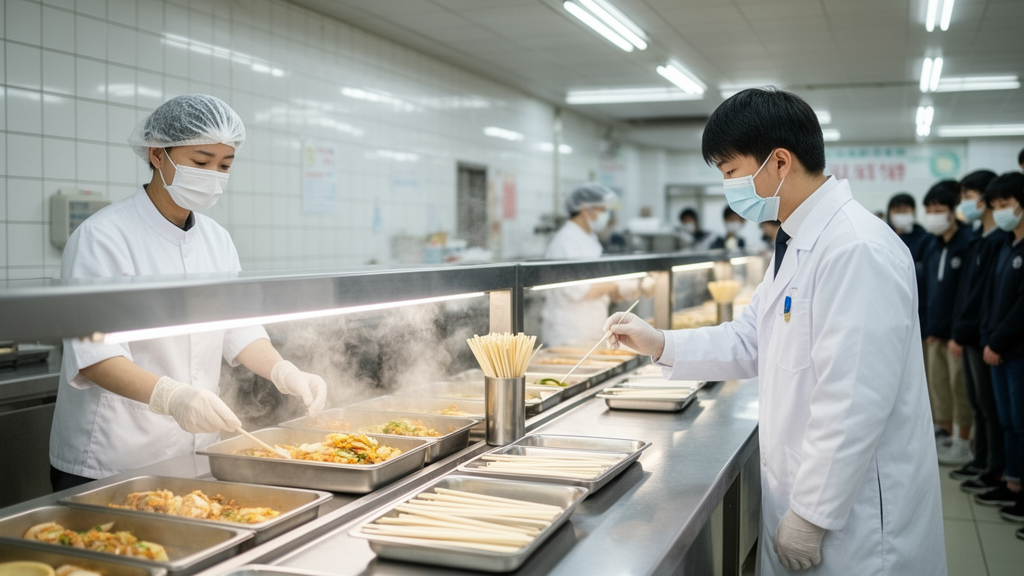
Of the 66 tested samples, six positive samples came from canteen workers, including two from people without symptoms. Six infected workers continued working through December 20, and four were cashiers who handled takeaway packaging. Investigators also observed improper glove use and inadequate tableware disinfection in the canteen environment. The authors stated that the epidemiological pattern, together with the laboratory and environmental findings, strongly implicated foodborne transmission involving infected canteen staff, followed by person-to-person spread. The investigation did not establish a complete transmission chain, and the positive samples that were not sequenced could not be assigned a genotype.

The study’s findings were based on the supplied published abstract and were reported in BMC Infectious Diseases as accepted research subject to further editing. Its scope was limited to one university outbreak and the available laboratory sequencing results. The investigators proposed staff health monitoring, standardized work practices, hand-hygiene promotion and prompt disinfection as components of outbreak control, but the abstract did not report a controlled evaluation of those measures or their effectiveness.

Subject of Research: Investigation of a university norovirus GII gastroenteritis outbreak and its association with canteen exposures

Article Title: An outbreak of Norovirus GII gastroenteritis in a Chinese university: investigating transmission patterns and implications for public health interventions

Article References: Bai, K., Pang, Z., Wang, J., Lou, M., Wang, Y., Zhang, B., Fang, L., Long, Z., Wu, C., & Zhang, G. (2026). An outbreak of Norovirus GII gastroenteritis in a Chinese university: investigating transmission patterns and implications for public health interventions. BMC Infectious Diseases. https://doi.org/10.1186/s12879-026-14485-y

Image Credits: AI Generated

DOI: 10.1186/s12879-026-14485-y

Keywords: norovirus, gastroenteritis, university outbreak, foodborne transmission, Jinhua, case-control study, retrospective cohort, environmental sampling, norovirus GII.17, public health, outbreak, Chinese

News Source: Ophelia Keating. (October 20, 2026). Field investigation associates norovirus GII outbreak at Chinese university with canteen dining. Scienmag.


Tags: case-control studyChineseenvironmental samplingfoodborne transmissiongastroenteritisJinhuanorovirusnorovirus GII.17outbreakPublic HealthRetrospective Cohortuniversity outbreak
Share12Tweet7Share2ShareShareShare1

Related Posts

Qualitative study identifies enablers and constraints of Ghanaian state–church health partnerships

Qualitative study identifies enablers and constraints of Ghanaian state–church health partnerships

October 20, 2026
Beta-Blocker Use Shows Interaction With AF Recurrence Radiomics

Beta-Blocker Use Shows Interaction With AF Recurrence Radiomics

October 20, 2026

Dance therapy shows promise for depression and anxiety, evidence review finds

October 20, 2026

Research report: Knowledge and associated factors related to stoma care among surgical nurses in Sri Lanka

October 20, 2026

POPULAR NEWS

  • Qualitative study identifies enablers and constraints of Ghanaian state–church health partnerships

    Qualitative study identifies enablers and constraints of Ghanaian state–church health partnerships

    29 shares
    Share 12 Tweet 7
  • Field investigation associates norovirus GII outbreak at Chinese university with canteen dining

    29 shares
    Share 12 Tweet 7
  • Randomized phase III trial with a factorial design assessing the efficacy and safety of darolutamide and stereotactic dose-escalated radiotherapy in patients with high-risk localized prostate cancer: the PEACE 7 (GETUG-AFU 45) study protocol

    29 shares
    Share 12 Tweet 7
  • Beta-Blocker Use Shows Interaction With AF Recurrence Radiomics

    29 shares
    Share 12 Tweet 7

About

We bring you the latest biotechnology news from best research centers and universities around the world. Check our website.

Follow us

Recent News

Qualitative study identifies enablers and constraints of Ghanaian state–church health partnerships

Field investigation associates norovirus GII outbreak at Chinese university with canteen dining

Randomized phase III trial with a factorial design assessing the efficacy and safety of darolutamide and stereotactic dose-escalated radiotherapy in patients with high-risk localized prostate cancer: the PEACE 7 (GETUG-AFU 45) study protocol

Subscribe to Blog via Email

Enter your email address to subscribe to this blog and receive notifications of new posts by email.

Join 85 other subscribers
  • Contact Us

Bioengineer.org © Copyright 2023 All Rights Reserved.

Welcome Back!

Login to your account below

Forgotten Password?

Retrieve your password

Please enter your username or email address to reset your password.

Log In
No Result
View All Result
  • Homepages
    • Home Page 1
    • Home Page 2
  • News
  • National
  • Business
  • Health
  • Lifestyle
  • Science

Bioengineer.org © Copyright 2023 All Rights Reserved.