A new study published in Bone Research reveals that defects in the surrounding bone matrix may explain why newly formed bone cells, known as osteocytes, die during their early stages of maturation. The research, led by Professor David M. Ornitz from the Department of Developmental Biology at Washington University School of Medicine in St. Louis, identifies fibroblast growth factor receptor 1, or FGFR1, as a critical signaling pathway that organizes the structural environment necessary for these cells to survive. By selectively inactivating the FGFR1 gene in the mature bone-cell lineage of adult mice, the team demonstrated that the loss of this signaling disrupts the formation of a healthy bone matrix, leading to the premature death of osteocytes as they become embedded in the tissue.
This finding shifts the focus from intrinsic cellular defects to the extrinsic structural support provided by the bone environment. Osteocytes are the most abundant cell type in mature bone and play a vital role in maintaining skeletal health by coordinating the balance between bone formation and breakdown. These long-lived cells reside within the mineralized bone matrix, extending slender projections through microscopic channels to communicate with neighboring cells and blood vessels.
While the loss of osteocytes is associated with fragile bones, the precise mechanisms governing their formation and survival have remained unclear until now. The study addresses this gap by investigating how specific signaling pathways influence the transition of bone-forming cells into mature, embedded osteocytes, a process that is essential for the long-term maintenance of skeletal integrity. The research team examined bone tissues for signs of cell death, differentiation markers, cellular projections, and matrix structure to understand the downstream effects of losing FGFR1 signaling.
They also analyzed gene activity in mouse cortical bone and Ocy454 osteocyte-like cells to identify the molecular changes accompanying the physical alterations observed in the tissue. To determine whether the observed effects were dependent on the specific location where bone was being formed, the researchers stimulated new bone formation through mechanical loading. The findings indicated that the loss of FGFR1 signaling led to significant osteocyte death, but this effect was concentrated in newly formed bone rather than in pre-existing bone structures.
Dying cells retained markers normally associated with bone-forming cells or early osteocyte development, suggesting that the transition into fully mature osteocytes was disrupted. The researchers observed a marked reduction in cellular projections and a substantial loss of the lacunocanalicular network, the microscopic communication system that connects osteocytes with their surroundings. When mechanical loading stimulated new bone formation at a different bone surface, osteocyte death also appeared in that newly formed region, reinforcing the idea that the vulnerability is tied to the process of new bone formation rather than a specific anatomical site.
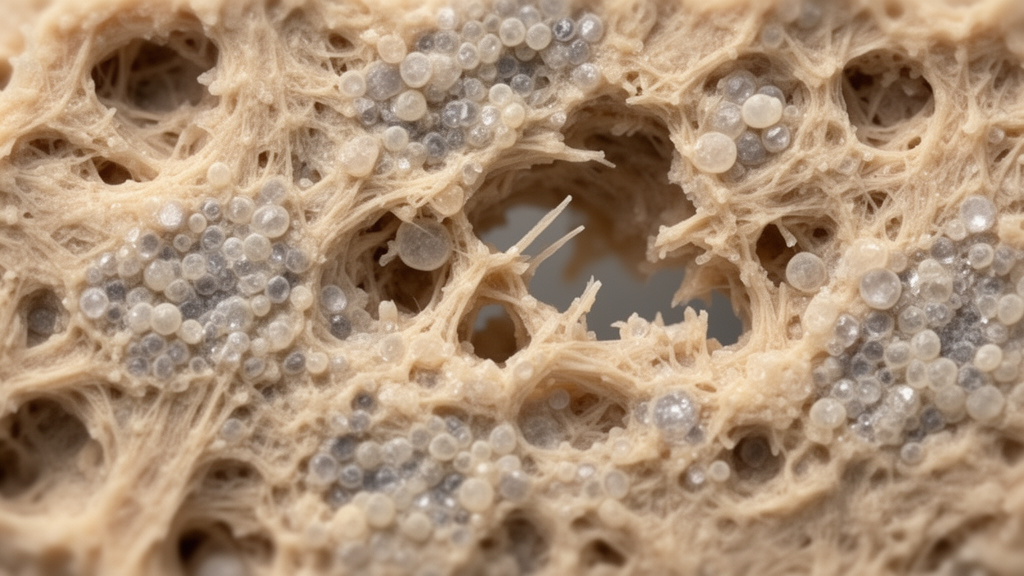
Further experiments pointed to the surrounding bone matrix as a key part of the problem. The team found a thinner layer of osteoid, the collagen-rich material deposited before it becomes mineralized bone, alongside reduced levels of various matrix components. Electron microscopy revealed disorganized collagen fibers and structural abnormalities in the newly forming bone.
These changes were detectable as early as three weeks after FGFR1 inactivation, when relatively few dying osteocytes were present. This temporal sequence suggests that matrix disruption may precede and contribute to cell death, rather than being a consequence of it. In laboratory-grown osteocyte-like cells, stimulating FGF signaling encouraged longer cellular projections, whereas blocking the pathway shortened them, providing direct evidence of the pathway's role in cellular morphology.
First author Professor Debabrata Patra stated that FGFR1 signaling appears to help newly embedded osteocytes survive by supporting the organization of the surrounding bone matrix and the cellular projections they need to connect with their environment. This quote underscores the dual role of the signaling pathway in both structural organization and cellular survival. Gene-expression analyses supported this explanation by showing that disrupting FGFR signaling altered genes involved in extracellular matrix organization, collagen formation, skeletal development, and neuronal pathways associated with cellular projections.
The overlapping changes in mouse cortical bone and cultured osteocyte-like cells suggest that FGFR signaling coordinates both the surrounding matrix and cellular gene-expression programs involved in osteocyte maturation. Notably, inactivating FGFR1 specifically in mature osteocytes did not produce a comparable cell-death phenotype. This finding highlights the importance of FGFR1 during the transition to newly embedded osteocytes, rather than in the maintenance of fully mature cells.
It suggests that the critical window for FGFR1 activity is during the early stages of osteocyte differentiation and embedding. Professor Ornitz noted that these findings highlight the importance of studying the earliest stages of osteocyte maturation to understand how bone tissue develops and maintains its structure. However, it is important to note that the study used mouse models and laboratory-grown cells, and it does not establish a treatment for people or demonstrate that manipulating FGFR1 can prevent human bone loss.
The findings offer a basis for future research into how bone aging and fragility develop, without implying immediate clinical applications. Overall, the study identifies FGFR1 signaling as an important regulator of the bone matrix, cellular projections, and survival of newly formed osteocytes. By showing how defects in the newly forming bone environment coincide with impaired cell maturation and death, the findings provide a basis for investigating how healthy bone tissue is built and maintained, and why this process may fail with age.
Subject of Research: Role of FGFR1 signaling in osteocyte survival and bone matrix organization
Article Title: Faulty bone matrix may explain why newly formed bone cells die
Article References: Faulty bone matrix may explain why newly formed bone cells die. Original publication (Bibliographic details unavailable.)
Image Credits: AI Generated
DOI: Not provided
Keywords: FGFR1, Osteocytes, Bone Matrix, Skeletal Health, Cell Survival, Mouse Model, Bone Research, Collagen, Osteoid, Washington University, Faulty, bone
News Source: Ophelia Keating. (October 26, 2026). FGFR1 Defects Disrupt Bone Matrix, Killing New Cells. Scienmag.