Food waste leachate, the nutrient-rich liquid that drains from decomposing kitchen scraps, has long tempted agricultural scientists as a free fertilizer. It carries nitrogen, phosphorus, potassium and a suite of organic compounds that crops crave. Yet it harbors a paradox that has frustrated its adoption: the same dissolved salts that make it nutritious make it toxic. Push the application rate too high and the soil turns saline, roots struggle to take up water, and plants accumulate reactive oxygen species that damage their cells. A new study published in Plant and Soil by Meng Wu, Yiran Yan and colleagues at China Agricultural University, working with Leonardo Fiore of the University of Tuscia in Italy, shows that two industrial fermentation by-products can neutralize this conflict, but only when they are combined at low doses.
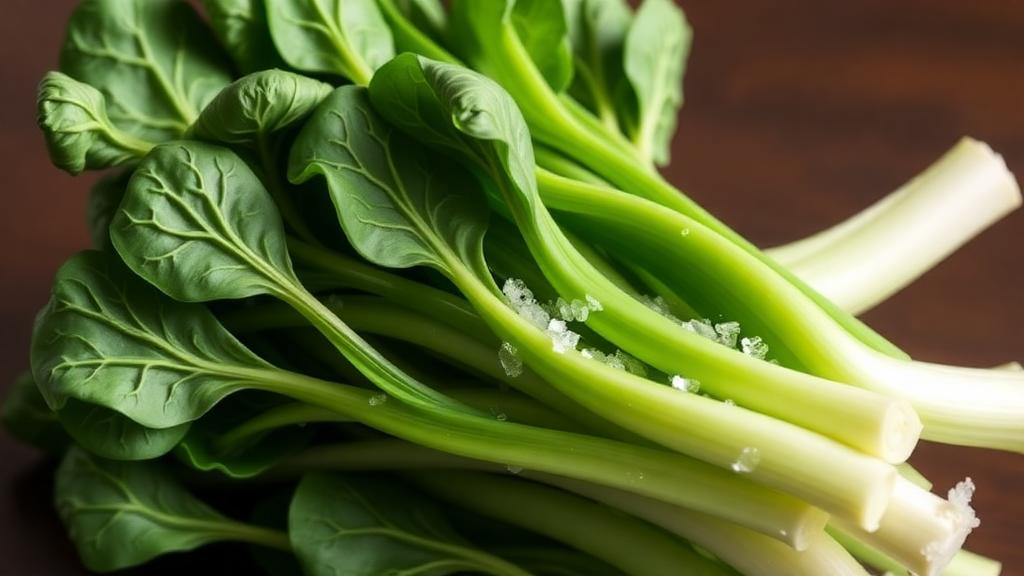
The team focused on pak choi, a fast-growing leafy brassica that is both economically important across Asia and notoriously sensitive to salinity. Their experimental system applied food waste leachate to soil at a range of rates and then measured how the plants responded. The first and arguably most consequential finding was a clear threshold. Below 125 milliliters of leachate per kilogram of soil, pak choi grew reasonably well, drawing on the leachate’s nutrient load. Above that critical rate, growth collapsed. The researchers identified 125 mL/kg as the point beyond which severe growth suppression set in, a boundary that any future fertilization protocol built on food waste leachate would need to respect.
To rescue plants grown near or at this salinity limit, the team turned to two by-products of industrial fermentation. The first, labeled YM in the study, is corn steep liquor concentrate, a concentrated steeping water from corn wet milling that is loaded with amino acids, soluble nitrogen, vitamins and growth-promoting compounds. The second, labeled TM, is molasses fermentation liquid, a sugary, antioxidant-rich residue from fermentation processes that use molasses as feedstock. Both materials are produced in enormous volumes worldwide, and both are typically treated as low-value waste streams. The researchers hypothesized that their physiological effects on stressed plants would be complementary rather than redundant, and that combining them could produce benefits larger than either could deliver alone.
The hypothesis held up in striking detail. When applied individually, each agent helped, but in visibly different ways. Corn steep liquor concentrate proved to be a root architect: pak choi treated with YM expanded its root volume by 89.2 percent compared with salt-stressed controls. A larger, more voluminous root system is not merely cosmetic. It increases the surface area available for water and nutrient uptake, which directly counteracts the osmotic stress that salinity imposes, since salty soil effectively holds water away from plant roots. Molasses fermentation liquid, by contrast, acted as a cellular defense agent. Plants receiving TM showed a 35.1 percent reduction in malondialdehyde, a standard biomarker of lipid peroxidation. Lower malondialdehyde means that the membranes lining plant cells were being oxidized and damaged far less, indicating that TM bolstered the plant’s antioxidant machinery against the oxidative burst that salt stress triggers.
These distinct mechanisms set the stage for the study’s central experiment: dose-dependent combination trials. The researchers paired the two agents at low concentrations, a formulation designated YM0.1 plus TM0.1, and at higher concentrations, YM0.5 plus TM0.5, to test whether the complementary actions would compound. The low-dose combination delivered the study’s headline result. Pak choi grown with the paired low-dose treatment under food waste leachate stress produced 27.7 percent more shoot dry weight than stressed plants without the combination. Crucially, this figure exceeded the maximum benefit achievable by either agent applied alone at any dose tested. The combination also maximized the study’s comprehensive growth index, an integrated measure that folds together multiple growth parameters into a single score of plant performance.
The high-dose combination told a cautionary tale. When YM and TM were both applied at the higher rate, the collaborative advantage vanished. Root growth indices for the high-dose combination actually fell below those of plants receiving the high dose of corn steep liquor concentrate alone. The authors attribute this reversal to secondary osmotic stress: piling two organic amendments onto soil already carrying a heavy salt load from the leachate pushed the total osmotic pressure of the root zone past what pak choi could tolerate. In other words, the very materials meant to relieve stress became stressors themselves when overdosed. The lesson is that in saline systems, more of a good thing is not better, and the interactions between amendments are dose-dependent in a way that single-agent trials cannot reveal.
The physiological logic behind the low-dose synergy is worth unpacking. Salinity harms plants through two intertwined pathways. The first is osmotic: salt in the soil solution makes it harder for roots to extract water, slowing cell expansion and overall growth. The second is ion-specific and oxidative: excess sodium and chloride ions interfere with enzyme function and nutrient balance, prompting the accumulation of reactive oxygen species that attack membranes, proteins and DNA. Corn steep liquor concentrate, with its rich supply of organic nitrogen compounds and growth factors, appears to attack the first pathway by building a bigger, more efficient root system that can mine water from a hostile soil. Molasses fermentation liquid attacks the second, supplying sugars and antioxidant precursors that help the plant quench free radicals before they shred cell membranes. Applied together at low doses, the two agents cover both fronts of the salt assault simultaneously, which is why their combined effect on biomass outran either single treatment.
The broader significance of the work lies in waste circularity. Food waste leachate, corn steep liquor and molasses fermentation liquid are all by-products of urban and industrial systems, generated in quantities that often overwhelm disposal infrastructure. Converting them into a coordinated fertilization strategy would close a nutrient loop: nutrients harvested from food scraps and fermentation plants would flow back into food production instead of into waterways or landfills. The study’s identification of a precise threshold, 125 mL/kg of leachate, and a precise formulation, low-dose YM plus TM, transforms what has been a qualitative idea, that organic amendments can ease salt stress, into a quantitative protocol that farmers and waste managers could actually implement. The authors frame this as a viable theoretical and practical framework for turning hypersaline organic wastes into sustainable agricultural resources without triggering secondary metabolic imbalances.
There are, of course, caveats that temper immediate field application. The experiments were conducted under controlled conditions with defined leachate and amendment compositions, and real food waste leachate varies enormously in salinity, nutrient content and organic load depending on its source and season. The dose thresholds established here would need recalibration for different soils, climates and crops, and long-term trials would need to confirm that repeated applications do not gradually accumulate salts or alter soil microbial communities in undesirable ways. The study’s own demonstration that high-dose combinations backfire underscores how carefully any scaling effort must tread. Still, the dose-dependent framework the researchers built, mapping where benefit peaks and where it collapses, is exactly the kind of quantitative scaffolding that turns a promising laboratory observation into an agronomic tool.
What makes the finding resonate beyond agronomy is its demonstration of a general principle: the value of a waste-derived biostimulant is not fixed but emergent, depending on what it is paired with and how much is applied. Two industrial residues, each individually modest in its benefit, became more than the sum of their parts when combined at the right dose, and less than useless when combined at the wrong one. As climate change drives soil salinization across agricultural regions and as food systems search for ways to recycle their own effluents, studies like this one suggest that the answer may lie not in any single miracle amendment but in the deliberate, dose-calibrated orchestration of the wastes we already produce. For pak choi growers wrestling with saline irrigation water or leachate-based fertilizers, the message is concrete: pair your corn steep liquor with your molasses liquid, keep both doses low, and stay under the salt threshold.
Subject of Research: Mitigating salinity stress in pak choi using combined industrial fermentation wastes and food waste leachate
Article Title: Alleviating salinity-induced growth inhibition in pak choi through the complementary effects of industrial fermentation wastes and food waste leachate in soil–plant interactions
Article References: Wu, M., Yan, Y., Han, G., Fiore, L., Ahmed, W., Chen, Q., & Mu, K. (2026). Alleviating salinity-induced growth inhibition in pak choi through the complementary effects of industrial fermentation wastes and food waste leachate in soil–plant interactions. Plant and Soil. https://doi.org/10.1007/s11104-026-09163-6
Image Credits: AI Generated
DOI: 10.1007/s11104-026-09163-6
Keywords: pak choi, soil salinity, food waste leachate, corn steep liquor, molasses fermentation liquid, plant biostimulants, oxidative stress, malondialdehyde, root architecture, waste valorization, sustainable agriculture, dose threshold
News Source: Alan Morgan. (October 6, 2026). Fermentation Waste Duo Rescues Pak Choi From Salt Stress at Just the Right Dose. Scienmag.