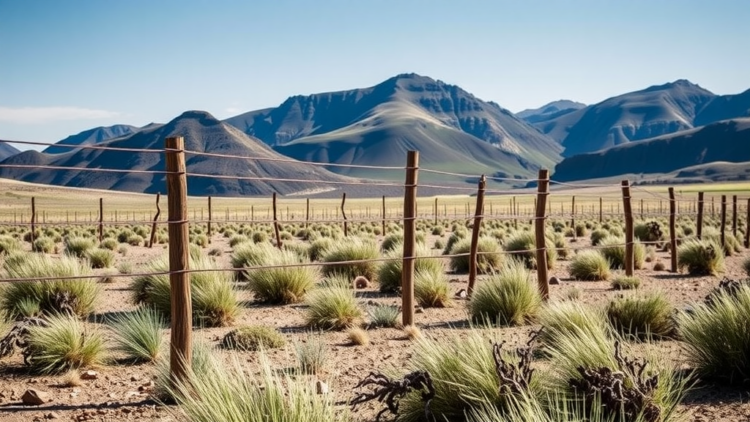
High on the Qinghai-Xizang Plateau, the world’s most extensive alpine grasslands are quietly losing their ability to heal themselves. For decades, land managers have assumed that simply fencing off overgrazed pastures and letting nature take its course would be enough to bring degraded rangelands back to life. A new study published in the journal Plant and Soil challenges that assumption in a striking way, showing that in severely desertified grasslands, the invisible world beneath the surface—depleted soils and proliferating plant pathogens—can block recovery even when livestock are removed entirely.
The research, led by Jingya Lv of the Institute of Tibetan Plateau Research at the Chinese Academy of Sciences together with colleagues including senior author Shiping Wang, set out to answer a deceptively simple question: why does fencing work for lightly degraded grasslands but fail for desertified ones? Overgrazing has pushed large swaths of the plateau into different stages of degradation, and while grazing exclusion is widely regarded as an effective restoration tool for lightly damaged meadows, desertified grasslands stubbornly refuse to recover on their own. Identifying the factors that lock these ecosystems into a degraded state is considered crucial for designing restoration strategies that actually work.
To untangle the problem, the team conducted paired sampling along a transect across the plateau, comparing sites inside and outside livestock fences in both lightly degraded and desertified alpine meadows and alpine steppes. At each paired site, they measured a comprehensive suite of soil properties, quantified soil-borne pathogens, assessed the soil seed bank, and recorded the composition of the plant community. This paired inside-outside design allowed them to isolate the effects of grazing exclusion from the broader environmental differences between sites, providing a rigorous test of whether fences alone can reverse desertification.
The results reveal a sobering picture of what desertification does to the underground environment. Desertification significantly reduced soil organic carbon and total nitrogen, two cornerstones of soil fertility that support plant growth and microbial communities. At the same time, it increased phosphorus availability and, perhaps most importantly, boosted populations of soil pathogens. These shifts matter because soil organic carbon and nitrogen fuel the nutrient cycles on which dominant grasses depend, while elevated pathogen loads can suppress seedling establishment and survival of the very species that restoration efforts aim to bring back.
Remarkably, fencing itself produced no significant effects on any of these soil chemical properties or on pathogen abundance. In other words, removing livestock did not restore soil carbon, did not replenish nitrogen, and did not reduce the pathogen burden in desertified soils. This finding strikes at the heart of conventional restoration practice on the plateau, suggesting that passive recovery through grazing exclusion leaves the fundamental belowground constraints untouched. The degraded soil environment appears to persist as a legacy of desertification, continuing to suppress plants long after the grazing pressure has been lifted.
The study also uncovered a critical difference in the regenerative capacity of the two ecosystems’ target plants. In the alpine meadow, the target species Kobresia pygmaea, a sedge that forms the foundation of the plateau’s meadow ecosystems, retained a measurable seed bank even in desertified soils. In the alpine steppe, however, seeds of the target bunchgrass Stipa purpurea were entirely absent from the soil. This absence is a red flag for restoration: without a seed bank, natural regeneration cannot even begin, no matter how favorable conditions become. The steppe’s desertified soils are effectively empty of the propagules needed to rebuild the native plant community.
Plant diversity told a similarly nuanced story. Desertification reduced plant species richness in both meadows and steppes, but fencing increased richness only in the desertified steppe, not in the meadow. The effects of fencing on the target species themselves were also divergent. In lightly degraded alpine meadows, fencing actually decreased the coverage of Kobresia pygmaea, an unexpected outcome that suggests grazing may play a role in maintaining this grazing-adapted sedge. In desertified alpine steppes, by contrast, fencing increased the coverage of Stipa purpurea, indicating that the bunchgrass can respond positively to livestock removal when it is present on the landscape.
Perhaps the most mechanistically important finding is that both soil quality and pathogen loads were negatively correlated with the abundance of target plants in desertified alpine grasslands. This dual negative relationship points to a coupled constraint: degraded soils deprive plants of the nutrients they need, while elevated pathogens attack them from below, and together these forces suppress the species that restoration seeks to promote. The study’s authors argue that this mechanistic insight explains why nature-based restoration stalls in desertified grasslands, and they emphasize the need for integrated, ecosystem-tailored approaches that address multiple constraints simultaneously rather than relying on a single intervention such as fencing.
The implications extend well beyond the Tibetan Plateau. Alpine grasslands cover vast areas of high-altitude Asia and provide critical ecosystem services, including carbon storage, water regulation for billions of people downstream, and pasture for pastoralist communities. Previous research has shown that microbial functional changes can mark an irreversible course of grassland degradation, and that soil-borne pathogens increase with warming at the global scale, adding climate pressure to an already stressed system. The new findings add a crucial piece to this puzzle by demonstrating that aboveground interventions alone cannot overcome belowground barriers.
For restoration practitioners, the message is clear: recovery strategies for desertified grasslands must go beyond fencing. Potential approaches suggested by the broader literature include soil amendments to rebuild organic carbon and nitrogen, targeted reseeding to overcome seed bank deficits—particularly urgent in steppes where Stipa purpurea seeds are entirely absent—and biological or management interventions to suppress soil pathogen loads. Because meadows and steppes responded differently to both desertification and fencing, the study underscores that restoration prescriptions must be tailored to ecosystem type and degradation stage. As the authors conclude, understanding the coupled effects of soil quality and pathogens provides the mechanistic foundation needed to accelerate the restoration of some of the world’s most vulnerable high-altitude ecosystems, before degradation becomes truly irreversible.
Subject of Research: Coupled effects of soil quality and soil-borne pathogens on nature-based restoration of target plants in desertified alpine grasslands on the Qinghai-Xizang Plateau
Article Title: Coupled effects of soil quality and pathogens on nature-based restoration of target plants in desertified alpine grasslands
Article References: Coupled effects of soil quality and pathogens on nature-based restoration of target plants in desertified alpine grasslands. (n.d.). https://doi.org/10.1007/s11104-026-09040-2
Image Credits: AI Generated
DOI: 10.1007/s11104-026-09040-2
Keywords: alpine grasslands, desertification, fencing, soil-borne pathogens, soil seed bank, soil organic carbon, Kobresia pygmaea, Stipa purpurea, restoration ecology, Qinghai-Xizang Plateau, overgrazing, plant-soil feedback
Cite Scienmag News
APA MLA Chicago
Alan Morgan. (September 12, 2026). Fences Alone Cannot Save Desertified Alpine Grasslands, Soil Study Reveals. Scienmag. https://scienmag.com/fences-alone-cannot-save-desertified-alpine-grasslands-soil-study-reveals/
Alan Morgan. “Fences Alone Cannot Save Desertified Alpine Grasslands, Soil Study Reveals.” Scienmag, 12 September 2026, https://scienmag.com/fences-alone-cannot-save-desertified-alpine-grasslands-soil-study-reveals/. Accessed 12 September 2026.
Alan Morgan. “Fences Alone Cannot Save Desertified Alpine Grasslands, Soil Study Reveals.” Scienmag. September 12, 2026. https://scienmag.com/fences-alone-cannot-save-desertified-alpine-grasslands-soil-study-reveals/
Copy citation Download RIS
Tags: alpine grasslandsdesertificationDesertified alpine grassland restorationecological barriers to grassland regenerationeffective strategies for alpine grassland restorationeffects of grazing exclusion on desertified ecosystemsfencingimpacts of overgrazing on Tibetan PlateauKobresia pygmaealimitations of fencing for grassland recoveryovergrazingplant pathogens in alpine ecosystemsplant-soil feedbackQinghai-Xizang Plateaurestoration ecologyrole of soil microbes in grassland degradationsoil health in degraded rangelandssoil microbial communities in desertified soilssoil nutrient depletion in desertified areassoil organic carbonsoil seed banksoil-borne pathogensStipa purpureaTibetan Plateau ecosystem degradation