• HOME
  • NEWS
  • EXPLORE
    • CAREER
      • Companies
      • Jobs
    • EVENTS
    • iGEM
      • News
      • Team
    • PHOTOS
    • VIDEO
    • WIKI
  • BLOG
  • COMMUNITY
    • FACEBOOK
    • INSTAGRAM
    • TWITTER
Monday, May 11, 2026
BIOENGINEER.ORG
No Result
View All Result
  • Login
  • HOME
  • NEWS
  • EXPLORE
    • CAREER
      • Companies
      • Jobs
        • Lecturer
        • PhD Studentship
        • Postdoc
        • Research Assistant
    • EVENTS
    • iGEM
      • News
      • Team
    • PHOTOS
    • VIDEO
    • WIKI
  • BLOG
  • COMMUNITY
    • FACEBOOK
    • INSTAGRAM
    • TWITTER
  • HOME
  • NEWS
  • EXPLORE
    • CAREER
      • Companies
      • Jobs
        • Lecturer
        • PhD Studentship
        • Postdoc
        • Research Assistant
    • EVENTS
    • iGEM
      • News
      • Team
    • PHOTOS
    • VIDEO
    • WIKI
  • BLOG
  • COMMUNITY
    • FACEBOOK
    • INSTAGRAM
    • TWITTER
No Result
View All Result
Bioengineer.org
No Result
View All Result
Home NEWS Science News Biology

Faster than a speeding bullet: Asian hornet invasion spreads to Northern Germany

Bioengineer by Bioengineer
February 5, 2020
in Biology
Reading Time: 2 mins read
0
IMAGE
Share on FacebookShare on TwitterShare on LinkedinShare on RedditShare on Telegram

IMAGE

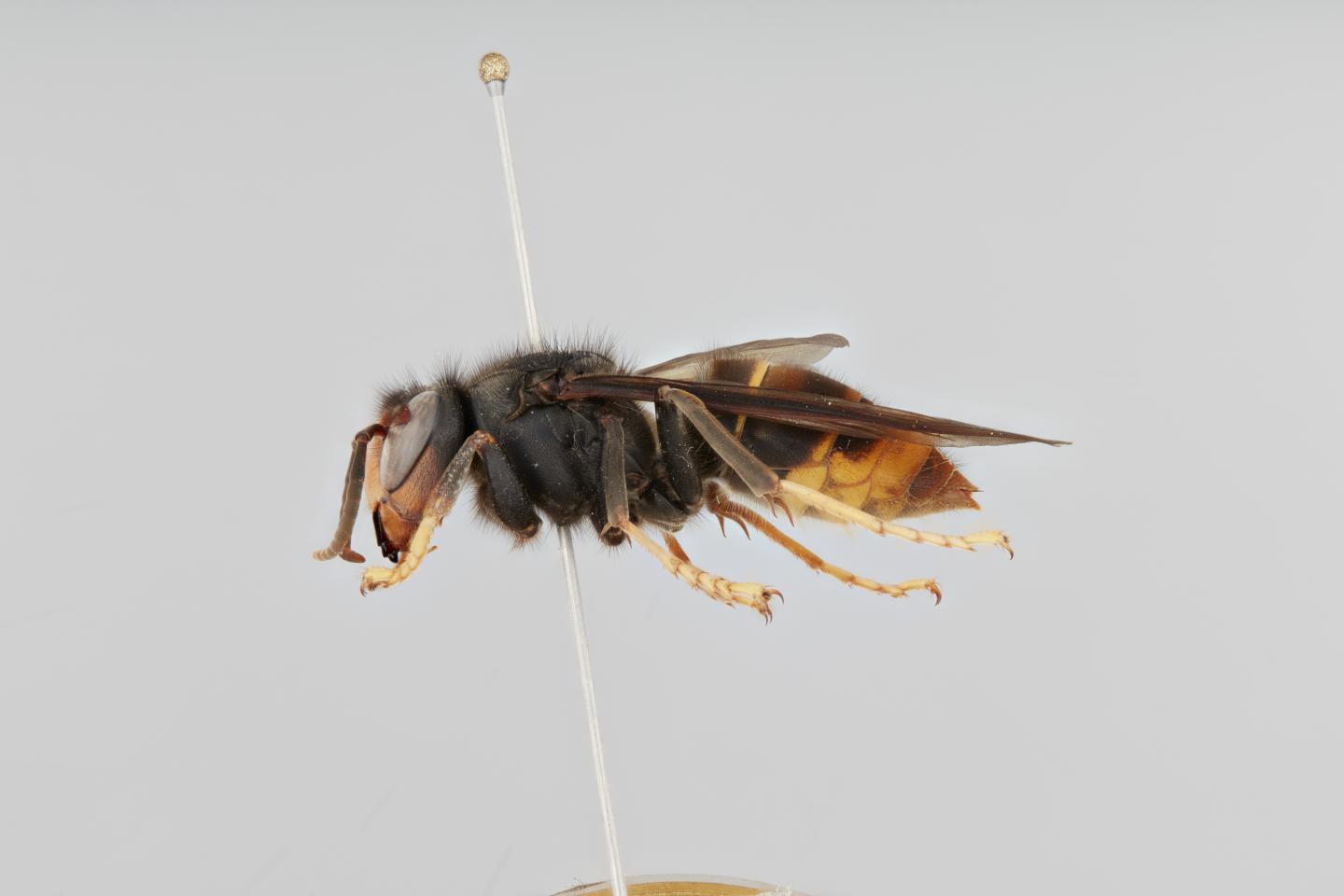
Credit: Mr. Martin Husemann


In early September 2019, an Asian hornet (Vespa velutina nigrithorax) was collected alive in Hamburg, Germany, representing the northernmost find of the species so far in Europe and indicating its further spread to the north. The paper by the research group from Hamburg, which also serves to update the occurrence of the dangerous invader, was published in the open access journal Evolutionary Systematics.

Known to prey on many insects, including honey bees and other beneficiary species, the Asian hornet, which had already invaded parts of Southern and Central Europe, is a potential threat to apiculture and even to ecosystems.

The first specimen was captured in south-western France in 2005 and started to spread quickly. Over the next years, it invaded large parts of France and regions of Spain, Portugal, Belgium, Italy, the Netherlands, Great Britain and south-western parts of Germany. The estimated invasion speed for France has been estimated at around 78 km/year, but in reality, the species spread might be occurring much faster due to anthropogenic factors.

It’s not yet clear if the collected Asian hornet belonged to an already settled population or it’s rather the first record of a new invasion. Nevertheless, considering the fast invasion speed of the species and its relatively high climatic tolerance, it’s quite possible that it had reached Hamburg on natural routes and now reproduces there.

Even though other models suggest that the Hamburg area is not suitable for the species today, the new find might be a sign that the Asian hornet has begun spreading at a speed above that previously known and even in climatically less favourable regions.

“Therefore, the current find needs to be taken seriously, no matter if it is only a single specimen or a member of an established population”, shares the lead researcher Martin Husemann from Centrum für Naturkunde, University of Hamburg.

Invasive species are one of the great challenges in the modern world. Their occurrence can be considered as one of the key important ecological and evolutionary drivers.

###

Original source:

Husemann M, Sterr A, Maack S, Abraham R (2020) The northernmost record of the Asian hornet Vespa velutina nigrithorax (Hymenoptera, Vespidae). Evolutionary Systematics 4(1): 1-4. https://doi.org/10.3897/evolsyst.4.47358

Media Contact
Martin Husemann
[email protected]

Related Journal Article

http://dx.doi.org/10.3897/evolsyst.4.47358

Tags: BiologyEntomologyEvolution
Share12Tweet8Share2ShareShareShare2

Related Posts

Transforming Jellyfish Bycatch into a Valuable Collagen Source for Cosmetics and Biotechnology — Biology

Transforming Jellyfish Bycatch into a Valuable Collagen Source for Cosmetics and Biotechnology

May 11, 2026
Ancient Plant Populations Reveal Fresh Insights into Climate Resilience — Biology

Ancient Plant Populations Reveal Fresh Insights into Climate Resilience

May 8, 2026

Rare Brain Disorders in Children Linked to Mutations in Lesser-Known Protein Complex

May 8, 2026

From Odd Insect to Underwater Predator: The Remarkable Evolution of a Bloodthirsty Fruit Fly

May 8, 2026
Please login to join discussion

POPULAR NEWS

  • Research Indicates Potential Connection Between Prenatal Medication Exposure and Elevated Autism Risk

    840 shares
    Share 336 Tweet 210
  • New Study Reveals Plants Can Detect the Sound of Rain

    728 shares
    Share 290 Tweet 182
  • Salmonella Haem Blocks Macrophages, Boosts Infection

    62 shares
    Share 25 Tweet 16
  • Breastmilk Balances E. coli and Beneficial Bacteria in Infant Gut Microbiomes

    57 shares
    Share 23 Tweet 14

About

We bring you the latest biotechnology news from best research centers and universities around the world. Check our website.

Follow us

Recent News

Medicaid’s Role in Combating Climate Change Impacts

Mapping Skin Lesions in Lupus Types Explored

Umbilical IL-6 Levels Reveal Preterm Brain Injury Risk

Subscribe to Blog via Email

Enter your email address to subscribe to this blog and receive notifications of new posts by email.

Join 82 other subscribers
  • Contact Us

Bioengineer.org © Copyright 2023 All Rights Reserved.

Welcome Back!

Login to your account below

Forgotten Password?

Retrieve your password

Please enter your username or email address to reset your password.

Log In
No Result
View All Result
  • Homepages
    • Home Page 1
    • Home Page 2
  • News
  • National
  • Business
  • Health
  • Lifestyle
  • Science

Bioengineer.org © Copyright 2023 All Rights Reserved.