• HOME
  • NEWS
  • EXPLORE
    • CAREER
      • Companies
      • Jobs
    • EVENTS
    • iGEM
      • News
      • Team
    • PHOTOS
    • VIDEO
    • WIKI
  • BLOG
  • COMMUNITY
    • FACEBOOK
    • INSTAGRAM
    • TWITTER
Monday, June 29, 2026
BIOENGINEER.ORG
No Result
View All Result
  • Login
  • HOME
  • NEWS
  • EXPLORE
    • CAREER
      • Companies
      • Jobs
        • Lecturer
        • PhD Studentship
        • Postdoc
        • Research Assistant
    • EVENTS
    • iGEM
      • News
      • Team
    • PHOTOS
    • VIDEO
    • WIKI
  • BLOG
  • COMMUNITY
    • FACEBOOK
    • INSTAGRAM
    • TWITTER
  • HOME
  • NEWS
  • EXPLORE
    • CAREER
      • Companies
      • Jobs
        • Lecturer
        • PhD Studentship
        • Postdoc
        • Research Assistant
    • EVENTS
    • iGEM
      • News
      • Team
    • PHOTOS
    • VIDEO
    • WIKI
  • BLOG
  • COMMUNITY
    • FACEBOOK
    • INSTAGRAM
    • TWITTER
No Result
View All Result
Bioengineer.org
No Result
View All Result
Home Headlines

Fast-cooking dry beans provide more protein, iron than ‘slower’ varieties

Bioengineer.org by Bioengineer.org
January 30, 2018
in Headlines, Health, Science News
Reading Time: 2 mins read
0
Share on FacebookShare on TwitterShare on LinkedinShare on RedditShare on Telegram
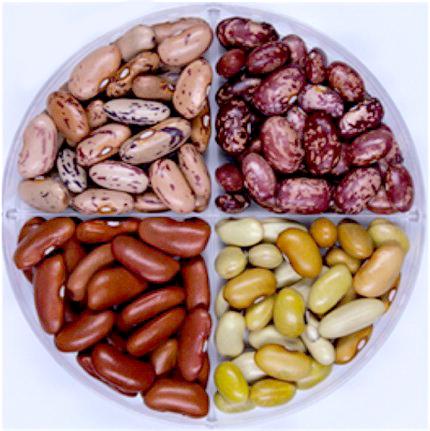
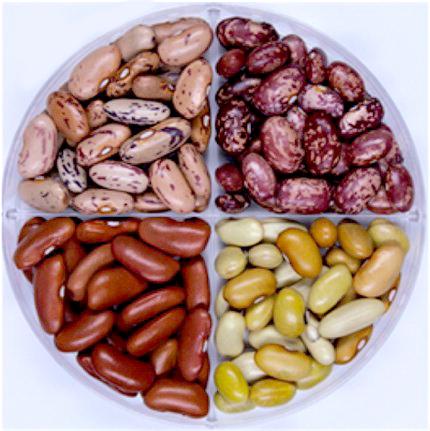
IMAGE

Credit: American Chemical Society

Beans are a versatile, inexpensive staple that can boost essential nutrients in a diet, especially for people in low-resource areas where food options are limited. To get the most out of these legumes, new research suggests choosing fast-cooking dry beans could be the way to go. A study in ACS' Journal of Agricultural and Food Chemistry found that fast-cooking beans retained more protein, iron and other minerals than "slower" dry beans.

According to the World Health Organization about 2 billion people around the world are estimated to be deficient in key vitamins and minerals, including iron and zinc. Dry beans could help address these deficiencies, but they often take a long time to cook. This can deter people from adding them to meals. To prepare food, many people with limited resources rely on burning wood, charcoal or other biofuels that can require a lot of time to gather or a relatively high percentage of their income. For those reasons, faster-cooking beans would be a good dietary option, but whether they carry the same nutritional value as slower-cooking varieties was unknown. So Karen A. Cichy, from the U.S. Department of Agriculture, and colleagues set out to test them.

The researchers analyzed the nutritional value of 12 fast-, moderate- and slow-cooking dry bean cultivars from four classes: yellow, cranberry, light red kidney and red mottled. The speedier beans maintained higher protein and mineral content after they were prepared than the moderate- and slow-cooking varieties. For example, the fast-cooking yellow bean Cebo Cela contained 20 percent more protein, 10 percent more iron and 10 percent more zinc than the yellow bean Canario, which took twice as long to prepare. Further testing showed that the iron bioavailability — the amount that a person's body would absorb — is also higher in the quicker-cooking beans in each of the four classes examined.

###

The authors acknowledge funding from the U.S. Agency for International Development, the U.S. Department of Agriculture and the National Cancer Institute.

The abstract that accompanies this study is available here.

The American Chemical Society is a nonprofit organization chartered by the U.S. Congress. With nearly 157,000 members, ACS is the world's largest scientific society and a global leader in providing access to chemistry-related research through its multiple databases, peer-reviewed journals and scientific conferences. Its main offices are in Washington, D.C., and Columbus, Ohio.

To automatically receive news releases from the American Chemical Society, contact [email protected]

Follow us: Twitter Facebook

Media Contact

Michael Bernstein
[email protected]
202-872-6042
@ACSpressroom

http://www.acs.org

Share12Tweet8Share2ShareShareShare2

Related Posts

Tracking Lanthanide-Labeled Microplastics in Plants

June 25, 2026

POSTECH Researchers Slash Cost of Reconstituted Cell-Free Systems by 95%

June 25, 2026

AI and Physics Collaborate to Design Advanced Hydrogen Storage Materials

June 25, 2026

Natural Hallucinogens: Evolution’s Ecological Tools, Not Mere Chemical Byproducts

June 25, 2026
Please login to join discussion

POPULAR NEWS

  • Saying Goodbye to PGY-6: Pediatric Fellowship Realities

    103 shares
    Share 41 Tweet 26
  • Multi-Hospital Study Reveals Long Covid Burden Is Twice as High as Current Estimates

    92 shares
    Share 36 Tweet 23
  • Detection of EDCs in Breast Milk and Infant Urine Up to Six Months Highlights Early Exposure Risks

    77 shares
    Share 31 Tweet 19
  • New Drug Candidate Developed at McMaster Shows Potential for Treating Brain Cancer

    58 shares
    Share 23 Tweet 15

About

We bring you the latest biotechnology news from best research centers and universities around the world. Check our website.

Follow us

Recent News

Tracking Lanthanide-Labeled Microplastics in Plants

POSTECH Researchers Slash Cost of Reconstituted Cell-Free Systems by 95%

AI and Physics Collaborate to Design Advanced Hydrogen Storage Materials

Subscribe to Blog via Email

Success! An email was just sent to confirm your subscription. Please find the email now and click 'Confirm' to start subscribing.

Join 82 other subscribers
  • Contact Us

Bioengineer.org © Copyright 2023 All Rights Reserved.

Welcome Back!

Login to your account below

Forgotten Password?

Retrieve your password

Please enter your username or email address to reset your password.

Log In
No Result
View All Result
  • Homepages
    • Home Page 1
    • Home Page 2
  • News
  • National
  • Business
  • Health
  • Lifestyle
  • Science

Bioengineer.org © Copyright 2023 All Rights Reserved.