Increased expression of cilia-related genes, particularly CAPS and DNAAF1, characterizes posterior fossa group A ependymoma compared to supratentorial tumors harboring zinc finger translocation-associated protein fusions, according to an integrative molecular study. Pediatric high-risk ependymomas arise across the neuroaxis, with posterior fossa group A tumors exhibiting distinctly poor overall survival linked to frequent recurrence and limited therapeutic response.
The aggressive clinical behavior of this high-risk subtype has driven efforts to identify its underlying epigenetic drivers and mechanisms. While stem-like and progenitor-like cell populations are abundant in these tumors, EZH2 inhibitory protein, known as EZHIP, has been identified as a driver of epigenetic reprogramming whose role in cellular differentiation during tumor progression remained uncharacterized.
To investigate the interactions between EZHIP, cilia-associated genes, and mesenchymal markers, the authors integrated multi-omic data from patient cohorts and publicly available datasets. Their profiling evaluated RNA expression across 58 tissue specimens, DNA methylation patterns across 37 specimens, chromatin immunoprecipitation sequencing for H3K27me3, H3K27ac, and EZHIP across four samples, and multiplex immunohistochemistry across 15 specimens.
Functional genomic profiling revealed that EZHIP binds directly to CAPS gene loci. Knockdown of EZHIP in posterior fossa group A ependymoma cells led to significantly reduced CAPS levels, establishing an association between EZHIP and neuro-epithelial differentiation programs. In addition, the investigators detected a strong correlation between CAPS, EZHIP, and chromosome 1q gain that was enriched in progressive disease specimens.
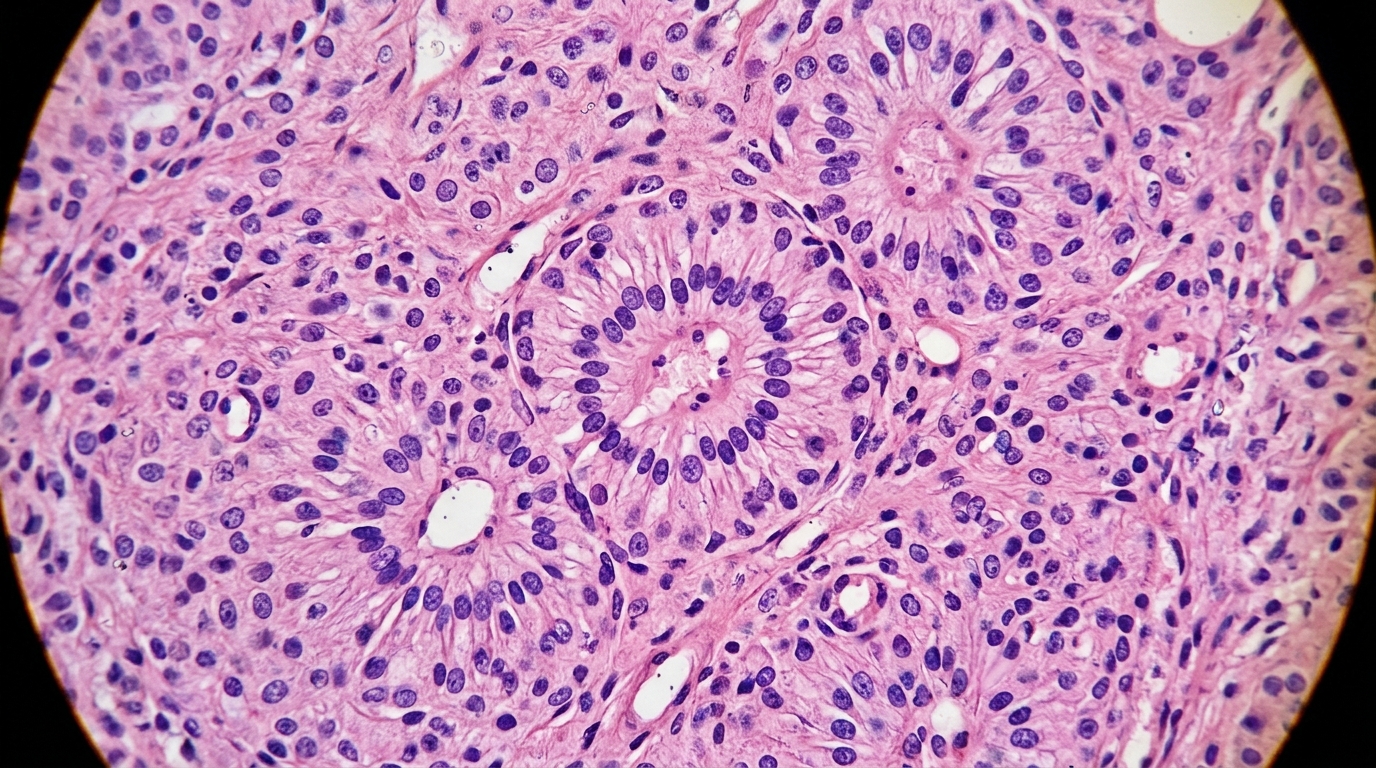
Tissue reorganization during tumor progression produced layered pseudorosette structures characterized by spatial compartmentalization. Within these formations, CA9-positive mesenchymal compartments encircled CAPS-positive ciliated cells, with both distinct cell populations expressing EZHIP, revealing the epigenetic and structural coordination between neuro-epithelial and mesenchymal differentiation programs during progression.
Subject of Research: EZHIP regulation of cellular differentiation programs in PFA ependymoma progression
Article Title: EZHIP links neuro-epithelial and mesenchymal tumor programs during progression of PFA ependymoma
Article References: Jaunecker, C. N., Mager, L., Bruckner, K., Zehetbauer, T., Tukmachi, D. A., Freund, J., Machreich, S., Pacher, L., Pirker, C., Jenseit, A., Hübner, J. M., Wang, S., Kerschbaumer, L., Dorfer, C., Rössler, K., Stepien, N., Krause, E., Haberler, C., Kool, M., … Lötsch, D. (2026). EZHIP links neuro-epithelial and mesenchymal tumor programs during progression of PFA ependymoma. Acta Neuropathologica Communications. https://doi.org/10.1186/s40478-026-02446-0
Image Credits: AI Generated
DOI: 10.1186/s40478-026-02446-0
Keywords: PFA ependymoma, EZHIP, neuro-epithelial differentiation, mesenchymal differentiation, pediatric brain tumors, CAPS gene, pseudorosettes, epigenetic reprogramming, links, neuro-epithelial, mesenchymal, tumor
News Source: Harold Sullivan. (November 7, 2026). EZHIP Links Dual Differentiation Programs During Pediatric PFA Ependymoma Progression. Scienmag.