• HOME
  • NEWS
  • EXPLORE
    • CAREER
      • Companies
      • Jobs
    • EVENTS
    • iGEM
      • News
      • Team
    • PHOTOS
    • VIDEO
    • WIKI
  • BLOG
  • COMMUNITY
    • FACEBOOK
    • INSTAGRAM
    • TWITTER
Sunday, May 24, 2026
BIOENGINEER.ORG
No Result
View All Result
  • Login
  • HOME
  • NEWS
  • EXPLORE
    • CAREER
      • Companies
      • Jobs
        • Lecturer
        • PhD Studentship
        • Postdoc
        • Research Assistant
    • EVENTS
    • iGEM
      • News
      • Team
    • PHOTOS
    • VIDEO
    • WIKI
  • BLOG
  • COMMUNITY
    • FACEBOOK
    • INSTAGRAM
    • TWITTER
  • HOME
  • NEWS
  • EXPLORE
    • CAREER
      • Companies
      • Jobs
        • Lecturer
        • PhD Studentship
        • Postdoc
        • Research Assistant
    • EVENTS
    • iGEM
      • News
      • Team
    • PHOTOS
    • VIDEO
    • WIKI
  • BLOG
  • COMMUNITY
    • FACEBOOK
    • INSTAGRAM
    • TWITTER
No Result
View All Result
Bioengineer.org
No Result
View All Result
Home NEWS Science News Biology

Eye-in-the-sky to save olive trees

Bioengineer by Bioengineer
June 25, 2018
in Biology
Reading Time: 2 mins read
0
Share on FacebookShare on TwitterShare on LinkedinShare on RedditShare on Telegram
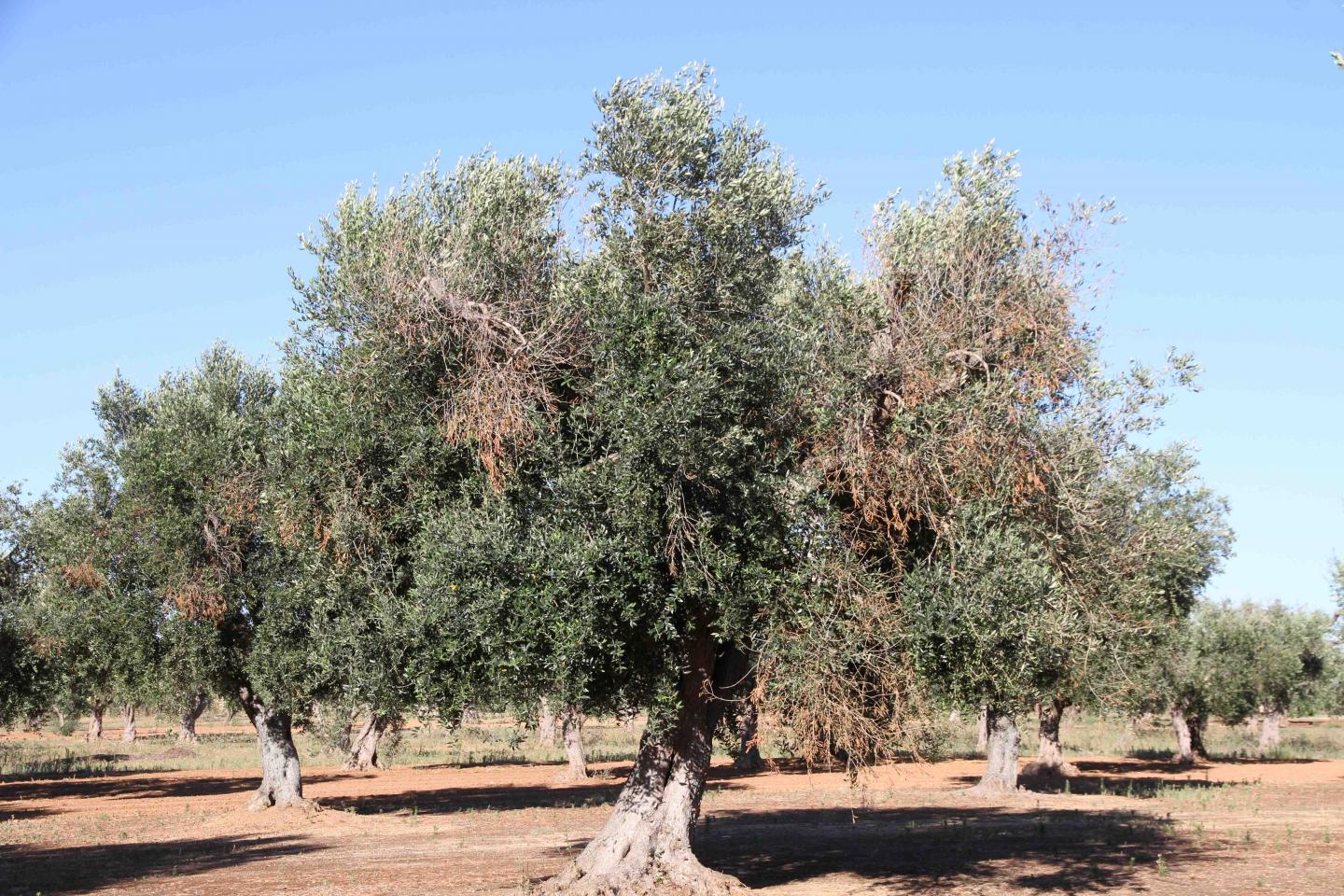
IMAGE

Credit: Juan A. Navas-Cortes

A new airborne remote-imaging method that scans entire orchards can identify olive trees infected by a devastating bacterium before visible symptoms appear, according to new research.

The scanning, which can be deployed using planes or drones, may help control the spread of infection and save southern Europe's iconic tree.

Xylella fastidiosa is a devastating bacterium, transmitted by common sap-feeding insects, which causes disease in over 350 plant species. Olive trees are especially vulnerable, with the bacteria causing branches and twigs to wither, and leaves to appear scorched.

Common in the Americas but only recently discovered in Europe, Xylella is spreading around the Mediterranean, with many orchards already destroyed in Italy's olive-oil-producing Apulia region. As there is no cure, the only way to stop the disease's progress is to cull infected trees, with earlier diagnoses being the key to more effective containment.

Pablo Zarco-Tejada of the European Commission, together with experts from Swansea University and other European institutions, used special cameras, fitted aboard a small plane, to perform both hyperspectral (looking across the entire electromagnetic range) and thermal image analyses of orchards. The authors then tested olive trees on the ground for Xylella infection.

Professor Peter North, from the Department of Geography at Swansea University, one of the authors of the research, said: "Our study found that the effects of the bacterial infection can be remotely detected before any visible symptoms appear, allowing for rapid and accurate mapping of Xylella-infected olive trees across target orchards".

Dr Rocio Hernandez-Clemente, a geographer and member of the research team from Swansea University, added: "The spread of plant diseases is predicted to become an increasing problem with climate change, including for the UK. International cooperation is essential for early detection, to control damage and prevent spread. This study demonstrates the possibility of detection of symptoms at an early stage, and may be adapted to drones and aircraft for widespread use".

###

The paper 'Previsual symptoms of Xylella fastidiosa infection revealed in spectral plant-trait alterations' is available on Nature Plants' website.

Media Contact

Catrin Newman
[email protected]
179-251-3454
@swanseauni

http://www.swansea.ac.uk/

Related Journal Article

http://dx.doi.org/10.1038/s41477-018-0189-7
Share12Tweet8Share2ShareShareShare2

Related Posts

Rising Sightings of Blue and Fin Whales in the South East Atlantic — Biology

Rising Sightings of Blue and Fin Whales in the South East Atlantic

May 23, 2026
New Maps Reveal How European Landscapes Can Simultaneously Promote Climate Action and Biodiversity Conservation — Biology

New Maps Reveal How European Landscapes Can Simultaneously Promote Climate Action and Biodiversity Conservation

May 22, 2026

University of Cincinnati Structural Biologists Achieve World First in Visualizing Crucial Cell Protein

May 22, 2026

Reducing Fertilizer Use Through Strategic Scientific Partnerships

May 22, 2026
Please login to join discussion

POPULAR NEWS

  • ESMO 2025: mRNA COVID Vaccines Enhance Efficacy of Cancer Immunotherapy

    313 shares
    Share 125 Tweet 78
  • New Study Reveals Plants Can Detect the Sound of Rain

    734 shares
    Share 293 Tweet 183
  • Research Indicates Potential Connection Between Prenatal Medication Exposure and Elevated Autism Risk

    847 shares
    Share 339 Tweet 212
  • Common Food Preservatives Associated with Elevated Blood Pressure and Increased Heart Disease Risk

    55 shares
    Share 22 Tweet 14

About

We bring you the latest biotechnology news from best research centers and universities around the world. Check our website.

Follow us

Recent News

Sepsis from C. difficile Infection Has Comparable Mortality

Mortality Trends in Dallas Very Preterm Neonates, 1977–2024

Nanofiber Self-Adhesive Electrode with PEDOT, Polyurethane

Subscribe to Blog via Email

Enter your email address to subscribe to this blog and receive notifications of new posts by email.

Join 83 other subscribers
  • Contact Us

Bioengineer.org © Copyright 2023 All Rights Reserved.

Welcome Back!

Login to your account below

Forgotten Password?

Retrieve your password

Please enter your username or email address to reset your password.

Log In
No Result
View All Result
  • Homepages
    • Home Page 1
    • Home Page 2
  • News
  • National
  • Business
  • Health
  • Lifestyle
  • Science

Bioengineer.org © Copyright 2023 All Rights Reserved.