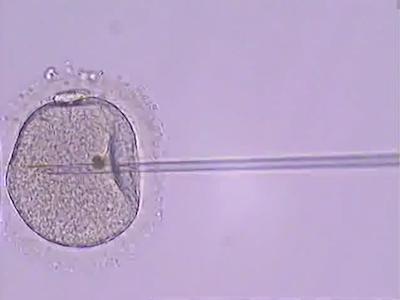
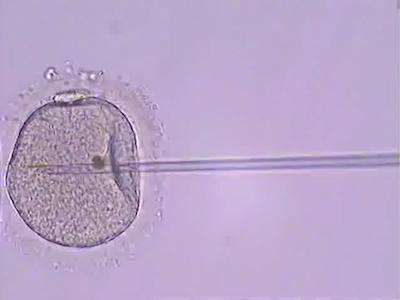
IMAGE: A simple sperm analysis — DFI — could help guide couples as they select the best fertility treatment for them. The picture illustrates the ICSI-method, which is one of the…
Credit: Lund University
New research findings from Lund University, Sweden show that a simple analysis of chromosomal breaks in sperms can help guide choice of fertility treatment and, thereby, increase chances of successful assisted reproduction for involuntary childless couples.
WATCH VIDEO INTERVIEW: Simple sperm test offers help for involuntarily childless couples – https://www.youtube.com/watch?v=JeiMnVM_SFo
Sperm DNA Fragmentation Index (DFI) is a method for analysing semen quality that shows presence of chromosomal breaks in sperms. The method complements other more well-known analytical methods available for assessing semen quality, such as assessment of sperm number quantity, motility and morphology.
A new study, which is the largest study within this field of research so far, shows that DFI analysis can be used for selecting the most efficient treatment to involuntarily childless couples. The study is based on analyses of more than 1 600 such couples referred to the Reproductive Medicine Centre at Skåne University Hospital in Malmö, Sweden for help. All men who participated in the study underwent DFI analysis.
Men with a high DNA fragmentation index (DFI) also have more chromosomal breaks, which is linked to lower fertility. The couples who participated in the study underwent assisted reproduction, either through the standard method in vitro fertilisation (IVF) or the more advanced – ICSI (intracytoplasmic sperm injection).
In standard IVF the harvested egg is mixed with a large number of sperms in a test tube. The goal is that the fertilisation will succeed without further measures or assistance. ICSI involves selecting a single viable sperm cell that is then injected into the egg through a needle.
Getting the most effective treatment from the start
"In couples where the man had many chromosomal breaks, their best chance of becoming pregnant was to use ICSI rather than IVF. The DFI analysis thereby makes it possible to personalise treatment and increase the chances of having children", says Krzysztof Oleszczuk, PhD student at Lund University and senior consultant at Skåne University Hospital.
"We hope that these results will mean that involuntarily childless couples are offered the most effective treatment right away. Undergoing unsuccessful assisted reproduction can be very stressful – both physically and mentally – especially if done repeatedly", explains Aleksander Giwercman, professor at Lund University and consultant at Skåne University Hospital.
To confirm these results, a follow-up multicentre study is currently underway, in which three hospitals in the greater Copenhagen area will participate within the scope of the EU funded research collaboration in the Öresund region on fertility – ReproUnion. However, Aleksander Giwercman is looking forward to immediately transferring this new knowledge into practice at the Reproductive Medicine Centre at Skåne University Hospital.
For a long time, the clinic has emphasised the importance of conducting a thorough analysis, both in terms of research and treatment, of women and men in couples that are involuntarily childless:
"Traditionally the main focus has been on the woman in cases where couples have difficulties to conceive. But our research and experience show that it is important to thoroughly study both partners", says Aleksander Giwercman.
The study is published in the medical journal Andrology.
###
"Sperm chromatin structure assay in prediction of in vitro fertilization outcome", Authors: K. Oleszczuk, A. Giwercman and M. Bungum
Andrology, published online 2016, Jan 12, http://www.ncbi.nlm.nih.gov/pubmed/26757265
Media Contact
Cecilia Schubert
[email protected]
46-708-661-383
@lunduniversity
http://www.lu.se