• HOME
  • NEWS
  • EXPLORE
    • CAREER
      • Companies
      • Jobs
    • EVENTS
    • iGEM
      • News
      • Team
    • PHOTOS
    • VIDEO
    • WIKI
  • BLOG
  • COMMUNITY
    • FACEBOOK
    • INSTAGRAM
    • TWITTER
Saturday, May 16, 2026
BIOENGINEER.ORG
No Result
View All Result
  • Login
  • HOME
  • NEWS
  • EXPLORE
    • CAREER
      • Companies
      • Jobs
        • Lecturer
        • PhD Studentship
        • Postdoc
        • Research Assistant
    • EVENTS
    • iGEM
      • News
      • Team
    • PHOTOS
    • VIDEO
    • WIKI
  • BLOG
  • COMMUNITY
    • FACEBOOK
    • INSTAGRAM
    • TWITTER
  • HOME
  • NEWS
  • EXPLORE
    • CAREER
      • Companies
      • Jobs
        • Lecturer
        • PhD Studentship
        • Postdoc
        • Research Assistant
    • EVENTS
    • iGEM
      • News
      • Team
    • PHOTOS
    • VIDEO
    • WIKI
  • BLOG
  • COMMUNITY
    • FACEBOOK
    • INSTAGRAM
    • TWITTER
No Result
View All Result
Bioengineer.org
No Result
View All Result
Home NEWS Science News Biology

Extending the coverage of PM2.5 monitoring to help improve air quality

Bioengineer by Bioengineer
June 23, 2020
in Biology
Reading Time: 2 mins read
0
IMAGE
Share on FacebookShare on TwitterShare on LinkedinShare on RedditShare on Telegram

IMAGE

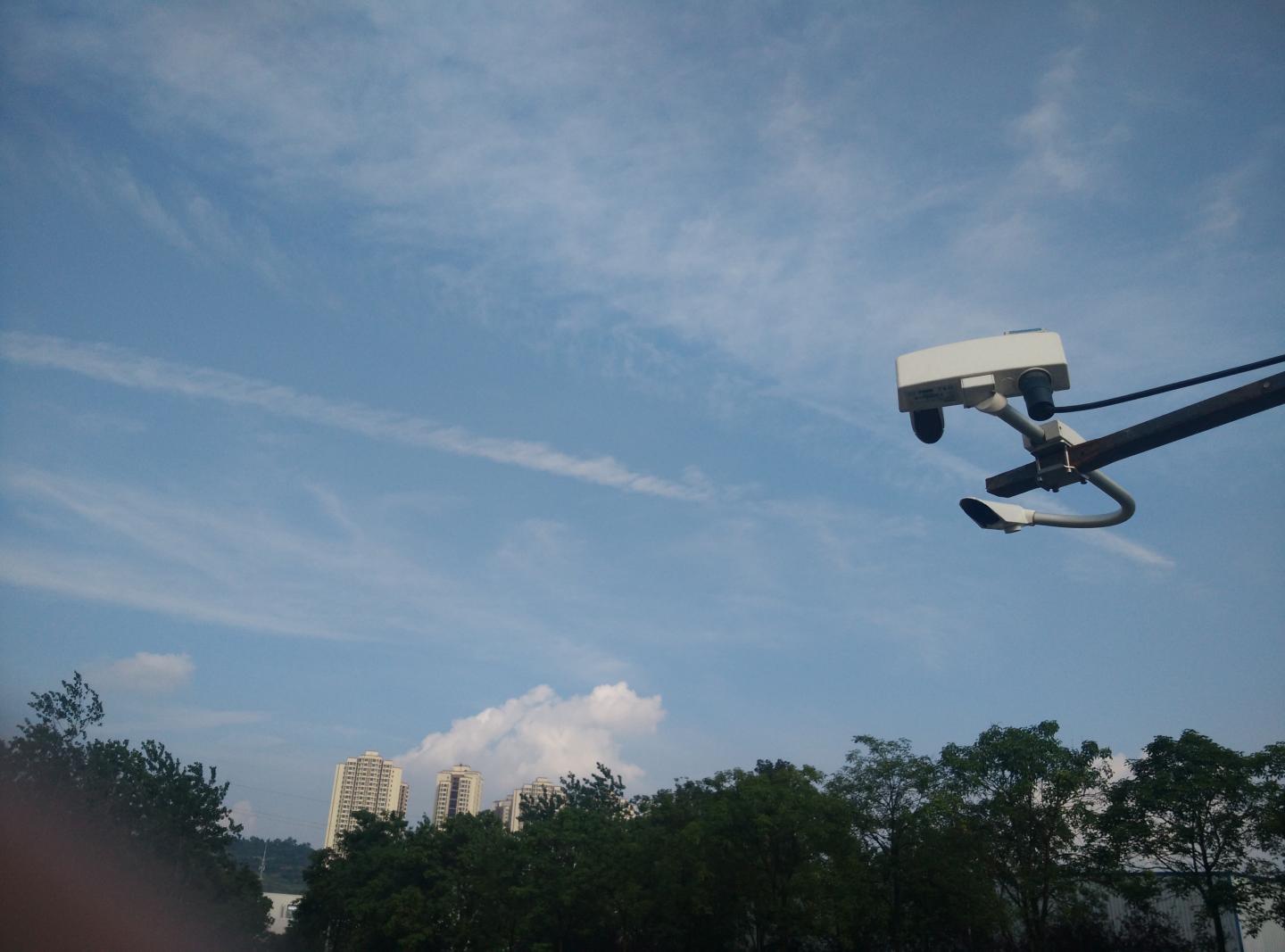
Credit: Liang Ran

Air pollution, especially the particulate matter in the atmosphere, can result in poor air quality and visibility, posing a risk to human health and transportation safety. Now, a team of researchers in China has improved the method to obtain mass concentrations of particulate matter from widely measured humidity and visibility data.

The results were published in Advances in Atmospheric Sciences.

The researchers specifically examined mass concentrations of PM2.5, which is particulate matter with an aerodynamic diameter less than 2.5 micrometers — roughly the size of one seventh of a pollen grain.

“Particulate matter, especially PM2.5, is of great concern to both public and scientific communities in recent years,” said the corresponding author, Zhaoze Deng from the Key Laboratory of Middle Atmosphere and Global environment Observation (LAEGO), the Institute of Atmospheric Physics (IAP) at the Chinese Academy of Sciences (CAS). “The number of observational stations that measure particulate matter mass concentrations keeps increasing. However, they are mainly located in urban areas, and the period of monitoring is very limited for most of them.”

By extending the available data to include larger spatial and temporal coverage, a broader understanding of how particulate matter evolves could emerge, according to Deng. That could be especially helpful when it comes to visibility in daily life. The distance a person can see, such as a pilot flying an airplane, is directly linked to particulate matter mass concentrations

“Atmospheric visibility is a measure for light extinction that is mainly caused by particles suspended in the atmosphere,” said first author Denghui Ji, who is also affiliated with LAGEO, IAP and CAS. “At high ambient relative humidity (RH), visibility is not only influenced by dry particles, but also by water condensed on particles.”

By understanding the relationship among relative humidity, visibility and particulate matter mass concentrations, the researchers developed a method to estimate the mass concentrations using only routine measurements of RH and visibility. Although the spatial and temporal coverage of particulate matter mass concentration measurements is limited, long-term measurements of relative humidity and visibility is available for many locations.

“The proposed method performed well for the dataset in this study,” Deng said, referring to data obtained from a field campaign carried out in January 2019 in southwest China. “We would like to further investigate its performance in other seasons and also other locations. Parameters characterizing the relationship might vary and need to be localized.”

The goal, according to Deng, is to apply this method to generate datasets of particulate matter mass concentrations based on extensive ground-level visibility data from meteorological stations or optical data from satellites. Eventually, the datasets could help finetune mass concentration estimations for other readily available measurements.

###

Media Contact
Ms. LIN Zheng
[email protected]

Original Source

http://english.iap.cas.cn/home/News/202006/t20200623_239128.html

Related Journal Article

http://dx.doi.org/10.1007/s00376-020-0009-7

Tags: Atmospheric ScienceEarth SciencePollution/Remediation
Share12Tweet8Share2ShareShareShare2

Related Posts

Single mother must adapt swiftly — the survival of her colony depends on it — Biology

Single mother must adapt swiftly — the survival of her colony depends on it

May 15, 2026
Why Are Nearly Everyone Right-Handed? It Might Be Linked to How We Learned to Walk — Biology

Why Are Nearly Everyone Right-Handed? It Might Be Linked to How We Learned to Walk

May 15, 2026

Excessive Neuronal Activity Initiates Severe Autoimmune Brain Disorder

May 15, 2026

Precision Anti-Aging Strategies Focus on Eliminating Harmful Senescent Cells While Preserving Beneficial Ones

May 15, 2026
Please login to join discussion

POPULAR NEWS

  • Research Indicates Potential Connection Between Prenatal Medication Exposure and Elevated Autism Risk

    843 shares
    Share 337 Tweet 211
  • New Study Reveals Plants Can Detect the Sound of Rain

    730 shares
    Share 291 Tweet 182
  • Salmonella Haem Blocks Macrophages, Boosts Infection

    62 shares
    Share 25 Tweet 16
  • Breastmilk Balances E. coli and Beneficial Bacteria in Infant Gut Microbiomes

    58 shares
    Share 23 Tweet 15

About

We bring you the latest biotechnology news from best research centers and universities around the world. Check our website.

Follow us

Recent News

Pembrolizumab and Lenvatinib Trial for Mucosal Melanoma

Carboplatin ± Nivolumab in Metastatic TNBC Trial

New Numeracy Screener Developed for Preschoolers

Subscribe to Blog via Email

Enter your email address to subscribe to this blog and receive notifications of new posts by email.

Join 82 other subscribers
  • Contact Us

Bioengineer.org © Copyright 2023 All Rights Reserved.

Welcome Back!

Login to your account below

Forgotten Password?

Retrieve your password

Please enter your username or email address to reset your password.

Log In
No Result
View All Result
  • Homepages
    • Home Page 1
    • Home Page 2
  • News
  • National
  • Business
  • Health
  • Lifestyle
  • Science

Bioengineer.org © Copyright 2023 All Rights Reserved.