Credit: NASA
You may think you're just an average Joe, but according to your metabolomics data your body is percolating some expressive information about your daily life.
"Metabolomics measures small molecules called metabolites that reflect the physiology of the body, and can reveal specific details about you. Researchers can see specific metabolites — such as caffeine — in your blood, and form hypotheses about your diet, lifestyle or environment," said Stanford University School of Medicine Postdoctoral Fellow Tejaswini Mishra, Ph.D. "For example, if we detected caffeine in your blood, it is likely that you had coffee before giving blood. With more data, we could also track your coffee-drinking habits, and perhaps even learn something about what type of coffee you drink! We might also see pesticides or derivatives of medications in the data, from which one could hypothesize whether a person gardens or farms, or lives in proximity to one, and which medications they might be on."
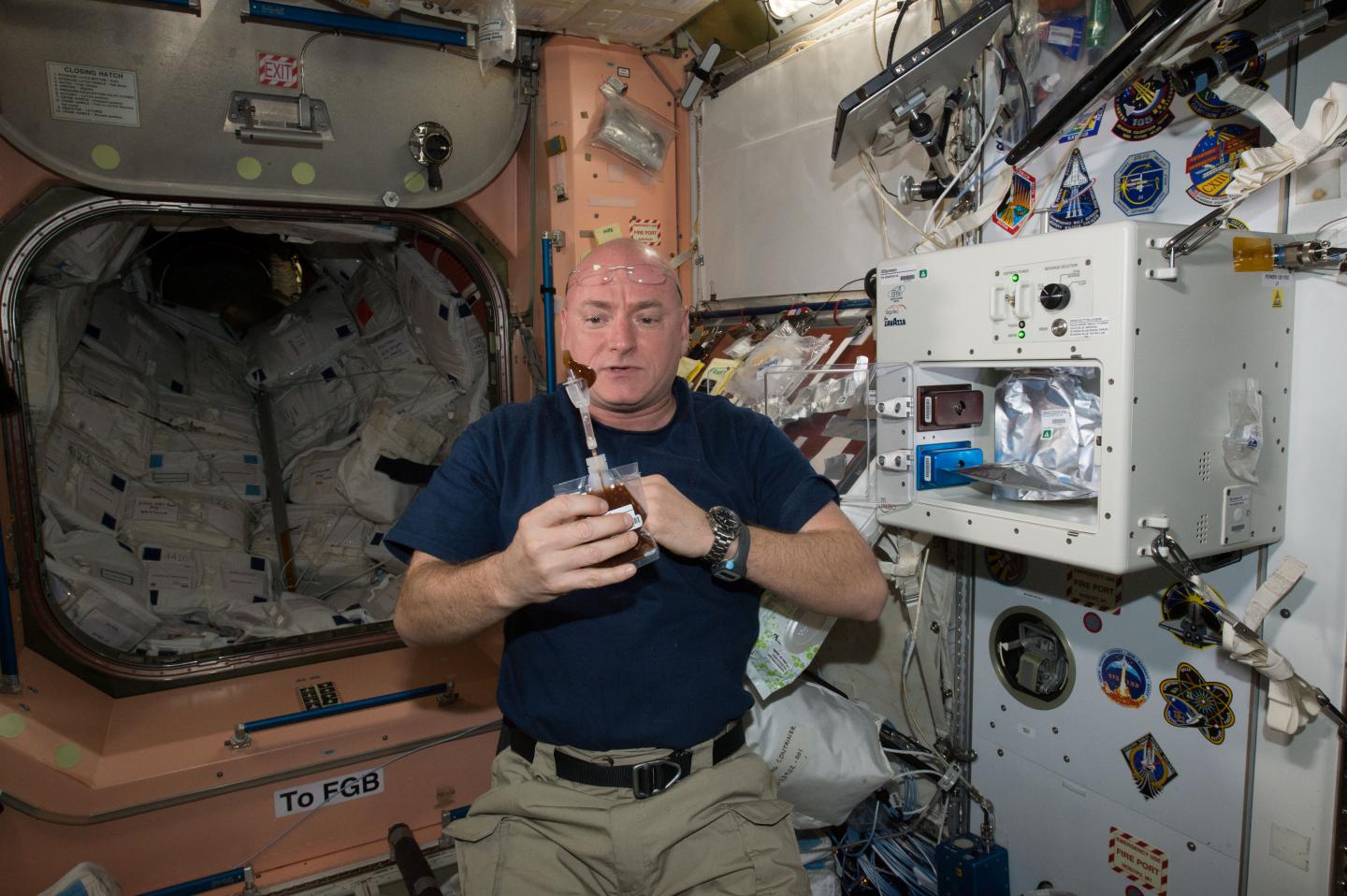
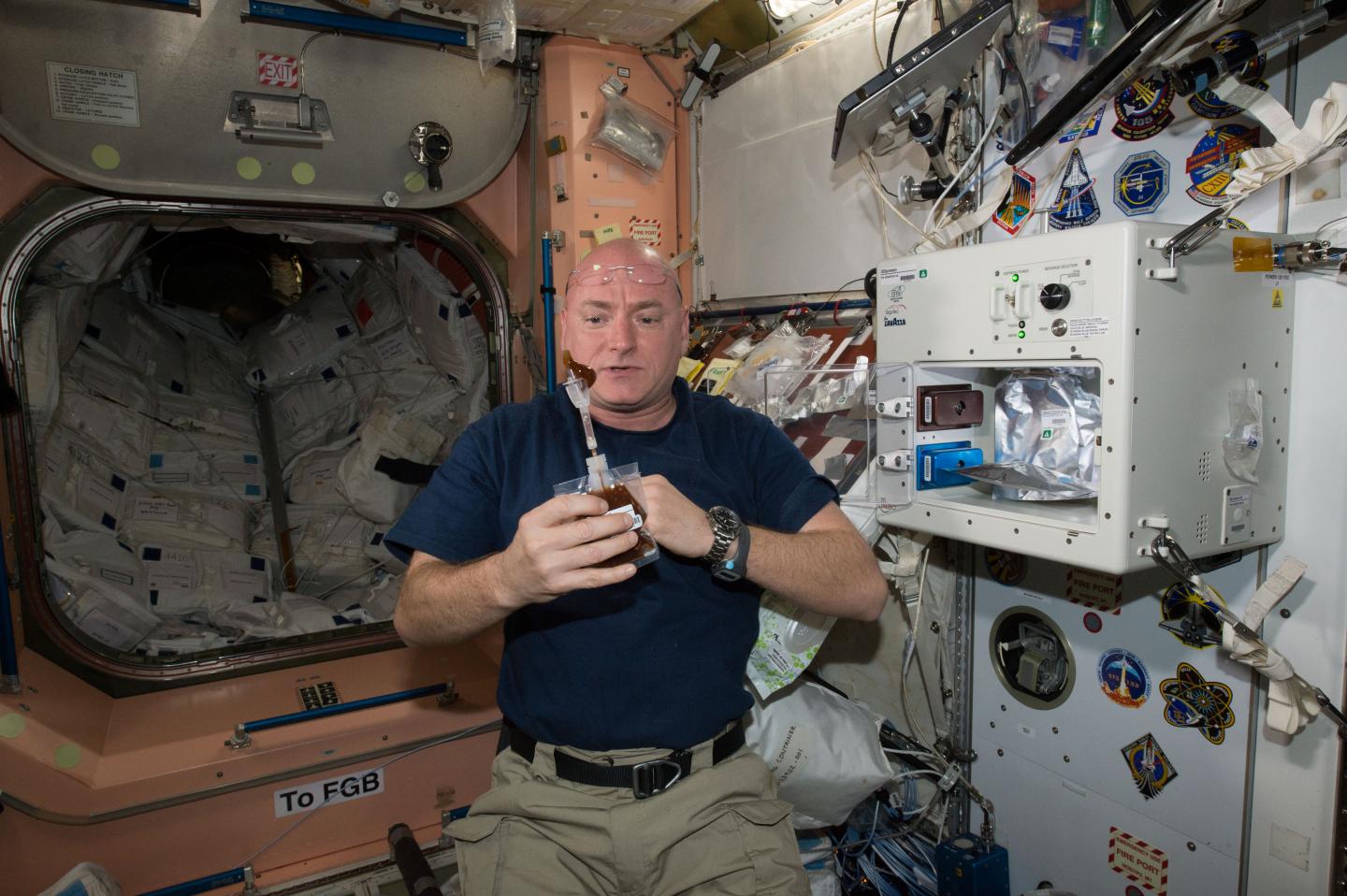
Mishra is integrating multi-omics data for NASA's Twins Study and comparing all the metabolites in retired twin astronauts Scott and Mark Kelly. She saw a number of Scott's metabolites increase in levels when he went to space and when he returned to Earth some of those stayed elevated. By integrating data from other Twins Study investigations, she hopes they can determine the cause of this elevation.
"It is incredible and powerful to have such rich data but it also is a little scary," Mishra said. "It really underscores the importance of securing your personal data, who you share it with, how you store it and protect it."
Twins Study researchers are investigating and securing an unprecedented amount of information. Most studies focus on two or three types of data but this is one of the few studies integrating many different types of data. By comparing identical genomes from twins, researchers can focus more attention to other specific molecular changes, such as metabolomics changes involving the end products of various biological pathways and processes. Mishra is helping to integrate data from metabolites, DNA, RNA, proteins, microbes, physiological and neurobehavioral systems, as well as food and exercise logs, to help researchers create a timeline and identify patterns and correlations. Together, they hope to help identify health-associated molecular effects of spaceflight to protect astronauts on future missions.
###
NASA's Human Research Program (HRP) is dedicated to discovering the best methods and technologies to support safe, productive human space travel. HRP enables space exploration by reducing the risks to astronaut health and performance using ground research facilities, the International Space Station and analog environments. This leads to the development and delivery of a program focused on: human health, performance and habitability standards; countermeasures and risk-mitigation solutions; and advanced habitability and medical-support technologies. HRP supports innovative, scientific human research by funding more than 300 research grants to respected universities, hospitals and NASA centers to over 200 researchers in more than 30 states.
Amy Blanchett
Laurie Abadie
NASA Human Research Strategic Communications
https://www.nasa.gov/feature/exploring-the-ground-truth-nasa-s-twin-study-investigates-metabolites
Media Contact
Amy Blanchett
[email protected]
@NASA_Johnson
http://www.nasa.gov/centers/johnson/home
Original Source
https://www.nasa.gov/feature/exploring-the-ground-truth-nasa-s-twin-study-investigates-metabolites