There are an estimated 8.7 million eukaryotic species on the planet. These are organisms whose cells contain a nucleus and other membrane-bound organelles. Although eukaryotes include the familiar animals and plants, these only represent two of the more than six major groups of eukaryotes. The bulk of eukaryotic diversity comprises single-cell eukaryotic microorganisms, known as protists. By studying protists, scientists can gain insight to the evolutionary processes that shaped the diversity and complexity of eukaryotic life and led to innovations such as multicellularity that made animal life on the planet possible.
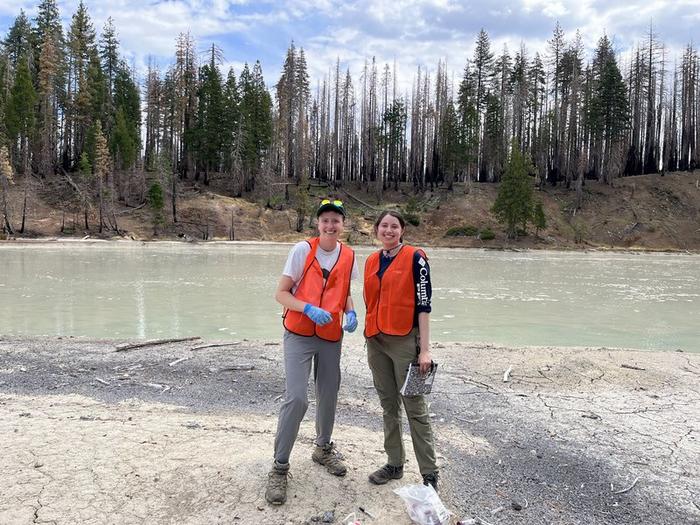
Credit: Syracuse University
There are an estimated 8.7 million eukaryotic species on the planet. These are organisms whose cells contain a nucleus and other membrane-bound organelles. Although eukaryotes include the familiar animals and plants, these only represent two of the more than six major groups of eukaryotes. The bulk of eukaryotic diversity comprises single-cell eukaryotic microorganisms, known as protists. By studying protists, scientists can gain insight to the evolutionary processes that shaped the diversity and complexity of eukaryotic life and led to innovations such as multicellularity that made animal life on the planet possible.
As researchers work toward a better understanding of the mechanisms behind the evolution of species on Earth, questions remain about how microbial eukaryotes adapted to the planet’s extreme environments. To dive further into this topic, scientists in the College of Arts and Sciences’ (A&S’) Department of Biology are currently investigating protists that inhabit some of the harshest environments on Earth: extremely hot and acidic geothermal lakes.
A team led by Angela Oliverio, assistant professor of biology, recently returned from Lassen Volcanic National Park in California, home to the largest geothermal lake in the U.S.
“This lake is an acid-sulfate steam-heated geothermal feature, meaning it is both quite hot (~52C/124F) and acidic (pH ~2),” says Oliverio, who started at Syracuse University in 2022. “This makes it a very unique environment to study polyextremophiles, which are organisms that have adapted to two or more extreme conditions – in this case high temperature and low pH.”
So how did they know to travel to a hot lake in California to find microbial eukaryotic life? In a recent study published in Nature Communications co-authored by Oliverio and Hannah Rappaport, a researcher in Oliverio’s lab, the team built a database of previous studies that searched for microbial eukaryotic life across extreme environments. Specifically, they analyzed which eukaryotic lineages were detected multiple times from different studies under similar environmental conditions.
“We discovered that several lineages of amoebae were often recovered from extremely high temperature environments,” says Oliverio. “This suggests that studying those lineages may yield great insight into how eukaryotic cells can adapt to life in extremely hot environments.”
According to Oliverio, one particular study conducted by Gordon Wolfe’s lab at Cal State Chico revealed an amoeba, T. thermoacidophilus, was quite abundant in Lassen National Park’s geothermal lake. However, no genomic data on this organism exists. Determining how this species adapted to this extreme environment could expand the understanding of what types of environments in the Universe may be considered suitable for life.
This past summer, Oliverio and Rappaport traveled to Lassen National Park to find out more about this particular protist and to search for other novel extremophilic eukaryotes. At the lake, the team used a long painter’s pole affixed with a 1-liter bottle to obtain samples – no easy task considering the water is well over 100 degrees Fahrenheit. Afterward, the bottles were transported back to Oliverio’s lab at Syracuse and the team is currently isolating single cells for genome sequencing and characterizing the amoebae by microscopy.
While many unknowns remain about how eukaryotes adapt to exist in extreme environments, Oliverio is hopeful that this research will help close some of the current knowledge gaps.
Image of amoebae (circular gray spots in the background) and red algae (four white ovals in the foreground), photographed by Hannah Rappaport using light microscopy. These were sampled from a geothermal lake at Lassen Volcanic National Park.
“We suspect that there is something special about the amoeboid form that enables persistence in these eukaryotic lineages, but the mechanism remains unknown,” she says. “Based on our research, we hypothesize that horizontal gene transfer (movement of genetic information between organisms) from bacteria and genome reduction (when a genome deletes genes it does not need), along with expansion of particularly useful gene families, may be a few of the ways in which protists have acquired the toolkit to survive in extreme environments.”
Oliverio notes that the team’s genome-scale findings will contribute important missing data into reconstructions of the tree of life. “This will further our understanding of the distribution and evolution of life on Earth.”
Full public citation: Rappaport, H. B., & Oliverio, A. M. (2023). Extreme environments offer an unprecedented opportunity to understand microbial eukaryotic ecology, evolution, and genome biology. Nature Communications, 14(1), 4959. doi: https://doi.org/10.1038/s41467-023-40657-4
Journal
Nature Communications
Article Title
Extreme environments offer an unprecedented opportunity to understand microbial eukaryotic ecology, evolution, and genome biology
Article Publication Date
16-Aug-2023