• HOME
  • NEWS
  • EXPLORE
    • CAREER
      • Companies
      • Jobs
    • EVENTS
    • iGEM
      • News
      • Team
    • PHOTOS
    • VIDEO
    • WIKI
  • BLOG
  • COMMUNITY
    • FACEBOOK
    • INSTAGRAM
    • TWITTER
Sunday, May 31, 2026
BIOENGINEER.ORG
No Result
View All Result
  • Login
  • HOME
  • NEWS
  • EXPLORE
    • CAREER
      • Companies
      • Jobs
        • Lecturer
        • PhD Studentship
        • Postdoc
        • Research Assistant
    • EVENTS
    • iGEM
      • News
      • Team
    • PHOTOS
    • VIDEO
    • WIKI
  • BLOG
  • COMMUNITY
    • FACEBOOK
    • INSTAGRAM
    • TWITTER
  • HOME
  • NEWS
  • EXPLORE
    • CAREER
      • Companies
      • Jobs
        • Lecturer
        • PhD Studentship
        • Postdoc
        • Research Assistant
    • EVENTS
    • iGEM
      • News
      • Team
    • PHOTOS
    • VIDEO
    • WIKI
  • BLOG
  • COMMUNITY
    • FACEBOOK
    • INSTAGRAM
    • TWITTER
No Result
View All Result
Bioengineer.org
No Result
View All Result
Home NEWS Science News Biology

Exploring lysosomal biology: current approaches and methods

Bioengineer by Bioengineer
May 7, 2024
in Biology
Reading Time: 2 mins read
0
Commonly used fluorescent dyes and protein markers for lysosomes.
Share on FacebookShare on TwitterShare on LinkedinShare on RedditShare on Telegram

Lysosomes are critical for cellular degradation, characterized by their acidic pH and array of hydrolytic enzymes. They degrade materials through endocytosis, phagocytosis, and autophagy, recycling essential components. Lysosomes also participate in vital cellular processes, and their dysfunction contributes to diseases such as lysosomal storage diseases, neurodegenerative disorders, and cancer. Research methods and tools have been developed to study lysosomes in cultured cells, C. elegans, and mice, key model systems. In cultured cells, lysosomes can be characterized and their functions investigated. C. elegans, with its short life cycle and genetic tools, offers a straightforward model for studying lysosomes in development and aging. In mice, transgenic models expressing lysosomal proteins provide insights into lysosomal function in vivo. While the well-established tools will continue to contribute to the study of lysosomal biology, it is necessary to develop novel assays for a better understanding of lysosomal functions in diverse physiological and pathological conditions. The methods and techniques summarized in this review provide a foundation for understanding lysosomal biology and exploring potential therapeutic targets. The review entitled “Exploring lysosomal biology: current approaches and methods” was published on Biophysics Reports (published on January, 2024).
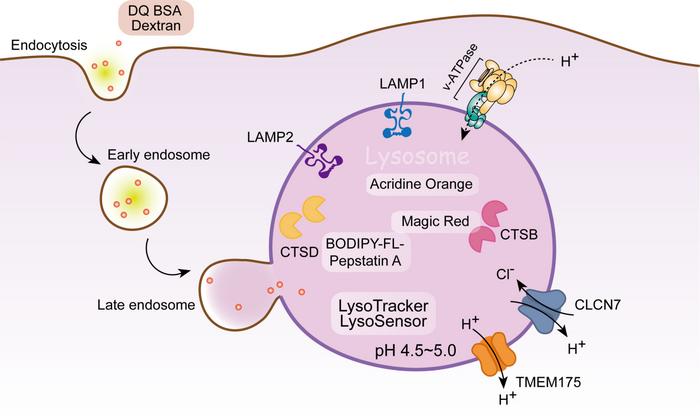
Commonly used fluorescent dyes and protein markers for lysosomes.

Credit: Qiuyuan Yin,Chonglin Yang

Lysosomes are critical for cellular degradation, characterized by their acidic pH and array of hydrolytic enzymes. They degrade materials through endocytosis, phagocytosis, and autophagy, recycling essential components. Lysosomes also participate in vital cellular processes, and their dysfunction contributes to diseases such as lysosomal storage diseases, neurodegenerative disorders, and cancer. Research methods and tools have been developed to study lysosomes in cultured cells, C. elegans, and mice, key model systems. In cultured cells, lysosomes can be characterized and their functions investigated. C. elegans, with its short life cycle and genetic tools, offers a straightforward model for studying lysosomes in development and aging. In mice, transgenic models expressing lysosomal proteins provide insights into lysosomal function in vivo. While the well-established tools will continue to contribute to the study of lysosomal biology, it is necessary to develop novel assays for a better understanding of lysosomal functions in diverse physiological and pathological conditions. The methods and techniques summarized in this review provide a foundation for understanding lysosomal biology and exploring potential therapeutic targets. The review entitled “Exploring lysosomal biology: current approaches and methods” was published on Biophysics Reports (published on January, 2024).


Journal

Biophysics Reports

DOI

10.52601/bpr.2023.230028

Method of Research

Experimental study

Subject of Research

Cells

Article Title

Exploring lysosomal biology: current approaches and methods

Article Publication Date

1-Jan-2024

Share12Tweet8Share2ShareShareShare2

Related Posts

Ohio Wall Lizards Overcame Genetic Bottleneck Through Reproduction, Study Finds — Biology

Ohio Wall Lizards Overcame Genetic Bottleneck Through Reproduction, Study Finds

May 29, 2026
Double Agent Unveils Unexpected Revelations — Biology

Double Agent Unveils Unexpected Revelations

May 29, 2026

University of Toronto Scientists Work to Enhance Access to Advanced Research and Biomanufacturing Tools in Resource-Limited Areas

May 29, 2026

CLPTM1L Alters Lipid Rafts to Drive Glioblastoma Progression

May 29, 2026

POPULAR NEWS

  • ESMO 2025: mRNA COVID Vaccines Enhance Efficacy of Cancer Immunotherapy

    319 shares
    Share 128 Tweet 80
  • Multi-Hospital Study Reveals Long Covid Burden Is Twice as High as Current Estimates

    81 shares
    Share 32 Tweet 20
  • Common Food Preservatives Associated with Elevated Blood Pressure and Increased Heart Disease Risk

    56 shares
    Share 22 Tweet 14
  • AI-Powered Atlas Uncovers Extensive Whole-Body Damage Linked to Obesity

    53 shares
    Share 21 Tweet 13

About

We bring you the latest biotechnology news from best research centers and universities around the world. Check our website.

Follow us

Recent News

Impact of Immigration Restrictions on the US Healthcare Workforce

Study Reveals Cancer Diagnostic Delays Linked to Population-Based Screening Using Cell-Free DNA Multicancer Early Detection Test

Innovative AI Technique Predicts Radiation Dosage Prior to Treatment in Advanced Prostate Cancer

Subscribe to Blog via Email

Success! An email was just sent to confirm your subscription. Please find the email now and click 'Confirm' to start subscribing.

Join 82 other subscribers
  • Contact Us

Bioengineer.org © Copyright 2023 All Rights Reserved.

Welcome Back!

Login to your account below

Forgotten Password?

Retrieve your password

Please enter your username or email address to reset your password.

Log In
No Result
View All Result
  • Homepages
    • Home Page 1
    • Home Page 2
  • News
  • National
  • Business
  • Health
  • Lifestyle
  • Science

Bioengineer.org © Copyright 2023 All Rights Reserved.