In a review published in Developmental Biology Advances, researchers Yui Uchida and Naoki Irie evaluate the long-standing relationship between animal ontogeny and phylogeny, examining emerging evidence on the mechanisms that govern embryonic evolution. The authors synthesize historical concepts alongside modern molecular insights to address why specific stages of embryonic development remain remarkably resistant to evolutionary change.
Historically, observations of embryonic ontogeny and phylogenetic diversification—both characterized by transitions toward increasing complexity—gave rise to classical frameworks culminating in Ernst Haeckel’s recapitulation theory during the 1860s. These early hypotheses posited that the earliest developmental stages were the most strictly conserved across species, establishing what is commonly described as the funnel model of embryonic development.
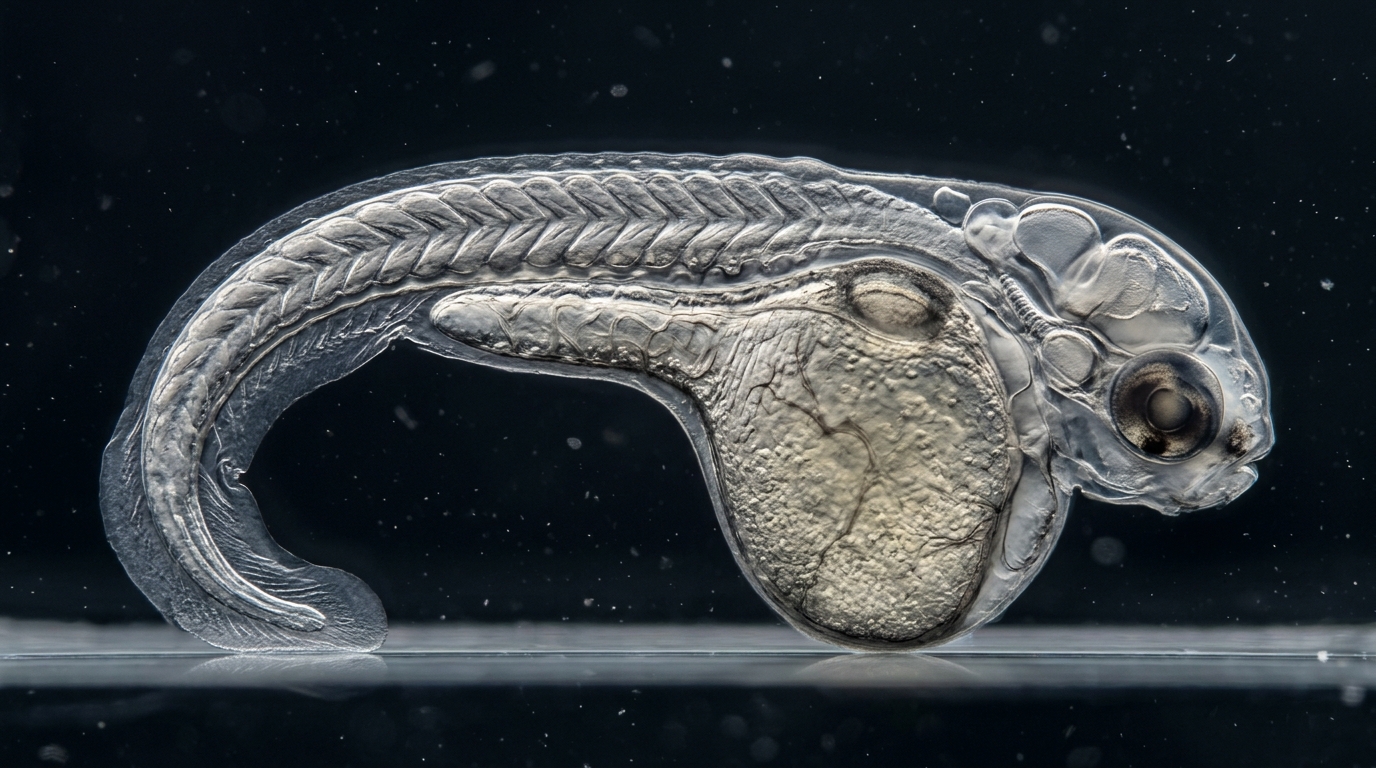
During the twenty-first century, comparative research challenged the funnel concept as cumulative empirical evidence provided robust support for the developmental hourglass model originally proposed by Denis Duboule. Under this model, evolutionary conservation is concentrated neither at the initial nor the final phases of development, but rather during a mid-embryonic interval termed the phylotypic period, which has been repeatedly corroborated across diverse animal lineages.
Despite widespread cross-species validation of the phylotypic period, the specific biological mechanisms preserving this developmental bottleneck have remained elusive. Recent empirical studies suggest that this evolutionary stability may arise from a reduced capacity of mid-stage embryos to produce viable phenotypic variations, although the exact drivers responsible for this diminished evolutionary potential remain under active investigation.
Uchida and Irie highlight the central role of lower evolvability as a primary explanatory factor for this conservation.
The review notes that no new datasets were generated or analysed for the study, focusing instead on theoretical synthesis and technological frontiers. The authors emphasize that emerging methodologies, particularly single-cell analyses and spatial transcriptomics, now provide essential tools to investigate tissue-level interactions and gene regulatory network architectures that enforce phenotypic stability throughout the phylotypic period.
A central challenge highlighted in the review is resolving the persistent disconnect between empirical confirmations of the phylotypic period and the underlying mechanisms that preserve it. Within evolutionary developmental biology, understanding the general relationship connecting animal ontogeny to phylogeny remains an enduring, long-standing issue. Historical theories established in the 1860s assumed that developmental conservation occurred primarily during the earliest stages of growth, reflecting classical hypotheses regarding increasing structural complexity. However, modern comparative studies spanning numerous species have accumulated robust empirical support for the developmental hourglass model originally proposed by Duboule, confirming that evolutionary conservation is concentrated during the mid-embryonic period rather than at the beginning of development.
To account for this evolutionary pattern, the authors contrast classical assumptions against emerging evidence concerning the mechanisms of embryonic evolution. Recent empirical studies indicate that conservation during the phylotypic period may stem directly from the reduced potential of mid-stage embryos to generate phenotypic variations. Uchida and Irie emphasize the potential role of lower evolvability, defining it as the intrinsic properties of developmental systems that potentially constrain phenotypic diversification. Nevertheless, despite recent empirical indications that diminished evolutionary potential maintains developmental stability, the precise developmental mechanisms responsible for producing this lower evolutionary potential remain unclear and subject to ongoing investigation.
To uncover these elusive mechanisms, the authors identify key technological tools capable of resolving developmental architecture across tissues. Recent advancements in single-cell analyses and spatial transcriptomics technologies now provide unprecedented opportunities for the comprehensive investigation of tissue-level interactions and developmental network architectures. The authors conclude that these high-resolution technological approaches promise to advance scientific understanding of how phenotypic stability is maintained during the most conserved phase of development.
Subject of Research: Mechanisms and evolvability constraints underlying the developmental hourglass model
Article Title: Toward mechanisms underlying the developmental hourglass: evolvability and phylotypic conservation
Article References: Uchida, Y., & Irie, N. (2025). Toward mechanisms underlying the developmental hourglass: evolvability and phylotypic conservation. Developmental Biology Advances, 17(1), Article 2. https://doi.org/10.1186/s13227-025-00255-5
Image Credits: AI Generated
DOI: 10.1186/s13227-025-00255-5
Keywords: developmental biology, developmental hourglass, ontogeny, phylogeny, evolvability, phylotypic period, spatial transcriptomics, gene regulatory networks, Toward, mechanisms, underlying, developmental
News Source: Drew Townsend. (November 8, 2026). Exploring How Reduced Evolvability Shapes the Conserved Developmental Hourglass. Scienmag.