


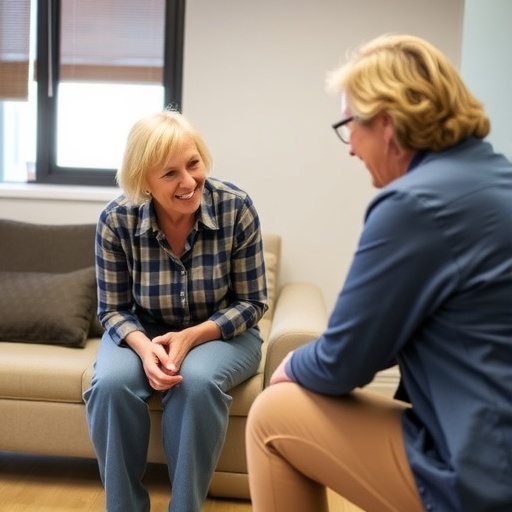
In a landscape where healthcare advancements are continually emerging, a recent investigation has cast a much-needed light on the often-overlooked yet crucial role of family caregivers in the recovery process of patients undergoing total knee arthroplasty (TKA). A collaborative research effort led by Liu, M., Li, Y., and Shan, Y., and published in BMC Nursing, focuses on an area of healthcare that has significant implications not just for patients, but for their families and the health systems that support them. This scoping review aims to systematically map the evidence surrounding the support systems available for these caregivers during what can be a tumultuous time.
As the population ages and the incidence of knee surgeries increases, the need for comprehensive recovery plans becomes more prominent. With nearly millions of total knee arthroplasty procedures performed annually worldwide, understanding the dynamics of recovery, including the role of family members, is paramount. The process of rehabilitation following TKA is often laden with physical, emotional, and psychological challenges—not only for the patients but also for their caregivers. This review serves as a stepping stone to comprehend what support exists and what gaps remain in the current healthcare paradigms.
The scoping review meticulously sifts through existing literature to uncover a multitude of studies and reports that detail the experiences and challenges of family caregivers during the recovery phase of TKA. Through qualitative and quantitative analyses, the researchers were able to identify several salient themes that emerge from these discussions. These themes range from the emotional toll of caregiving to the practical aspects of helping patients manage pain, mobility, and routine daily activities, underscoring the multifaceted nature of this role.
Among many findings, the review highlights the severe emotional and psychological impacts that caregiving can impose. Caregivers frequently report feelings of stress, anxiety, and even burnout as they navigate the intricacies of their loved ones’ recovery journey. With patients often experiencing significant pain and mobility restrictions, caregivers are thrust into roles that demand both physical assistance and emotional support, often leading to duress. Thus, the identification of the types of support needed by caregivers—be it educational, emotional, or practical—emerges as a critical aspect of the recovery process.
Importantly, the review reveals a stark inconsistency in the level of support offered to family caregivers across different healthcare settings. While some institutions recognize the value of equipping caregivers with tools and resources to effectively perform their roles, others fall short, leaving caregivers to navigate the complexities of TKA recovery alone. This variability raises concerns about the equity of care provided within the healthcare system and highlights a clear need for standardized caregiver support protocols that can be implemented across various medical facilities.
Moreover, the study underscores the importance of psychosocial support mechanisms and programs tailored specifically for caregivers. The evidence suggests that caregivers who participate in support groups or gain access to counseling services experience reduced levels of stress and feel more prepared to assist their loved ones. This avenue not only benefits the caregivers but also contributes positively to the recovery outcomes of patients, affirming the interconnected nature of these experiences.
Another compelling finding of the review illustrates the difference in experiences based on demographics. Factors such as age, gender, and the caregiver’s proximity to the patient can significantly influence the capacity to provide care. With younger caregivers facing different challenges compared to older ones, there emerges a critical need for personalized support strategies that consider these demographic variables. Healthcare providers must work to ensure that support systems are both comprehensive and inclusive, addressing the diverse needs of caregivers from all backgrounds.
As the evidence begins to coalesce around these themes, the review champions the necessity of incorporating caregiver perspectives into clinical care standards. The insights gained from this work advocate for collaborative decision-making processes, where healthcare professionals engage caregivers as integral members of the care team. This shift not only empowers caregivers but also enriches the overall care experience, leading to better outcomes for patients and their families alike.
Furthermore, the review recommends ongoing education and training for healthcare providers to better understand the dynamics at play between patients and their caregivers. By enhancing healthcare professionals’ knowledge of caregiver roles and challenges, the potential to improve supportive measures increases substantially. This education can take the form of training modules, workshops, or even informational pamphlets that are distributed to caregivers post-surgery.
In terms of future research directions, this body of work advocates for longitudinal studies that track caregiver experiences over time. By understanding how caregiver roles evolve through the different stages of recovery, researchers can gain valuable insights that will inform the development of tailored support interventions. This approach will ultimately help in establishing a comprehensive framework that benefits not only caregivers but also the healthcare systems tasked with supporting both them and their patients.
In conclusion, Liu, Li, and Shan’s scoping review illuminates an essential aspect of total knee arthroplasty recovery: the vital support system that family caregivers provide. As healthcare continues to evolve alongside demographic shifts and technological advances, the findings of this research emphasize the urgency of addressing the gaps in caregiver support. It’s a call to action for healthcare policy-makers, practitioners, and administrators to prioritize and innovate caregiver support frameworks, thus enhancing the overall quality of care provided to patients undergoing this significant surgical procedure.
The challenges faced by family caregivers should no longer exist in the shadows of surgical recovery narratives. The clarion call from this research serves as a robust foundation for future enhancements that can ultimately lead to improved experiences for all involved in the healthcare continuum around total knee arthroplasty. Such advancements are not only timely but necessary in a world where effective recovery and rehabilitation hinge as much on organizational support as they do on surgical excellence.
Subject of Research: Support for family caregivers in total knee arthroplasty recovery.
Article Title: Mapping the evidence on support for family caregivers in total knee arthroplasty recovery: a scoping review.
Article References:
Liu, M., Li, Y. & Shan, Y. Mapping the evidence on support for family caregivers in total knee arthroplasty recovery: a scoping review.
BMC Nurs (2026). https://doi.org/10.1186/s12912-026-04321-8
Image Credits: AI Generated
DOI: 10.1186/s12912-026-04321-8
Keywords: family caregivers, total knee arthroplasty, recovery, support systems, emotional toll, healthcare system, caregiver education, psychosocial support.



