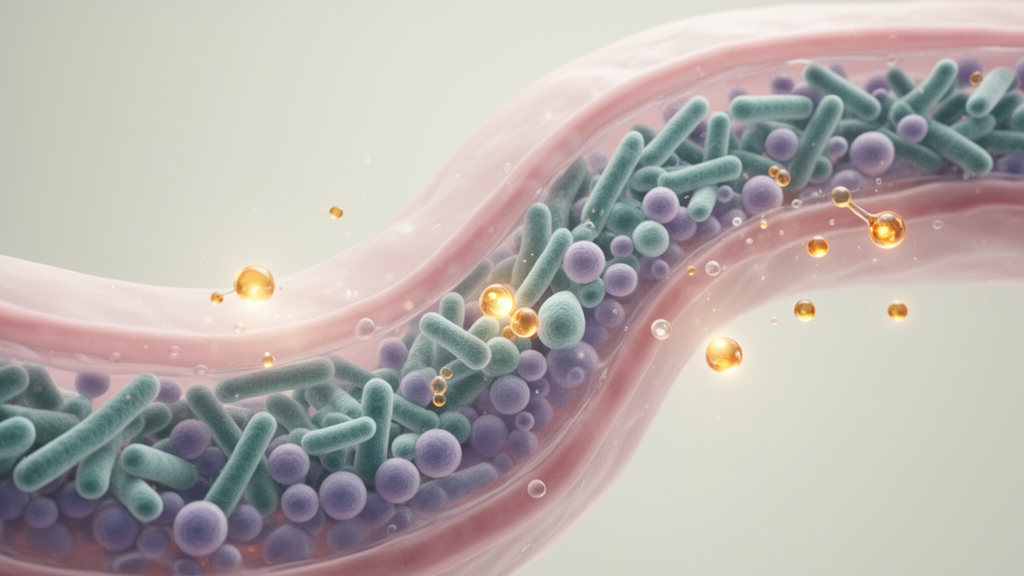
Researchers have developed an exploratory second-trimester risk model that combines vaginal microbiota data with microbial metabolite measurements to assess the likelihood of preterm birth. The study, published in BMC Pregnancy and Childbirth, evaluated whether nano-titanium dioxide enrichment of samples, paired with 16S ribosomal RNA gene sequencing and metabolomics, could strengthen prediction beyond established clinical risk factors.
The retrospective analysis included 208 singleton pregnancies, of which 42 ended in preterm birth and 166 in term delivery. Vaginal samples were collected at two points in gestation, 12 to 14 weeks and 24 to 26 weeks, with the second sampling date serving as the prediction landmark. This design allowed the investigators to test how well microbial and metabolic features measured in mid-pregnancy could discriminate between women who later delivered preterm and those who carried to term.
The model itself was deliberately constrained. A fixed six-predictor logistic regression incorporated previous preterm birth, short cervix, Lactobacillus abundance, Gardnerella abundance, lactate, and putrescine. The researchers compared maximum-likelihood and Firth variants of the model, both internally validated using the same 1,000 bootstrap samples without discarding or replacing any samples. Likelihood-ratio tests were used to compare the combined model against reduced versions.
The microbiota findings showed a familiar pattern. At 24 to 26 weeks of gestation, the preterm group displayed higher alpha diversity and lower Lactobacillus abundance than the term group, consistent with the notion that vaginal dysbiosis is associated with preterm birth. On the metabolomic side, eleven of fourteen mass-spectrometry indicators differed between the groups after correction for multiple testing, suggesting that microbial metabolites carry measurable signal in this setting.
Performance figures were reported with careful statistical framing. The combined model achieved an apparent area under the receiver operating characteristic curve of 0.824, with a 95 percent confidence interval of 0.757 to 0.891. At a probability threshold of 0.218988, sensitivity was 73.8 percent, specificity 80.1 percent, positive predictive value 48.4 percent, and negative predictive value 92.4 percent. The high negative predictive value indicates that a low-risk result at this threshold was rarely wrong in this sample, while the modest positive predictive value reflects the relatively low prevalence of preterm birth.
Because apparent performance in a development sample typically overstates real-world accuracy, the team applied bootstrap-based optimism correction. The optimism-corrected AUC was 0.800, with a calibration slope of 0.873 and a Brier score of 0.135. The Firth variant, which is designed to reduce bias in the presence of limited events, performed almost identically, with an optimism-corrected AUC of 0.801. The authors note that residual overfitting remained even after these corrections.
Not every candidate predictor earned its place. Adding the Shannon index, a common measure of microbial diversity, to the six-predictor model did not show clear incremental information, with a likelihood-ratio test yielding a P value of 0.499. This suggests that the diversity measure added little beyond the specific taxa and metabolites already included in the fixed model.
The authors are explicit about the limits of their work. Improvements in model fit within the development sample do not establish clinical utility, and the model’s discrimination was assessed only internally. External validation in independent cohorts, recalibration when indicated, standardization of the sequencing and metabolomics assays, and evaluation of turnaround time, net benefit, and cost are all required before any such approach could move toward clinical use. As an exploratory study, the work offers a promising statistical signal rather than a ready-made screening tool, and its value lies in identifying which microbial and metabolic features merit testing in larger, prospective populations.
Subject of Research: Exploratory prediction of preterm birth using nano-titanium dioxide enrichment, vaginal microbiota sequencing and metabolomics
Article Title: An exploratory study of nano-titanium dioxide combined with vaginal microbiota for the prediction of preterm birth
Article References: Zhang, M., Gao, L., Shang, Y., Han, Y., & E, Q. (2026). An exploratory study of nano-titanium dioxide combined with vaginal microbiota for the prediction of preterm birth. BMC Pregnancy and Childbirth. https://doi.org/10.1186/s12884-026-10115-2
Image Credits: AI Generated
DOI: 10.1186/s12884-026-10115-2
Keywords: preterm birth, vaginal microbiota, nano-titanium dioxide, 16S rRNA sequencing, metabolomics, risk prediction model, Lactobacillus, Gardnerella, second trimester, logistic regression, bootstrap validation, BMC Pregnancy and Childbirth
News Source: Morgan Morrow. (October 30, 2026). Exploratory model links vaginal microbiota and metabolites to preterm birth risk. Scienmag.