• HOME
  • NEWS
  • EXPLORE
    • CAREER
      • Companies
      • Jobs
    • EVENTS
    • iGEM
      • News
      • Team
    • PHOTOS
    • VIDEO
    • WIKI
  • BLOG
  • COMMUNITY
    • FACEBOOK
    • INSTAGRAM
    • TWITTER
Thursday, June 25, 2026
BIOENGINEER.ORG
No Result
View All Result
  • Login
  • HOME
  • NEWS
  • EXPLORE
    • CAREER
      • Companies
      • Jobs
        • Lecturer
        • PhD Studentship
        • Postdoc
        • Research Assistant
    • EVENTS
    • iGEM
      • News
      • Team
    • PHOTOS
    • VIDEO
    • WIKI
  • BLOG
  • COMMUNITY
    • FACEBOOK
    • INSTAGRAM
    • TWITTER
  • HOME
  • NEWS
  • EXPLORE
    • CAREER
      • Companies
      • Jobs
        • Lecturer
        • PhD Studentship
        • Postdoc
        • Research Assistant
    • EVENTS
    • iGEM
      • News
      • Team
    • PHOTOS
    • VIDEO
    • WIKI
  • BLOG
  • COMMUNITY
    • FACEBOOK
    • INSTAGRAM
    • TWITTER
No Result
View All Result
Bioengineer.org
No Result
View All Result
Home NEWS Science News Biology

Exploiting green tides thanks to a marine bacterium

Bioengineer by Bioengineer
July 8, 2019
in Biology
Reading Time: 2 mins read
0
IMAGE
Share on FacebookShare on TwitterShare on LinkedinShare on RedditShare on Telegram

IMAGE

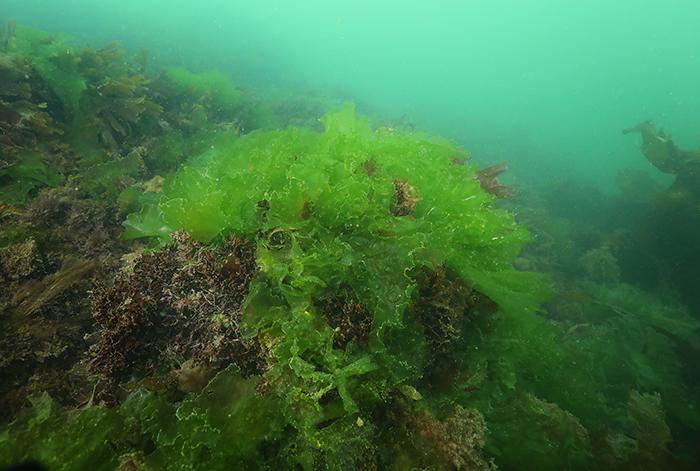
Credit: Wilfried THOMAS, Service Mer, Station Biologique de Roscoff (CNRS/Sorbonne université)

Ulvan is the principal component of Ulva or “sea lettuce” which causes algal blooms (green tides). Scientists at the Station Biologique de Roscoff (CNRS/Sorbonne Université) and their German and Austrian colleagues have identified a marine bacterium whose enzymatic system can break down ulvan into an energy source or molecules of interest for use by the agrifood or cosmetics industries. Twelve enzymes have thus been discovered and they constitute as many tools that could transform this under-exploited polysaccharide into a renewable resource. This work is published on July 8 in Nature Chemical Biology.

Ulva are edible green macroalgae that are present naturally along our coastlines (“sea lettuce”). These algae can suddenly proliferate because of an excess of nutrients resulting from human activities and cause the deposit of enormous masses on beaches. These phenomena, or green tides, have a detrimental impact on the quality of the environments concerned and on tourism.

However, sea lettuce constitutes a reservoir of biomolecules with promising properties. This is the case for ulvan, the principal monosaccharide found in the cell wall of Ulva. However, the biotechnological exploitation of ulvan is currently hindered by a lack of understanding of its degradation mechanisms.

In this context, an international consortium involving the Laboratoire de Biologie Intégrative des Modèles Marins at the Station Biologique de Roscoff (CNRS/Université Paris-Sorbonne), the Universities of Bremen and Greifswald (in Germany) and Vienna Technical University (Austria) has discovered and characterised the complete degradation pathway for ulvan in the marine flavobacterium Formosa agariphila. In this bacterium, twelve enzymes act sequentially to convert ulvan into fermentable monosaccharides that could serve as a basis for the production of bioethanol. The French team in the consortium focused notably on a particular type of these enzymes, sulfatases, and determined their 3D structures.

As well as the production of energy, these enzymes can also obtain other types of bioactive molecules that are more complex and have a higher added value than simple fermentable monosaccharides. This work therefore opens the way to the biotechnological exploitation of ulvan, particularly by the agrifood and cosmetics industries, transforming a biomass considered as “detrimental” into a sustainable resource.

###

Media Contact
Alexiane Agullo
[email protected]

Original Source

https://www.cnrs.fr/en/press-area

Related Journal Article

http://dx.doi.org/10.1038/s41589-019-0311-9

Tags: BacteriologyChemistry/Physics/Materials SciencesEnergy/Fuel (non-petroleum)Microbiology
Share12Tweet8Share2ShareShareShare2

Related Posts

Natural Hallucinogens: Evolution’s Ecological Tools, Not Mere Chemical Byproducts

June 25, 2026

This Famous Butterfly Revealed: Three Distinct Species Hidden in One

June 25, 2026

Scientists Attack Soybean Cyst Nematode by Starving Its Food Source

June 25, 2026

Decoding the Secret Code of a Crucial Immune Sensor

June 24, 2026
Please login to join discussion

POPULAR NEWS

  • Saying Goodbye to PGY-6: Pediatric Fellowship Realities

    103 shares
    Share 41 Tweet 26
  • Multi-Hospital Study Reveals Long Covid Burden Is Twice as High as Current Estimates

    92 shares
    Share 36 Tweet 23
  • Detection of EDCs in Breast Milk and Infant Urine Up to Six Months Highlights Early Exposure Risks

    77 shares
    Share 31 Tweet 19
  • New Drug Candidate Developed at McMaster Shows Potential for Treating Brain Cancer

    58 shares
    Share 23 Tweet 15

About

We bring you the latest biotechnology news from best research centers and universities around the world. Check our website.

Follow us

Recent News

Tracking Lanthanide-Labeled Microplastics in Plants

POSTECH Researchers Slash Cost of Reconstituted Cell-Free Systems by 95%

AI and Physics Collaborate to Design Advanced Hydrogen Storage Materials

Subscribe to Blog via Email

Enter your email address to subscribe to this blog and receive notifications of new posts by email.

Join 82 other subscribers
  • Contact Us

Bioengineer.org © Copyright 2023 All Rights Reserved.

Welcome Back!

Login to your account below

Forgotten Password?

Retrieve your password

Please enter your username or email address to reset your password.

Log In
No Result
View All Result
  • Homepages
    • Home Page 1
    • Home Page 2
  • News
  • National
  • Business
  • Health
  • Lifestyle
  • Science

Bioengineer.org © Copyright 2023 All Rights Reserved.