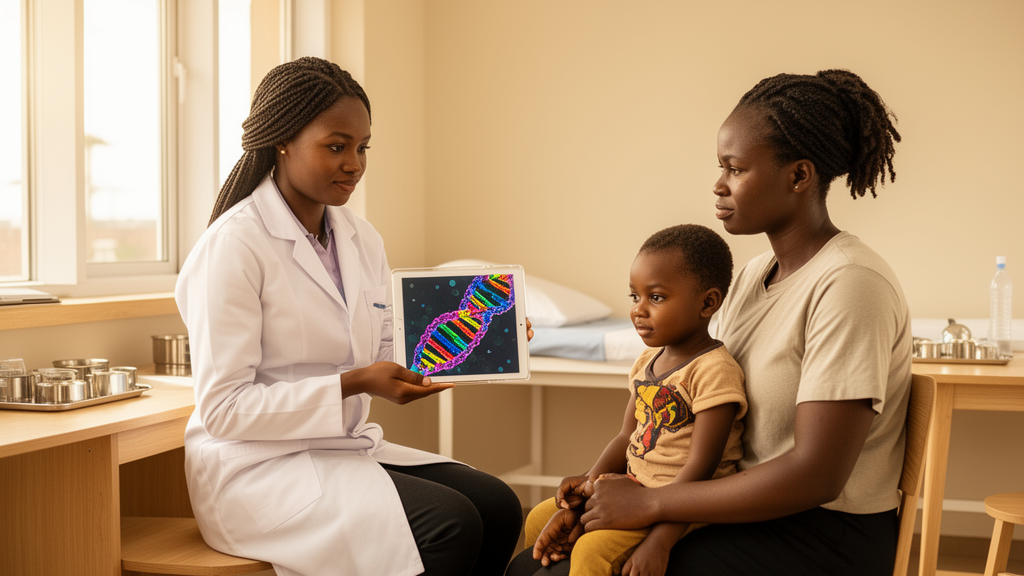
Researchers in Rwanda have reported a high diagnostic yield from trio exome sequencing in a cohort of children with global developmental delay and intellectual disability. The study, published in BMC Medical Genomics, analyzed 25 families, including 23 trios and one quad, comprising 25 children with syndromic global developmental delay or intellectual disability recruited from a hospital setting.
The background of the research highlights a significant gap in global genomic databases, where individuals of African ancestry remain significantly underrepresented. This lack of representation limits the interpretation of genetic variants and equitable access to precision diagnostics for these populations. The study sought to address this by applying comprehensive genomic testing to a clinically selected Rwandan cohort.
The methodology involved collecting detailed clinical, demographic, and phenotypic data from the participating families. Trio exome sequencing was performed to detect single-nucleotide variants, small insertions and deletions, and copy number variants. The clinical evaluation was combined with this genomic analysis to provide a comprehensive assessment of each patient’s condition.
The results demonstrated a diagnostic yield of 60 percent, with pathogenic or likely pathogenic variants identified in 15 of the 25 families. Specifically, the team identified 13 pathogenic variants and 3 likely pathogenic variants. These variants included 8 copy number variants and 8 single-nucleotide variants, representing a 50 percent split between these two types of genetic alterations.
The findings suggest that the combination of comprehensive clinical evaluation and trio exome sequencing can be highly effective in identifying the genetic causes of developmental delay in this population. The high diagnostic yield supports the integration of genomic testing into routine clinical practice to improve timely diagnosis and patient management.
This study contributes to the expanding phenotypic and molecular spectrum of global developmental delay and intellectual disability in sub-Saharan Africa. By generating genomic data from an underrepresented African population, the research helps to improve the global database of genetic variants.
However, the authors note that the findings are based on a highly selected, clinically selected cohort from a hospital setting. The study requires validation in larger population-based studies to confirm the generalizability of these findings.
Subject of Research: Genetic etiology of global developmental delay and intellectual disability in Rwanda using trio exome sequencing
Article Title: Trio exome sequencing in patients with global developmental delay and intellectual disability in Rwanda
Article References: Dukuze, N., Hitayezu, J., Uyisenga, J. P., Hakizimana, O., Akimana, V., Mizero, L., Caberg, J. H., Dideberg, V., Bours, V., Alagbonsi, A. I., & Uwineza, A. (2026). Trio exome sequencing in patients with global developmental delay and intellectual disability in Rwanda. BMC Medical Genomics. https://doi.org/10.1186/s12920-026-02453-z
Image Credits: AI Generated
DOI: 10.1186/s12920-026-02453-z
Keywords: genomics, Rwanda, intellectual disability, developmental delay, exome sequencing, African ancestry, diagnostic yield, neurodevelopmental disorders, Trio, exome, sequencing, patients
News Source: Ophelia Keating. (November 10, 2026). Exome sequencing identifies genetic causes in Rwandan children. Scienmag.