A new evolutionary study is upending a century-old assumption about how vertebrate muscles work. For decades, researchers have treated muscle contraction as a largely conserved machine across animals: myosin pulls on actin to generate force, and the basic biochemical partnership was presumed to be nearly identical in birds, reptiles, amphibians, and fish.
But by mining historic genomic data across species, researchers report that this “core” muscle machinery is far more variable than expected. Instead of one shared myosin setup, vertebrates appear to carry lineage-specific myosin gene subfamilies that subtly alter how myosin moves—changing contraction speed, firing behavior, and the energy cost of muscle activity.
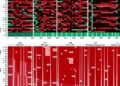
The team analyzed approximately 1,201 myosin genes across deep time, reconstructing evolutionary history spanning roughly 500 million years. Their comparative modeling revealed around 50 previously unrecognized myosin gene subfamilies, adding to 15 existing types already cataloged in the literature.
The results suggest repeated evolutionary remodeling of skeletal muscle across the vertebrate tree. Different lineages—ranging from salmon to eagles, snakes to elephants—are not just sculpted by visible body forms. Instead, diversity may be driven partly by molecular changes in the contractile toolkit buried within muscle cells.
Crucially, the study highlights that gene-level evolution can diverge even when outward physiology looks similar. The authors emphasize “gene turnover” unique to each major vertebrate group, meaning that the routes producing functional traits have been distinct rather than inherited through a single, static design.
Even within one species, specialization can be striking. The rattlesnake, for example, appears to deploy different myosin molecule sets for separate body regions, including tail muscles involved in rattle production that contain a myosin type not previously documented.
The work reframes the familiar fast-twitch versus slow-twitch categories. While mammalian myosin composition has traditionally been used to explain twitch speed, the authors argue that the molecular basis underlying these muscle phenotypes may not translate cleanly across vertebrate groups.
Because proving adaptation requires direct evidence of selection, the study cannot definitively identify what environmental pressures drove these molecular shifts. However, the repeated emergence of functionally distinct myosin variants makes “one-size-fits-all” evolution unlikely—suggesting selective or adaptive processes were at play.
The research, published in Proceedings of the Royal Society B, was supported by the U.S. National Science Foundation and the Howard Hughes Medical Institute. Co-authors include collaborators from UC San Francisco and Brown University.
Subject of Research: Vertebrate skeletal muscle myosin gene evolution
Article Title: Repeated evolutionary turnover of vertebrate skeletal muscle myosins
Web References: https://doi.org/10.1098/rspb.2026.0254
References: Proceedings of the Royal Society B (2026), doi:10.1098/rspb.2026.0254
Image Credits:
Tags: deep time myosin gene studyevolutionary history of muscle proteinsevolutionary remodeling of skeletal musclesgenomic analysis of muscle proteinshidden genetic diversity in muscle machineryimpact of gene evolution on muscle physiologylineage-specific muscle genesmolecular basis of muscle speed and energy efficiencymuscle contraction molecular mechanismsmyosin gene diversityvertebrate muscle contraction variabilityvertebrate muscle evolution