• HOME
  • NEWS
  • EXPLORE
    • CAREER
      • Companies
      • Jobs
    • EVENTS
    • iGEM
      • News
      • Team
    • PHOTOS
    • VIDEO
    • WIKI
  • BLOG
  • COMMUNITY
    • FACEBOOK
    • INSTAGRAM
    • TWITTER
Saturday, February 7, 2026
BIOENGINEER.ORG
No Result
View All Result
  • Login
  • HOME
  • NEWS
  • EXPLORE
    • CAREER
      • Companies
      • Jobs
        • Lecturer
        • PhD Studentship
        • Postdoc
        • Research Assistant
    • EVENTS
    • iGEM
      • News
      • Team
    • PHOTOS
    • VIDEO
    • WIKI
  • BLOG
  • COMMUNITY
    • FACEBOOK
    • INSTAGRAM
    • TWITTER
  • HOME
  • NEWS
  • EXPLORE
    • CAREER
      • Companies
      • Jobs
        • Lecturer
        • PhD Studentship
        • Postdoc
        • Research Assistant
    • EVENTS
    • iGEM
      • News
      • Team
    • PHOTOS
    • VIDEO
    • WIKI
  • BLOG
  • COMMUNITY
    • FACEBOOK
    • INSTAGRAM
    • TWITTER
No Result
View All Result
Bioengineer.org
No Result
View All Result
Home NEWS Science News Biology

Evolution of fan worm eyes

Bioengineer by Bioengineer
August 1, 2017
in Biology
Reading Time: 2 mins read
0
Share on FacebookShare on TwitterShare on LinkedinShare on RedditShare on Telegram
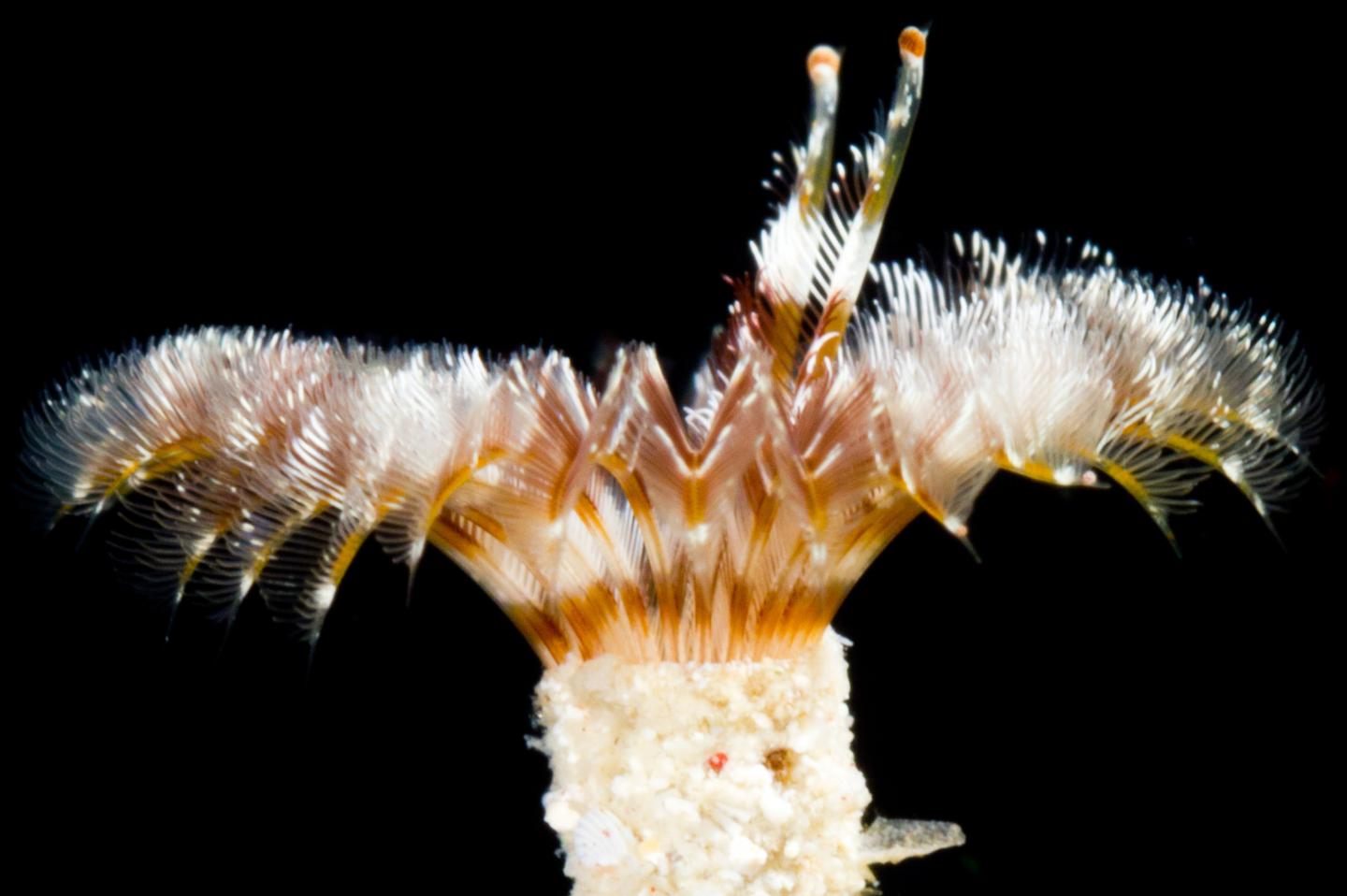
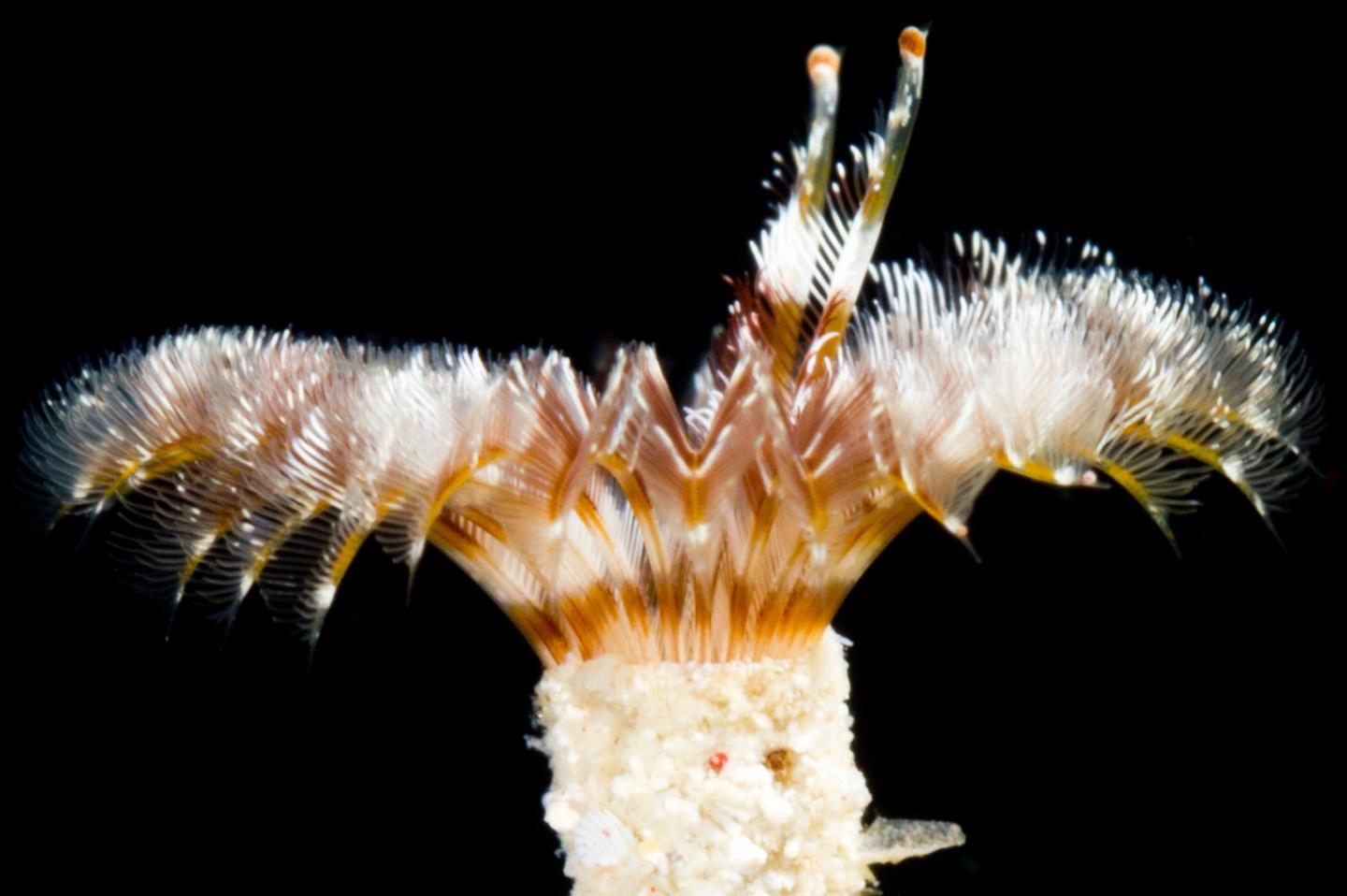
IMAGE

Credit: Dr Michael Bok, University of Bristol

Scientists examining the multiple eyes found on the tentacles of fan worms have discovered they evolved independently from their other visual systems, specifically to support the needs of their lifestyle.

Fan worms live in tubes on the seafloor. From their heads, the worms extend feather-like tentacles up out of their tubes to sift the water for food particles and aid in respiration.

To protect themselves from predators, fan worms have evolved a variety of unusual compound eyes on their tentacles that act like shadow or motion detectors, alerting the worm to danger and triggering a rapid hiding response to encroaching objects in the water.

Superficially, some of these eyes resemble those of crustaceans or insects, but their photoreceptor cells are structurally and functionally distinct.

Researchers from Lund University in Sweden used transcriptomic sequencing to examine the genes expressed in these eyes from a species of fan worm collected on the Great Barrier Reef, Megalomma interrupta.

This sequencing approach identifies nearly all gene transcripts expressed in a given piece of tissue. They identified a number of genes that produce light-sensitive cellular signalling components such as opsins and g-proteins in the fan worm's eyes, which they compared with others known from across the animal kingdom.

The findings were published last week in the journal Current Biology.

Lead author Dr Michael Bok, Senior Research Associate at the University of Bristol's Ecology of Vision Group – part of the School of Biological Sciences, said: "Surprisingly, we found an unusual set of light-sensing genes, previously only seen in simple photoreceptors in the brains of some invertebrates.

"It seems that the eyes on the tentacles of fan worms evolved independently from all other visual systems in order to support the needs of their unusual filter-feeding lifestyle.

"Many questions remain about the evolution and function of these eyes.

"Due to their unique evolutionary history and neural circuitry these eyes could offer many clues about the emergence of new sensory systems and how the first eyes may have arisen."

###

Media Contact

Shona East
[email protected]
44-117-928-8086
@BristolUni

http://www.bristol.ac.uk

Original Source

http://www.cell.com/current-biology/fulltext/S0960-9822(17)30701-7

Share12Tweet7Share2ShareShareShare1

Related Posts

New Study Uncovers Mechanism Behind Burn Pit Particulate Matter–Induced Lung Inflammation

New Study Uncovers Mechanism Behind Burn Pit Particulate Matter–Induced Lung Inflammation

February 6, 2026

DeepBlastoid: Advancing Automated and Efficient Evaluation of Human Blastoids with Deep Learning

February 6, 2026

Navigating the Gut: The Role of Formic Acid in the Microbiome

February 6, 2026

AI-Enhanced Optical Coherence Photoacoustic Microscopy Revolutionizes 3D Cancer Model Imaging

February 6, 2026
Please login to join discussion

POPULAR NEWS

  • Robotic Ureteral Reconstruction: A Novel Approach

    Robotic Ureteral Reconstruction: A Novel Approach

    82 shares
    Share 33 Tweet 21
  • Digital Privacy: Health Data Control in Incarceration

    63 shares
    Share 25 Tweet 16
  • Study Reveals Lipid Accumulation in ME/CFS Cells

    57 shares
    Share 23 Tweet 14
  • Breakthrough in RNA Research Accelerates Medical Innovations Timeline

    53 shares
    Share 21 Tweet 13

About

We bring you the latest biotechnology news from best research centers and universities around the world. Check our website.

Follow us

Recent News

Exploring Decision-Making in Dementia Caregivers’ Mobility

Succinate Receptor 1 Limits Blood Cell Formation, Leukemia

Palmitoylation of Tfr1 Drives Platelet Ferroptosis and Exacerbates Liver Damage in Heat Stroke

Subscribe to Blog via Email

Enter your email address to subscribe to this blog and receive notifications of new posts by email.

Join 73 other subscribers
  • Contact Us

Bioengineer.org © Copyright 2023 All Rights Reserved.

Welcome Back!

Login to your account below

Forgotten Password?

Retrieve your password

Please enter your username or email address to reset your password.

Log In
No Result
View All Result
  • Homepages
    • Home Page 1
    • Home Page 2
  • News
  • National
  • Business
  • Health
  • Lifestyle
  • Science

Bioengineer.org © Copyright 2023 All Rights Reserved.