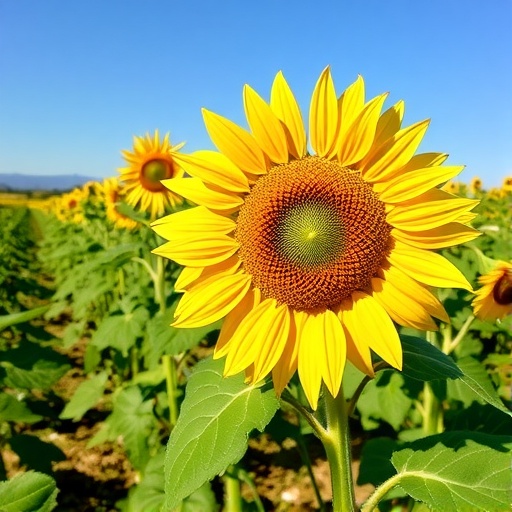
Sunflowers have long been celebrated for their striking beauty and culinary versatility. However, a recent study is shifting the focus back to the agricultural world, specifically examining the performance of various sunflower genotypes under the unique climatic conditions of Ethiopia’s Afar region. As the global demand for sunflower oil continues to rise, understanding how different genotypes perform can potentially lead to more efficient cultivation practices and improved yields, thereby contributing to food security and economic stability in the region.
The study, led by Tadesse et al., concentrates on the multifaceted evaluation of sunflower genotypes in terms of quantitative traits such as growth rate, flower size, seed yield, and oil content. These parameters are critical not only for determining agricultural success, but also for ensuring that farmers can maximize their profitability in a competitive market. The research sets out to identify which specific sunflower varieties are best suited for the Afar climate — a region characterized by its extreme temperatures and aridity.
One of the primary motivations behind this research is the stark reality that sunflower production can be severely hampered by climatic challenges. Sunflowers require specific conditions to flourish; when temperatures soar or rainfall patterns shift unpredictably, crop failure becomes a pressing concern. By evaluating the adaptability and resilience of different sunflower genotypes, this study aims to provide farmers with the knowledge necessary to select varieties that will thrive in the face of climate variability.
In their methodology, Tadesse et al. implemented a series of rigorous field trials designed to assess the quantitative traits of sunflower genotypes. The trials were conducted across varying microenvironments within the Afar region, ensuring comprehensive data collection under conditions reflective of local farming practices. By utilizing advanced statistical analyses, the research team was able to delineate which genotypes demonstrated superior performance, revealing valuable insights into the genetic factors that influence sunflower productivity.
The findings of this study carry critical implications for stakeholders beyond just local farmers. Agricultural policymakers in Ethiopia and broader agricultural development organizations can utilize this data to formulate strategies aimed at promoting cultivation practices that will support food security. As the global landscape of agriculture increasingly grapples with the impacts of climate change, this research could prove to be a vital piece of a larger puzzle aimed at developing sustainable agricultural systems.
Moreover, sunflower oil is highly sought after in the culinary world, serving as a key ingredient in numerous food products. As demand escalates both domestically and globally, the implications of improved sunflower yields extend beyond mere agricultural science; this research could play a crucial role in stabilizing the market and ensuring affordable prices for consumers.
The adaptive traits observed in the successful sunflower genotypes identified through this research offer actionable insights that farmers can implement in their cultivation practices. For instance, understanding which varieties require less water or are more tolerant to heat can be transformative for farmers working in the arid conditions of Afar. In turn, these adaptations can lead to higher profit margins for farmers as they can produce more with less resource expenditure.
Equally important is the contribution of this research to the ongoing dialogue about sustainable farming practices. By identifying and promoting sunflower genotypes that are both resilient and productive, this study encourages farming methods that reduce dependency on chemical fertilizers and pesticides, supporting a shift toward organic farming. Thus, it not only benefits immediate agricultural yields but also fosters longer-term soil health and environmental sustainability.
An exciting aspect of this research is the potential for increased collaboration between farmers and agricultural scientists. As knowledge about the performance of sunflower genotypes disseminates through local agriculture extension services, farmers may feel empowered to engage with scientific endeavors and take greater ownership of their agricultural practices. This community-centric approach can also lead to innovations as farmers experiment with different cultivation techniques and share their findings with peers.
As the agricultural community in Ethiopia continues to navigate the complexities brought on by climate change, studies like this underscore the necessity of empirical research in developing practical solutions. The performance evaluation of sunflower genotypes not only enriches the scientific discourse but also aligns with the urgent need for sustainable agricultural practices that can adapt to changing environmental conditions.
In conclusion, Tadesse and colleagues’ work offers a promising glimpse into the future of sunflower agriculture in Ethiopia. By grounding their study in rigorous empirical research and practical evaluations, they open doors for new agricultural strategies that could significantly impact yields and support economic development in the region. The findings from this research stand to benefit not only the farmers of Afar, but also contribute to broader efforts toward global food security in an era increasingly defined by climate unpredictability.
This study provides an essential step towards understanding and enhancing sunflower cultivation practices under the challenging climatic conditions of Ethiopia. The potential ramifications of this research extend far beyond the confines of academic inquiry, impacting farmers, policymakers, and consumers alike. Expressions of interest from agricultural stakeholders, both within Ethiopia and abroad, could pave the way for additional investments in sunflower farming technologies that enhance production efficiency and environmental adaptability.
Ultimately, as the civilized world leans towards sustainability, the lessons learned from evaluating sunflower genotypes in the Afar region may prove invaluable. With an increased understanding of how these plants can thrive in adverse conditions, the agricultural sector can better position itself to not only meet current demands but also adapt to future challenges posed by climate change and environmental degradation.
Subject of Research: Performance evaluation of sunflower genotypes for quantitative traits in Ethiopia’s Afar region.
Article Title: Performance evaluation of sunflower (Helianthus annuus L.) genotypes for quantitative traits at Afar region, Ethiopia.
Article References:
Tadesse, M., Semahegn, Y., Abdella, M. et al. Performance evaluation of sunflower (Helianthus annuus L.) genotypes for quantitative traits at Afar region, Ethiopia.
Discov Agric 4, 24 (2026). https://doi.org/10.1007/s44279-026-00483-w
Image Credits: AI Generated
DOI: https://doi.org/10.1007/s44279-026-00483-w
Keywords: Sunflower genotypes, quantitative traits, Afar region, Ethiopia, agricultural sustainability, food security, climate adaptation.