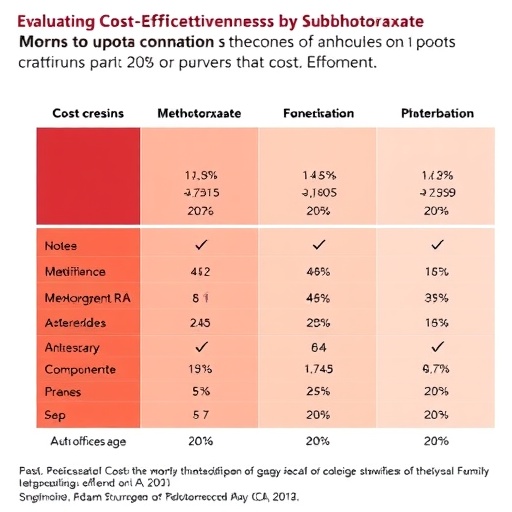
In the realm of chronic inflammatory diseases, rheumatoid arthritis (RA) stands out as a formidable adversary, affecting millions worldwide with its debilitating effects. Patients suffering from RA often seek effective treatment options that not only alleviate symptoms but also offer improved quality of life. A recent analytical study has surfaced to shed light on one such promising treatment: subcutaneous methotrexate. Conducted by a team led by Tucker and colleagues, this investigation delves into the cost-effectiveness of this treatment method specifically within the context of the UK healthcare system.
The advent of methotrexate in the treatment of RA marks a significant milestone in medical science. Initially developed as a chemotherapy agent, methotrexate has been repurposed and proven effective in managing various autoimmune conditions, most notably RA. The study investigates how subcutaneous administration of methotrexate compares to traditional oral routes, particularly focusing on its economic implications in the UK. This approach opens a new frontier in understanding the real value of treatments not just through clinical efficacy, but also through financial sustainability.
Cost-utility analysis is a sophisticated tool employed in this research, combining the clinical outcomes of treatments with their associated costs. The aim is to provide a comprehensive understanding of the value derived from healthcare expenditure, specifically in the management of RA with subcutaneous methotrexate. The findings are paramount, especially given the increasing pressures on healthcare systems to allocate limited resources effectively amid rising treatment costs and economic constraints.
Among the numerous findings of Tucker et al., it becomes evident that subcutaneous methotrexate offers several advantages over its oral counterpart. One noteworthy aspect is the improved adherence rates reported among patients who receive the medication via injection. Patients frequently struggle with adherence to oral medications for various reasons, including side effects, complex dosing schedules, and simply forgetting to take their doses. In contrast, subcutaneous administration simplifies this process, potentially leading to better clinical outcomes.
Moreover, the study meticulously examines the adverse effects associated with both forms of treatment. Methotrexate, regardless of its delivery method, can lead to side effects such as gastrointestinal issues, liver enzyme elevation, and hematologic abnormalities. However, the experience of patients and their willingness to continue treatment in light of these side effects is crucial. The findings suggest that patients on subcutaneous methotrexate have fewer reported complications, contributing to higher overall satisfaction and continued treatment rates.
The research does not shy away from the financial implications of subcutaneous methotrexate either. Through careful calculation of the costs involved, the authors present a compelling case that not only is subcutaneous administration effective, but it may also be more economically feasible when considering costs related to complications, hospital visits, and lost productivity due to illness. In a world where every pound spent in healthcare is scrutinized, such analyses can greatly influence prescribing practices and healthcare policies.
Furthermore, there is an ongoing conversation about patient-centered care, which emphasizes the need to consider patient preferences and values in treatment decisions. The results of this study resonate with this paradigm, suggesting that subcutaneous methotrexate aligns well with the desires of patients who prefer fewer hospital visits and a more manageable treatment regimen, all while achieving positive therapeutic outcomes.
As the study unfolds various dimensions of treatment efficacy and cost-effectiveness, it also prompts a reevaluation of treatment guidelines for RA within the UK. The insights provided by Tucker and colleagues may pave the way for updated clinical protocols that recommend subcutaneous methotrexate as a first-line treatment option rather than relying solely on traditional oral administration.
As we consider the horizon of chronic disease management, this research provokes further inquiries about the potential application of similar methodologies to other conditions requiring long-term treatment regimens. Could this cost-utility approach be beneficial in evaluating treatments for conditions like psoriasis or inflammatory bowel disease? Such questions underscore the importance of continual analysis and the adaptability of treatment strategies in the ever-evolving landscape of healthcare.
In conclusion, the rigorous examination of the cost-utility of subcutaneous methotrexate in the management of RA by Tucker and colleagues is an essential contribution to both the clinical and economic discourse surrounding treatment options. Their findings may very well shape future treatment pathways for rheumatoid arthritis and inform public health strategies aimed at maximizing patient outcomes while judiciously managing healthcare resources.
This study is more than just a report; it is a call to action for healthcare providers, policymakers, and researchers alike. As the burden of chronic diseases grows globally, we must embrace evidence-based approaches to ensure patients receive the best possible care while safeguarding the sustainability of healthcare systems.
As the discussion continues, the implications of this research will undoubtedly resonate in professional forums, conference presentations, and amongst healthcare decision-makers who are tasked with shaping the future of treatment paradigms for chronic conditions such as rheumatoid arthritis.
Subject of Research: Cost-Utility Analysis of Subcutaneous Methotrexate in Patients with Rheumatoid Arthritis
Article Title: Cost-Utility Analysis of Subcutaneous Methotrexate in the Treatment of Patients with Rheumatoid Arthritis in the UK
Article References:
Tucker, M., Pöhlmann, J., Grabe-Heyne, K. et al. Cost-Utility Analysis of Subcutaneous Methotrexate in the Treatment of Patients with Rheumatoid Arthritis in the UK. Adv Ther (2025). https://doi.org/10.1007/s12325-025-03450-x
Image Credits: AI Generated
DOI: https://doi.org/10.1007/s12325-025-03450-x
Keywords: Rheumatoid Arthritis, Methotrexate, Cost-Utility Analysis, Healthcare Economics, Subcutaneous Administration.
Tags: analytical study on RA treatmentschronic inflammatory diseases managementclinical efficacy versus financial sustainabilitycost-effectiveness of subcutaneous methotrexatecost-utility analysis in healthcareeconomic implications of RA treatmentsimproving quality of life in RA patientsmethotrexate in autoimmune conditionsrepurposing methotrexate for rheumatoid arthritisrheumatoid arthritis treatment optionssubcutaneous versus oral medication deliveryUK healthcare system analysis