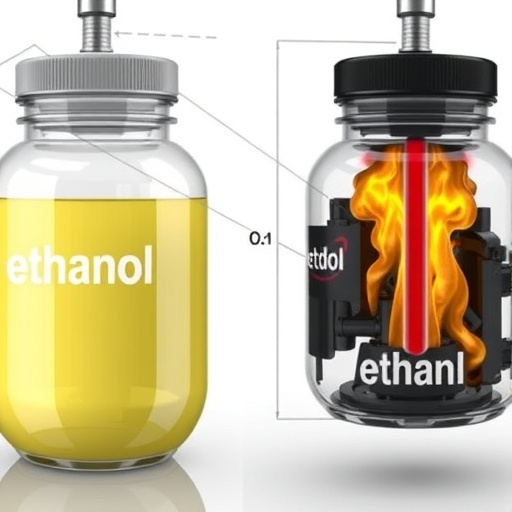
In a groundbreaking study released in 2025, researchers Müller and Günthner profoundly delve into the implications of ethanol-diesel fuel blending. Their work offers a nuanced and comprehensive comparison between direct fuel blending and conventional dual-fuel combustion methods, serving as a critical insight into the future of automotive fuel technology. This detailed examination is particularly relevant as the automotive industry seeks sustainable and efficient solutions to reduce carbon emissions, improve fuel economy, and meet increasingly stringent environmental regulations.
Ethanol-diesel blending has emerged as a viable option in the conversation surrounding alternative fuels, especially given the global shift towards renewable energy sources. Ethanol is derived from biomass and can substantially lighten the carbon footprint of traditional diesel fuels. By exploring direct fuel blending, Müller and Günthner aim to evaluate its effectiveness against the well-established technique of dual-fuel combustion. This comparative analysis is timely, considering the rising popularity of hybrid approaches that aim to optimize engine performance while minimizing adverse environmental effects.
The research meticulously outlines how direct fuel blending involves combining ethanol and diesel before introducing the mixture into the combustion chamber. This method differs from dual-fuel combustion, where diesel acts as the primary fuel source while ethanol is injected separately. This distinction is crucial as it may lead to varying degrees of engine performance, emissions, and fuel efficiency. Müller and Günthner sought to identify the mechanical and chemical dynamics at play when these two methods are utilized, focusing on aspects such as ignition timing, combustion efficiency, and the resultant emissions.
One of the key findings highlighted in the study involves the efficiency of combustion. Direct blending appears to offer certain advantages over the dual-fuel approach, primarily stemming from the more homogenized mixture of fuels. This uniformity leads to a more stable combustion process, which in turn can enhance overall engine performance. The researchers underline that improved combustion stability can yield significant reductions in undesirable emissions, contributing to cleaner air and a healthier environment.
Furthermore, the study dives deeper into the operational parameters that influence fuel blending outcomes. Factors such as the blend ratio, engine design, and operating conditions were meticulously analyzed to establish correlations between varying configurations and performance metrics. This element of the study is essential; it provides automotive engineers with critical insights into optimizing fuel mixtures tailored to specific engine architectures—tailoring solutions that maximize efficiency while adhering to regulatory standards.
A notable contribution of this work is its focus on emissions profiling. Emission testing revealed that the direct blending method could significantly lower the levels of particulate matter compared to conventional dual-fuel combustion. By analyzing exhaust samples, Müller and Günthner were able to chart a clear decrease in harmful emissions, positioning ethanol-diesel blends as not just a performance enhancer but a cleaner alternative as well. These findings provide vital evidence in favor of transitioning towards more sustainable fuel technologies across various applications.
Another pivotal aspect raised in the paper is the economic feasibility of implementing ethanol-diesel blending in current automotive systems. The authors emphasize that while direct blending may offer technical advantages, the broader implications on fuel prices, production costs, and supply chain logistics could affect industry uptake. As governments push for greener fuels, the economic incentives of adopting such technologies will become an increasingly important factor for manufacturers and consumers alike.
As automotive entities evaluate these technologies, the findings from Müller and Günthner encourage a shift in mindset regarding how fuel types are perceived and utilized. Industry stakeholders must begin to view ethanol not merely as a supplementary fuel but rather as a complementary one that can work effectively with diesel to create a more sustainable solution. This change is not merely academic; it resonates throughout the supply chain, potentially impacting farmers, fuel producers, and end-users—an interconnected network that must evolve in harmony.
The researchers also address the technical challenges that arise from transitioning to ethanol-diesel blends, especially regarding engine adaptation and maintenance. Understanding the chemical interactions resulting from fuel blending can aid engineers in refining engine designs to maximize fuel efficacy and lifespan. As demands for fuel efficiency grow, this knowledge becomes increasingly essential in guiding practical implementations without sacrificing reliability.
In conclusion, the work of Müller and Günthner stands as a pivotal point in the dialogue surrounding alternative fuels and their feasibility in modern automotive applications. Their comprehensive analysis not only elucidates the benefits of ethanol-diesel direct fuel blending compared to traditional methods but also sheds light on the broader implications for the automotive industry. The study reinforces the critical need for innovation in fuel technology to align with global energy trends and environmental commitments.
As this research garners attention, it will undoubtedly spark discussions and further investigations into optimizing current vehicles for improved sustainability. Subsequently, as regulations and consumer preferences evolve, the groundwork laid by these findings will serve as a cornerstone for future innovations, ensuring that the automotive industry continues to embrace clean and efficient technologies.
The study highlights a pivotal juncture in automotive engineering where the duo of science and sustainability may redefine fuel consumption in the upcoming decades. With the continued advancement in alternative fuel technology, the findings outlined herein open doors for extensive exploration and development, underscoring the journey towards a cleaner, more efficient automotive future.
Subject of Research: Comparison of Ethanol-Diesel Fuel Blending Techniques
Article Title: A detailed comparison of ethanol–diesel direct fuel blending to conventional ethanol–diesel dual-fuel combustion.
Article References:
Müller, F., Günthner, M. A detailed comparison of ethanol–diesel direct fuel blending to conventional ethanol–diesel dual-fuel combustion.
Automot. Engine Technol. 10, 1 (2025). https://doi.org/10.1007/s41104-024-00147-1
Image Credits: AI Generated
DOI: https://doi.org/10.1007/s41104-024-00147-1
Keywords: Ethanol, Diesel, Fuel Blending, Combustion Efficiency, Emissions, Automotive Engineering, Alternative Fuels, Sustainable Technology, Automotive Industry.
Tags: automotive fuel technology comparisonbiomass-derived ethanol benefitscarbon emissions reduction strategiesconventional combustion techniques analysisdirect fuel blending advantagesdual-fuel combustion methodsengine performance optimization techniquesenvironmental regulations in fuel industryEthanol-diesel fuel blendinghybrid fuel approachesrenewable energy sources in transportationsustainable fuel alternatives