


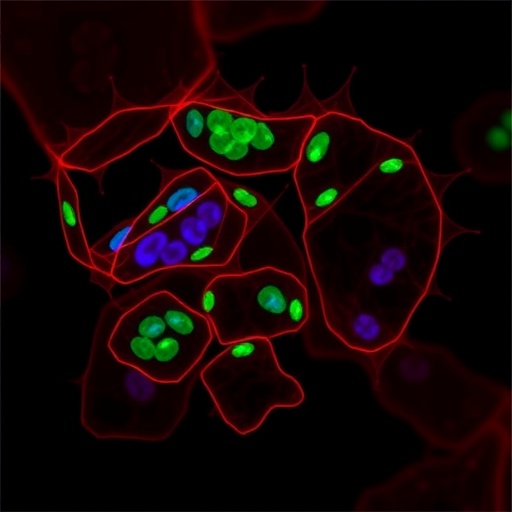
In a groundbreaking exploration of female reproductive biology, new findings have emerged regarding the intricate relationship between estrogen and the neuropeptide nesfatin-1. Researchers led by Ha, J., alongside Moon, S., and Yang, H., have delved into the mechanisms by which estrogen influences nesfatin-1 expression, ultimately impacting endometrial decidualization in murine models. This research not only extends our understanding of hormonal regulation during the menstrual cycle but also provides new insights into potential therapeutic targets for reproductive disorders.
Decidualization, a critical process occurring in the endometrium, is crucial for successful implantation and subsequent development of the embryo. During the menstrual cycle, the endometrium undergoes significant changes, transforming from a quiescent state to one that supports embryo implantation. The study by Ha et al. sheds light on this dynamic process, revealing that estrogen plays a pivotal role in modulating the expression of nesfatin-1, a neuropeptide known primarily for its role in energy balance and appetite regulation.
Interestingly, nesfatin-1 has emerged as a key player not only in metabolic processes but also in reproductive health. Previous studies have indicated that nesfatin-1 may have functions beyond its established role in energy homeostasis, and the current research builds on this concept. The team utilized a range of experimental techniques, including gene expression analysis and immunohistochemistry, to investigate the expression levels of nesfatin-1 in response to varying estrogen levels in mice.
In their findings, the researchers observed a marked increase in nesfatin-1 expression in the endometrial tissue of estrogen-treated mice. This upregulation suggests that estrogen may enhance the synthesis of nesfatin-1, implicating it as a potential mediator in the decidualization process. The implications of this finding are significant, as they indicate that nesfatin-1 could serve as a crucial signaling molecule that coordinates the responses of the endometrium to hormonal changes.
Moreover, the study also explored the mechanistic pathways through which nesfatin-1 operates. Researchers found that nesfatin-1 can modulate the expression of various genes associated with inflammation and cellular proliferation within the endometrium. These findings suggest that nesfatin-1 may influence not only the morphological changes associated with decidualization but also the functional aspects that are critical for successful embryo implantation and subsequent pregnancy maintenance.
Additional experiments conducted by the research team indicated that blocking the action of nesfatin-1 in vivo resulted in impaired decidualization, demonstrating its essential role in this biological process. This inhibition led to reduced expression of key markers associated with decidualization, thereby providing strong evidence for nesfatin-1’s involvement in establishing a receptive endometrial environment. Such discoveries could pave the way for novel therapeutic strategies aimed at enhancing fertility in women facing reproductive challenges.
Importantly, the implications of these findings extend beyond reproductive physiology into the realm of metabolic health. The relationship between energy balance and reproduction is a complex interplay, with both systems influencing each other. The research highlights nesfatin-1 as a dual-function peptide that may link metabolic status and reproductive health, raising questions about how metabolic disorders, such as obesity, may affect fertility through alterations in nesfatin-1 signaling.
As scientists continue to investigate the multifaceted roles of hormones and neuropeptides in reproductive health, studies like this underscore the importance of understanding the biological underpinnings that regulate female fertility. The work of Ha et al. is particularly timely as it provides a fresh perspective on how estrogen’s influence extends beyond traditional functions and affects complex reproductive processes like decidualization via nesfatin-1.
Looking ahead, future research endeavors will be necessary to confirm these findings in human models and to explore the therapeutic potential of targeting nesfatin-1 for addressing menstrual and fertility disorders. The intersection of neuropeptides and reproductive health presents an exciting frontier, promising to unveil new strategies for enhancing women’s health and addressing infertility issues. The implications of this study resonate not only in the scientific community but also for clinicians working directly with patients seeking fertility treatment.
In conclusion, the elucidation of the relationship between estrogen and nesfatin-1 expression represents a pivotal advancement in reproductive science. As researchers continue to decode the complexities of hormonal interactions and their physiological outcomes, the work of Ha, J., Moon, S., and Yang, H. stands as a promising foundation for future studies that may ultimately lead to improved reproductive health outcomes for women.
Subject of Research: Estrogen-Induced Nesfatin-1 Expression and Endometrial Decidualization
Article Title: Estrogen-Induced Nesfatin-1 Expression Modulates Endometrial Decidualization in Mice
Article References:
Ha, J., Moon, S. & Yang, H. Estrogen-Induced Nesfatin-1 Expression Modulates Endometrial Decidualization in Mice.
Reprod. Sci. (2025). https://doi.org/10.1007/s43032-025-02028-w
Image Credits: AI Generated
DOI: https://doi.org/10.1007/s43032-025-02028-w
Keywords: nesfatin-1, estrogen, decidualization, endometrium, reproductive health, fertility, hormonal regulation, neuropeptides.
Tags: endometrial decidualization processenergy balance in reproductive healthEstrogen and nesfatin-1 relationshipestrogen’s impact on embryo implantationhormonal influence on endometrial changeshormonal regulation in menstrual cyclemetabolic processes and reproductionmurine models in reproductive researchnesfatin-1 role in reproductive healthneuropeptides in female reproductive biologyreproductive disorders therapy targetsresearch on female reproductive mechanisms



