• HOME
  • NEWS
  • EXPLORE
    • CAREER
      • Companies
      • Jobs
    • EVENTS
    • iGEM
      • News
      • Team
    • PHOTOS
    • VIDEO
    • WIKI
  • BLOG
  • COMMUNITY
    • FACEBOOK
    • INSTAGRAM
    • TWITTER
Monday, September 28, 2026
BIOENGINEER.ORG
No Result
View All Result
  • Login
  • HOME
  • NEWS
  • EXPLORE
    • CAREER
      • Companies
      • Jobs
        • Lecturer
        • PhD Studentship
        • Postdoc
        • Research Assistant
    • EVENTS
    • iGEM
      • News
      • Team
    • PHOTOS
    • VIDEO
    • WIKI
  • BLOG
  • COMMUNITY
    • FACEBOOK
    • INSTAGRAM
    • TWITTER
  • HOME
  • NEWS
  • EXPLORE
    • CAREER
      • Companies
      • Jobs
        • Lecturer
        • PhD Studentship
        • Postdoc
        • Research Assistant
    • EVENTS
    • iGEM
      • News
      • Team
    • PHOTOS
    • VIDEO
    • WIKI
  • BLOG
  • COMMUNITY
    • FACEBOOK
    • INSTAGRAM
    • TWITTER
No Result
View All Result
Bioengineer.org
No Result
View All Result
Home NEWS Science News Chemistry

Estimating microplastic consumption

Bioengineer by Bioengineer
June 5, 2019
in Chemistry
Reading Time: 2 mins read
0
IMAGE
Share on FacebookShare on TwitterShare on LinkedinShare on RedditShare on Telegram

IMAGE

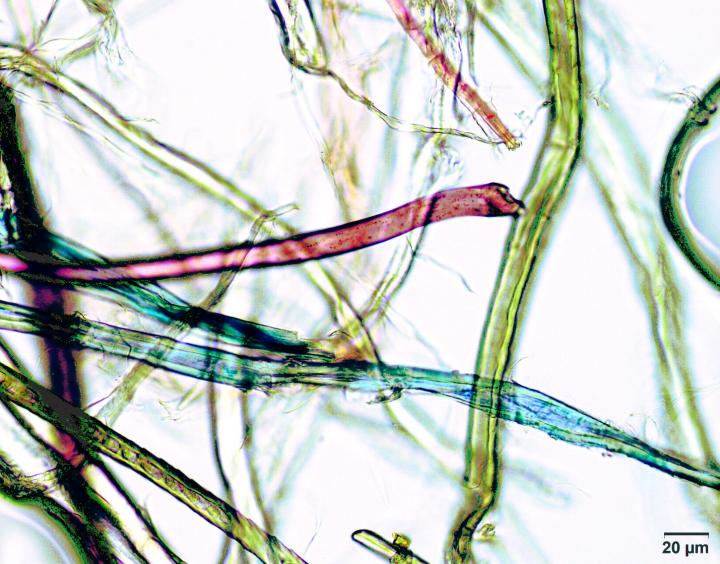
Credit: Monique Raap, University of Victoria

Since the mass production of plastics began in the 1940s, the versatile polymers have spread rapidly across the globe. Although plastics have made life easier in many ways, disposing of the materials is a growing problem. Now, researchers in the ACS journal Environmental Science & Technology estimate that the average American consumes more than 70,000 particles of microplastics per year, though the health effects of that consumption are unclear.

Microplastics are tiny (often microscopic) pieces of plastic that can arise from multiple sources, such as the degradation of larger plastic products in the environment, or the shedding of particles from food and water containers during packaging. Humans can inadvertently take in the materials when eating food or breathing air containing microplastics. The health effects of ingesting these particles are unknown, but some pieces are small enough to enter human tissues, where they could trigger immune reactions or release toxic substances. But how much microplastics do humans consume? That’s the question Kieran Cox and colleagues wanted to tackle.

To do so, the researchers reviewed 26 previous studies that analyzed the amounts of microplastic particles in fish, shellfish, added sugars, salts, alcohol, tap or bottled water, and air. Other foods were not included in the analysis because the data were lacking. The team then assessed approximately how much of these foods men, women and children eat from the recommended dietary intakes of the 2015-2020 Dietary Guidelines for Americans. From this analysis, the estimated microplastic consumption ranged from 74,000 to 121,000 particles per year, depending on age and sex. People who drink only bottled water could consume an additional 90,000 microplastics annually compared with those who drink only tap water. Because the researchers considered only 15% of Americans’ caloric intake, these values are likely underestimates, they say. Additional research is needed to understand the health effects, if any, of the ingested particles.

###

The authors acknowledge funding from the Natural Sciences and Engineering Research Council of Canada and the Liber Ero Foundation.

The paper’s abstract will be available on June 5 at 8 a.m. Eastern time here:

http://pubs.acs.org/doi/abs/10.1021/acs.est.9b01517

The American Chemical Society, the world’s largest scientific society, is a not-for-profit organization chartered by the U.S. Congress. ACS is a global leader in providing access to chemistry-related information and research through its multiple databases, peer-reviewed journals and scientific conferences. ACS does not conduct research, but publishes and publicizes peer-reviewed scientific studies. Its main offices are in Washington, D.C., and Columbus, Ohio.

To automatically receive news releases from the American Chemical Society, contact [email protected].

Follow us: Twitter | Facebook

Media Contact
Katie Cottingham
[email protected]

Tags: Chemistry/Physics/Materials SciencesHydrology/Water ResourcesMarine/Freshwater BiologyMicrobiologyPollution/RemediationPolymer ChemistryPublic Health
Share12Tweet8Share2ShareShareShare2

Related Posts

Sponge-Powered Reactor Keeps Fish Farm Water Clean Without Water Exchanges

Sponge-Powered Reactor Keeps Fish Farm Water Clean Without Water Exchanges

September 27, 2026
Scientists Turn Chemistry Into a Single Number That Measures the Complexity of Chinese Baijiu Aroma

Scientists Turn Chemistry Into a Single Number That Measures the Complexity of Chinese Baijiu Aroma

September 27, 2026

Strontium-Doped Bioactive Glass Turns Everyday Friction Into a Water-Cleaning Powerhouse

September 27, 2026

Quantum Simulations Reveal the Hidden Electronic Architecture of Methisazone

September 26, 2026
Please login to join discussion

POPULAR NEWS

  • Trunk Control May Hold a Key to Balance and Fall Risk in Older Adults

    29 shares
    Share 12 Tweet 7
  • AI Tells Doctors When It Is Unsure About Cancer Treatment Success

    29 shares
    Share 12 Tweet 7
  • Engineered mini CRISPR enzyme gets a 60-fold power boost for gene editing

    29 shares
    Share 12 Tweet 7
  • When Autism Diagnoses Fade: Early Intervention and Milder Symptoms Mark Children Who Lose the Label

    29 shares
    Share 12 Tweet 7

About

We bring you the latest biotechnology news from best research centers and universities around the world. Check our website.

Follow us

Recent News

Trunk Control May Hold a Key to Balance and Fall Risk in Older Adults

AI Tells Doctors When It Is Unsure About Cancer Treatment Success

Engineered mini CRISPR enzyme gets a 60-fold power boost for gene editing

Subscribe to Blog via Email

Enter your email address to subscribe to this blog and receive notifications of new posts by email.

Join 85 other subscribers
  • Contact Us

Bioengineer.org © Copyright 2023 All Rights Reserved.

Welcome Back!

Login to your account below

Forgotten Password?

Retrieve your password

Please enter your username or email address to reset your password.

Log In
No Result
View All Result
  • Homepages
    • Home Page 1
    • Home Page 2
  • News
  • National
  • Business
  • Health
  • Lifestyle
  • Science

Bioengineer.org © Copyright 2023 All Rights Reserved.