• HOME
  • NEWS
  • EXPLORE
    • CAREER
      • Companies
      • Jobs
    • EVENTS
    • iGEM
      • News
      • Team
    • PHOTOS
    • VIDEO
    • WIKI
  • BLOG
  • COMMUNITY
    • FACEBOOK
    • INSTAGRAM
    • TWITTER
Monday, May 4, 2026
BIOENGINEER.ORG
No Result
View All Result
  • Login
  • HOME
  • NEWS
  • EXPLORE
    • CAREER
      • Companies
      • Jobs
        • Lecturer
        • PhD Studentship
        • Postdoc
        • Research Assistant
    • EVENTS
    • iGEM
      • News
      • Team
    • PHOTOS
    • VIDEO
    • WIKI
  • BLOG
  • COMMUNITY
    • FACEBOOK
    • INSTAGRAM
    • TWITTER
  • HOME
  • NEWS
  • EXPLORE
    • CAREER
      • Companies
      • Jobs
        • Lecturer
        • PhD Studentship
        • Postdoc
        • Research Assistant
    • EVENTS
    • iGEM
      • News
      • Team
    • PHOTOS
    • VIDEO
    • WIKI
  • BLOG
  • COMMUNITY
    • FACEBOOK
    • INSTAGRAM
    • TWITTER
No Result
View All Result
Bioengineer.org
No Result
View All Result
Home NEWS Science News Health

Establishment of a pancreatic cancer animal model using the pancreas-targeted hydrodynamic gene delivery method

Bioengineer by Bioengineer
April 22, 2022
in Health
Reading Time: 2 mins read
0
Establishment of a Pancreatic Cancer Animal Model Using the Pancreas-Targeted Hydrodynamic Gene Delivery Method
Share on FacebookShare on TwitterShare on LinkedinShare on RedditShare on Telegram

Niigata, Japan – The research group of Professor Kamimura in Niigata University have established a novel pancreatic carcinogenesis model in wild-type rats utilizing the pancreas-targeted selective hydrodynamic gene delivery method developed by their research group.
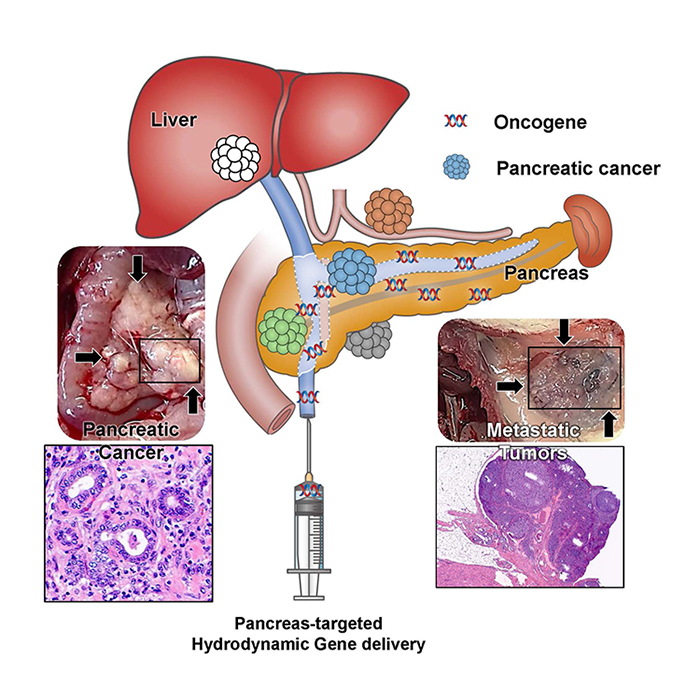
Establishment of a Pancreatic Cancer Animal Model Using the Pancreas-Targeted Hydrodynamic Gene Delivery Method

Credit: Niigata University

Niigata, Japan – The research group of Professor Kamimura in Niigata University have established a novel pancreatic carcinogenesis model in wild-type rats utilizing the pancreas-targeted selective hydrodynamic gene delivery method developed by their research group.

“The gene human pancreatic cancer-related gene transfer of the KRASG12D efficiently developed the pancreatic cancer”, says Prof. Kamimura. KRASG12D-induced pancreatic intraepithelial neoplasia lesions showed malignant transformation in the main pancreatic duct at four weeks and developed acinar-to-ductal metaplasia, which led to pancreatic ductal adenocarcinoma within five weeks and the gene combination of KRASG12D and YAP enhanced these effects.

In addition, the combination of oncogenes revealed the metastatic tumors in the liver, lymph nodes, etc., and invasive growth to the surrounding organ and tissues, mimicking the clinical course of human pancreatic cancer. The pancreas-targeted hydrodynamic gene delivery showed its efficacy in developing novel animal models and is promising methods for the organ specific gene therapy. Prof. Kamimura concluded that this pancreatic cancer model will speed up pancreatic cancer research for novel treatments and biomarkers for early diagnosis.


Journal

Molecular Therapy — Nucleic Acids

DOI

10.1016/j.omtn.2022.03.019

Article Title

Establishment of a pancreatic cancer animal model using the pancreas-targeted hydrodynamic gene delivery method

Article Publication Date

28-Mar-2022

Share12Tweet8Share2ShareShareShare2

Related Posts

Grant Supports Early-Career Research on Metabolism and Dietary Choices

May 4, 2026

New Study Investigates Root Causes of Co-Occurring Mental Health Disorders

May 4, 2026

New Approaches to Managing Anxiety in Adults Within Primary Care Settings

May 4, 2026

Effective AAV Gene Therapy in Late-Stage Lysosomal Disease

May 4, 2026

POPULAR NEWS

  • Research Indicates Potential Connection Between Prenatal Medication Exposure and Elevated Autism Risk

    834 shares
    Share 334 Tweet 209
  • New Study Reveals Plants Can Detect the Sound of Rain

    718 shares
    Share 287 Tweet 179
  • Scientists Investigate Possible Connection Between COVID-19 and Increased Lung Cancer Risk

    67 shares
    Share 27 Tweet 17
  • Salmonella Haem Blocks Macrophages, Boosts Infection

    61 shares
    Share 24 Tweet 15

About

We bring you the latest biotechnology news from best research centers and universities around the world. Check our website.

Follow us

Recent News

Study Reveals AI Struggles to Gain Ground Among Cybercriminals

Grant Supports Early-Career Research on Metabolism and Dietary Choices

McGill Study Reveals Moderate UV Light Optimizes Vitamin D Levels in Edible Mushrooms

Subscribe to Blog via Email

Enter your email address to subscribe to this blog and receive notifications of new posts by email.

Join 82 other subscribers
  • Contact Us

Bioengineer.org © Copyright 2023 All Rights Reserved.

Welcome Back!

Login to your account below

Forgotten Password?

Retrieve your password

Please enter your username or email address to reset your password.

Log In
No Result
View All Result
  • Homepages
    • Home Page 1
    • Home Page 2
  • News
  • National
  • Business
  • Health
  • Lifestyle
  • Science

Bioengineer.org © Copyright 2023 All Rights Reserved.