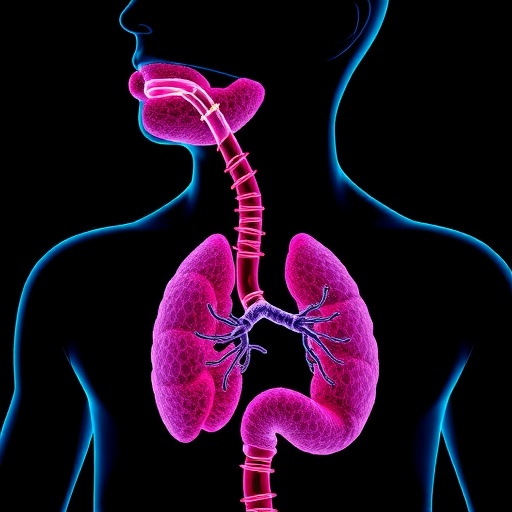
In a groundbreaking advancement poised to transform the field of drug delivery and pharmaceutical screening, researchers have developed a sophisticated oesophageal tissue screening system engineered to evaluate the retention and mucosal absorption of biologic drugs. This cutting-edge platform addresses a critical bottleneck in the optimization of biologics administration, specifically focusing on the nuanced interactions within the oesophageal environment — a domain traditionally underexplored yet pivotal for the efficacy of certain therapeutic modalities. By meticulously mimicking the tissue architecture and fluid dynamics of the human oesophagus, this innovative system offers unparalleled insight into the pharmacokinetics and pharmacodynamics of biologic compounds, heralding new horizons for personalized medicine and streamlined drug development.
The oesophagus serves as a crucial conduit, connecting the oral cavity to the stomach, and its unique mucosal lining presents both challenges and opportunities for local and systemic drug delivery. Historically, the dynamic mechanical properties and the complex biochemical milieu of oesophageal tissue have posed significant obstacles to the precise measurement of biologic drug retention and absorption. Conventional in vitro models and animal studies often fall short in replicating the human oesophageal environment, leading to discrepancies in preclinical-to-clinical translation. The advent of this novel screening system marks a pivotal leap forward, integrating bioengineered tissue with advanced analytical modalities to reproduce the distinct physiological conditions that influence drug behavior post-administration.
At the core of this new system lies an assembly of stratified oesophageal mucosal models, meticulously cultured to emulate the epithelial barrier’s cellular composition and structural integrity. These tissue constructs exhibit hallmark features such as tight junction formation, mucin secretion, and surface topography reflective of human oesophageal lining. The researchers employed state-of-the-art bioreactors to sustain these tissues under physiologically relevant conditions, including regulated temperature, pH, and shear stress induced by peristaltic motions. Such meticulous control enables the evaluation of drug retention kinetics under conditions that closely parallel natural oesophageal exposure, thereby yielding data with enhanced predictive validity.
An extraordinary aspect of this screening approach is its capability to quantitatively monitor biologic molecules in real-time, assessing both retention at the mucosal surface and trans-epithelial absorption. This is achieved through the integration of sensitive fluorescence-based assays and high-resolution imaging techniques which track labeled biologic agents during their interaction with the tissue. These methodologies illuminate critical parameters such as diffusion rates, local retention times, and permeation efficacy across the mucosal barrier. This granular level of detail empowers researchers to discern subtle differences in drug formulation behavior, paving the way for optimized therapeutic designs that maximize efficacy while minimizing systemic exposure and associated side effects.
Moreover, the system’s adaptability stands out as it accommodates the assessment of a diverse range of biologics, spanning monoclonal antibodies, peptides, and nucleic acid-based therapeutics. Given the growing prominence of biologic drugs in contemporary medicine — characterized by their specificity and complexity — the ability to reliably gauge their mucosal dynamics is imperative. This platform thus serves as an invaluable intermediary step prior to in vivo testing, refining drug candidates and informing dosage strategies more effectively than traditional methods allow. Furthermore, the system supports testing under pathological conditions by incorporating diseased mucosal models, offering insights into altered drug absorption dynamics in scenarios such as inflammation or Barrett’s esophagus.
The implications of this research extend beyond the laboratory, addressing significant clinical challenges associated with oesophageal drug delivery. Treatments targeting conditions like eosinophilic esophagitis, gastroesophageal reflux disease, and localized infections stand to benefit immensely. By elucidating tissue-specific parameters dictating drug retention and absorption, clinicians can tailor delivery systems that enhance local therapeutic concentrations while mitigating systemic exposure, thereby elevating patient outcomes and compliance. This forward-thinking approach embodies a shift towards precision therapeutics, leveraging tissue-engineered models to bridge existing gaps in drug development pipelines.
In addition to advancing drug delivery science, the oesophageal screening system presents a transformative tool for understanding mucosal barrier function itself. The oesophagus, often overlooked compared to other mucosal sites such as the intestine or respiratory tract, plays a critical role in barrier maintenance and immune surveillance. This research sheds light on the delicate interplay between mucosal architecture and molecular transport phenomena, potentially unearthing new pathways for therapeutic intervention. The system’s high-fidelity mimicry of mucosal properties furnishes a platform for studying disease progression and therapeutic responses in a controlled yet biologically accurate context.
Technologically, the innovation integrates microfluidic engineering with tissue biology, enabling fine-tuned control over fluid flow, shear forces, and biochemical gradients reminiscent of the oesophageal microenvironment. These parameters are crucial in dictating drug adhesion and penetration, often overlooked in static culture systems. By simulating peristalsis-induced mechanical stimuli, the screening setup replicates transient physiological interactions that affect drug fate post-administration. This dynamic testing environment distinguishes the approach from traditional assays, offering a holistic perspective on drug-mucosa interactions.
The research team has meticulously validated their system against clinical data, demonstrating close correspondence between in vitro retention and absorption profiles and observed in vivo pharmacokinetics in human subjects. Such validation underscores the platform’s potential to serve as a robust predictive model, streamlining drug candidate evaluation workflows and reducing reliance on animal testing. This methodological refinement aligns with ethical imperatives and regulatory trends favoring alternative testing strategies, positioning the oesophageal tissue screening system at the forefront of contemporary biomedical engineering.
Looking forward, the platform’s modularity suggests opportunities for integration with other organ-on-chip systems, which could facilitate comprehensive investigations into multiorgan pharmacokinetics and systemic drug distribution. Coupling oesophageal models with gastric, hepatic, or intestinal tissue chips would enable sophisticated simulation of oral biologic drug journeys, from administration through metabolism and clearance. Such expanded capabilities could revolutionize personalized medicine approaches by accommodating patient-specific variations in tissue responses and drug metabolism, ultimately guiding precision dosing regimens informed by robust, mechanistic data.
In the realm of formulation science, insights garnered from this screening system could catalyze the design of novel drug carriers tailored for oesophageal administration. Nanoparticles, mucoadhesive gels, or sustained-release coatings can now be systematically evaluated for their ability to enhance biologic retention and mucosal penetration under realistic physiological conditions. This ability to pre-screen formulation efficacy accelerates translational timelines and may reduce costly late-stage trial failures by ensuring candidate robustness early in development. Additionally, the platform could support bioequivalence studies for generic biologics, ensuring therapeutic parity through rigorous mucosal interaction assessments.
The strategic application of this screening technology extends into vaccine delivery, particularly mucosal vaccines targeted at eliciting local immune responses within the oesophagus. Given emerging evidence that mucosal immunity is pivotal in systemic protection against pathogens, the ability to study antigen retention and uptake at the mucosal surface represents a critical advance. Researchers can explore adjuvant formulations and delivery vehicles optimized for mucosal targeting, thereby enhancing vaccine effectiveness and patient compliance via non-invasive administration routes.
Beyond therapeutic implications, this research envisions a future wherein personalized screening of patient-derived oesophageal tissues informs individualized treatment plans. Biopsy-derived cells could be cultured into mucosal models reflective of a patient’s unique tissue milieu, allowing direct evaluation of drug retention and absorption tailored to personal pathology and molecular profiles. This convergence of tissue engineering and precision medicine could revolutionize clinical decision-making, optimizing drug formulations and regimens to maximize therapeutic benefit with minimal adverse effects.
The development of the oesophageal tissue screening system exemplifies the power of interdisciplinary collaboration combining vascular biology, biomaterials science, optical imaging, and microfluidics. Each component contributes to creating a comprehensive and physiologically faithful platform critical for advancing the frontiers of biologic drug development. Such synergy not only accelerates scientific understanding but also propels forward innovative healthcare solutions addressing unmet medical needs related to oesophageal diseases and biologic therapies.
Ultimately, this pioneering work underscores an exciting paradigm shift in drug development strategies. By bridging the experimental gap between traditional in vitro systems and complex in vivo human physiology, the oesophageal screening platform elevates the fidelity and throughput of biologic absorption studies. The comprehensive data generated promise to de-risk development programs, inform regulatory decision-making, and catalyze the emergence of next-generation therapies tailored to the unique challenges of oesophageal drug delivery. With this technological leap, the future of patient-centric, efficacious biologic treatments delivered at the mucosal frontier looks brighter and more attainable than ever before.
Subject of Research: Development of an oesophageal tissue screening system for assessing biologic drug retention and mucosal absorption.
Article Title: Oesophageal tissue screening system for assessing the retention and mucosal absorption of biologics.
Article References:
Karavasili, C., Young, T., Chan, A. et al. Oesophageal tissue screening system for assessing the retention and mucosal absorption of biologics. Nat. Biomed. Eng (2026). https://doi.org/10.1038/s41551-026-01685-9
Image Credits: AI Generated
DOI: https://doi.org/10.1038/s41551-026-01685-9
Tags: biologic drug absorptionbiologic therapeutics optimizationdrug absorption efficiency testingesophageal drug delivery challengesesophageal mucosal barrieresophageal tissue screening systemin vitro esophageal modelsmucosal drug retentionpersonalized medicine in drug developmentpharmacodynamics in esophageal tissuepharmacokinetics of biologicspreclinical to clinical drug translation