• HOME
  • NEWS
  • EXPLORE
    • CAREER
      • Companies
      • Jobs
    • EVENTS
    • iGEM
      • News
      • Team
    • PHOTOS
    • VIDEO
    • WIKI
  • BLOG
  • COMMUNITY
    • FACEBOOK
    • INSTAGRAM
    • TWITTER
Saturday, December 27, 2025
BIOENGINEER.ORG
No Result
View All Result
  • Login
  • HOME
  • NEWS
  • EXPLORE
    • CAREER
      • Companies
      • Jobs
        • Lecturer
        • PhD Studentship
        • Postdoc
        • Research Assistant
    • EVENTS
    • iGEM
      • News
      • Team
    • PHOTOS
    • VIDEO
    • WIKI
  • BLOG
  • COMMUNITY
    • FACEBOOK
    • INSTAGRAM
    • TWITTER
  • HOME
  • NEWS
  • EXPLORE
    • CAREER
      • Companies
      • Jobs
        • Lecturer
        • PhD Studentship
        • Postdoc
        • Research Assistant
    • EVENTS
    • iGEM
      • News
      • Team
    • PHOTOS
    • VIDEO
    • WIKI
  • BLOG
  • COMMUNITY
    • FACEBOOK
    • INSTAGRAM
    • TWITTER
No Result
View All Result
Bioengineer.org
No Result
View All Result
Home NEWS Science News Chemistry

Escher’s angels and demons woodcut predicts how matter deforms

Bioengineer by Bioengineer
November 21, 2019
in Chemistry
Reading Time: 2 mins read
0
IMAGE
Share on FacebookShare on TwitterShare on LinkedinShare on RedditShare on Telegram

A study published in the prestigious Physical Review Letters
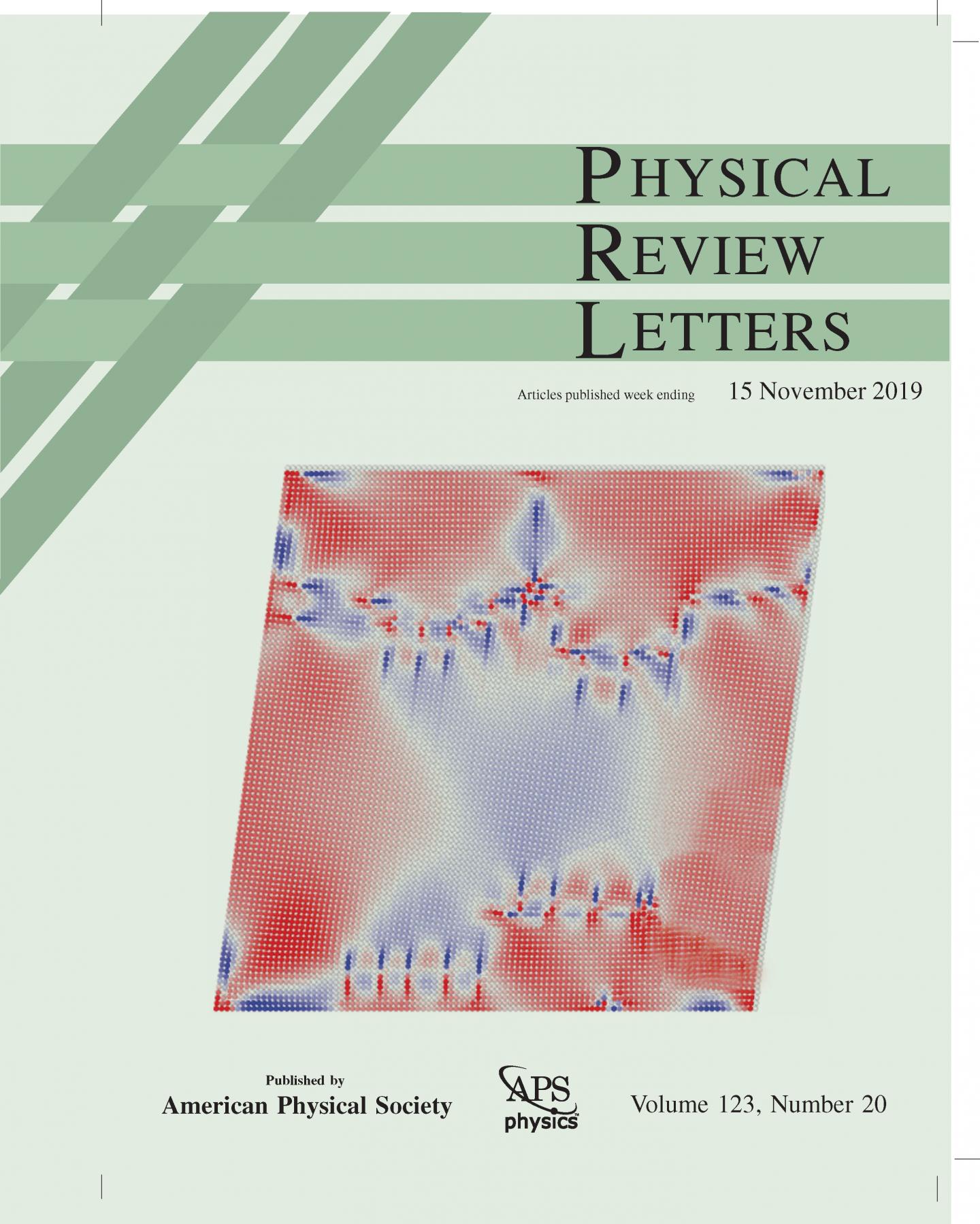
IMAGE

Credit: PRL Politecnico di Milano


Dutch artist M.C. Escher’s most famous drawing, “Circle Limit IV (Heaven and Hell)”, shows angels and demons in a tessellation that fills a circle without empty spaces. This masterful woodcut inspired an international partnership of researchers including Politecnico di Milano Physics Department to author the cover-story article published in Physical Review Letters (*).

This free and unconventional work-of-art has provided a valuable assistance to science.

The discovery

The researchers of Professor Paolo Biscari’s group, together with their colleagues discovered that the arrangement of angels and demons in the famous woodcut makes it possible to predict how a crystalline body will change its shape when subject to external action.

Escher’s woodcut is linked to the work of mathematicians who in the middle of the last century were exploring the properties of hyperbolic spaces:

The study’s subject showed a connection between these spaces and everyday phenomena such as the permanent plastic deformation of matter.

The work-of-art sparked a new approach to the mathematical description of complex material deformation phenomena problem.

The new approach mooted by the researchers indicates how crystalline lattice shapes can be associated with points in the hyperbolic space. During its deformations, the material changes shape, passing e.g. from one Escher’s angelic image to the next angel’s shape.

Crystal plasticity is due to the interactions of lattice defects that glide under the effect of the applied forces.

The model promises to become a new useful tool for the study and numerical simulation of microscopic plastic phenomena. Conventional theories cannot correctly describe many properties such as mechanical strength and its unpredictable fluctuations, which can generate true plastic avalanches.

Controlling these phenomena opens new paths for the design and development (guided by theory and simulation) of new materials to optimise micro-manufacturing processes.

###

Landau-type theory of planar crystal plasticity

R. Baggio, E. Arbib, P. Biscari, S. Conti, L. Truskinovsky, G. Zanzotto and O. U. Salman

Phys. Rev. Lett., 123, 205501 (2019)

Media Contact
Cristina Perini
[email protected]
39-022-399-2508

Original Source

https://www.polimi.it/?id=3936&tx_wfqbe_pi1[id]=1139

Related Journal Article

http://dx.doi.org/10.1103/PhysRevLett.123.205501

Tags: Atomic PhysicsMaterialsMathematics/StatisticsNanotechnology/MicromachinesResearch/Development
Share13Tweet8Share2ShareShareShare2

Related Posts

Cutting Electrolyte Reduction Boosts High-Energy Battery Performance

Cutting Electrolyte Reduction Boosts High-Energy Battery Performance

December 19, 2025
Microenvironment Shapes Gold-Catalysed CO2 Electroreduction

Microenvironment Shapes Gold-Catalysed CO2 Electroreduction

December 11, 2025

Photoswitchable Olefins Enable Controlled Polymerization

December 11, 2025

Cation Hydration Entropy Controls Chloride Ion Diffusion

December 10, 2025
Please login to join discussion

POPULAR NEWS

  • Robotic Waist Tether for Research Into Metabolic Cost of Walking

    NSF funds machine-learning research at UNO and UNL to study energy requirements of walking in older adults

    71 shares
    Share 28 Tweet 18
  • Nurses’ Views on Online Learning: Effects on Performance

    70 shares
    Share 28 Tweet 18
  • Exploring Audiology Accessibility in Johannesburg, South Africa

    51 shares
    Share 20 Tweet 13
  • Unraveling Levofloxacin’s Impact on Brain Function

    54 shares
    Share 22 Tweet 14

About

We bring you the latest biotechnology news from best research centers and universities around the world. Check our website.

Follow us

Recent News

Age Differences in Childhood Type 1 Diabetes Revealed

AI vs. Traditional Credit Scoring: A Comparative Analysis

Reassessing N-acetylcysteine Cut-off in Paracetamol Poisoning

Subscribe to Blog via Email

Enter your email address to subscribe to this blog and receive notifications of new posts by email.

Join 71 other subscribers
  • Contact Us

Bioengineer.org © Copyright 2023 All Rights Reserved.

Welcome Back!

Login to your account below

Forgotten Password?

Retrieve your password

Please enter your username or email address to reset your password.

Log In
No Result
View All Result
  • Homepages
    • Home Page 1
    • Home Page 2
  • News
  • National
  • Business
  • Health
  • Lifestyle
  • Science

Bioengineer.org © Copyright 2023 All Rights Reserved.