Disruption of epithelial barrier architecture and selective remodelling of hemidesmosomal adhesion complexes can act as disease-modifying factors that may represent both causes and consequences of squamous cell carcinoma progression. Antonio Celentano and colleagues from the Melbourne Dental School, University of Foggia, UWA Dental School, and the Walter and Eliza Hall Institute synthesized multidisciplinary evidence encompassing molecular investigations, immunohistochemistry, spatial profiling, and experimental models across stratified epithelia. Their critical review establishes that epithelial barrier structures, traditionally viewed merely as static physical boundaries, operate as active tumor-suppressor systems whose stage-specific breakdown reprograms intracellular signaling pathways, stimulates cellular plasticity, and coordinates collective tumor invasion into surrounding tissue. By tracking molecular shifts across normal tissue homeostasis, premalignant dysplasia, malignant transformation, and invasive carcinoma, the authors demonstrate how structural perturbations within stratified boundaries actively facilitate neoplastic progression and reshape the adjacent tissue microenvironment.
Squamous cell carcinomas represent a major worldwide health burden, constituting the vast majority of malignancies arising across stratified epithelial sites including the skin, oral cavity, head and neck, esophagus, cervix, and lungs. Despite therapeutic advances and molecular characterization, clinical outcomes for patients presenting with recurrent or advanced disease remain poor, with five-year survival rates persisting around fifty percent across numerous anatomical subtypes. In healthy stratified tissue, epithelial barrier integrity depends on a hierarchical network of intercellular and cell-matrix junctions, notably desmosomes, adherens junctions, tight junctions, and basement-membrane-anchoring hemidesmosomes. These specialized junctions collectively preserve tissue architecture, direct cellular differentiation, control proliferative dynamics, and moderate communication with the underlying stromal microenvironment. Genetic mutations, epigenetic alterations, growth-factor-mediated phosphorylation cascades, and enzymatic degradation of the extracellular matrix systematically compromise these structural anchors, undermining the tissue-level organization that normally restricts aberrant cell behavior.
Across fifty to ninety percent of squamous cell carcinomas, the structural loss or functional reprogramming of hemidesmosomal complexes coincides directly with the functional failure of p53 tumor suppression. When barrier integrity fails alongside compromised p53 surveillance, epithelial cells gain migratory capacity and invasive competence. This disruption simultaneously triggers epithelial plasticity via downstream β-catenin signaling and partial epithelial-to-mesenchymal transition pathways, initiating cascades that enable transformed cells to escape homeostatic spatial constraints and interact abnormally with surrounding stromal components. Rather than viewing adhesion breakdown solely as a late-stage consequence of neoplastic detachment, the authors propose that progressive and spatially heterogeneous disturbances in epithelial adhesion, polarity, and barrier integrity—collectively termed epithelial dysregulation—function as an organizing principle of malignant transformation. This conceptual shift highlights how architectural alterations provide essential mechanical and biochemical cues that support subsequent tumor evolution and cellular dissemination.
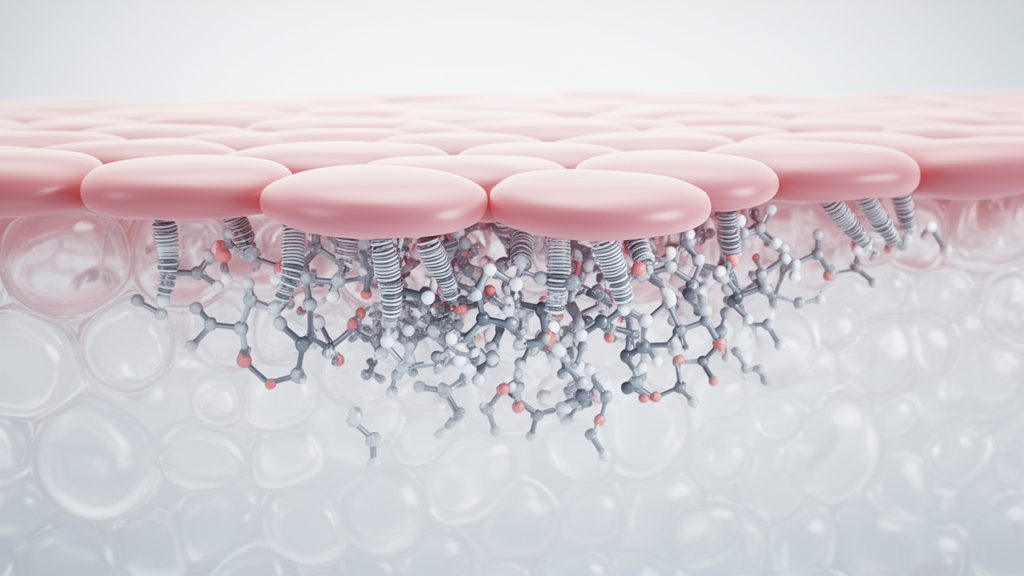
Under non-pathological conditions, hemidesmosomes serve as specialized anchoring junctions that mechanically couple basal keratinocytes to the underlying basement membrane, balancing structural stability with adhesion-dependent regulatory signals. The core multi-protein complex comprises integrin α6β4, collagen XVII (encoded by COL17A1), plectin, and tetraspanins including CD151, which together regulate keratinocyte survival, proliferation, directional migration, and resistance to anoikis—a specialized apoptotic process triggered by cell detachment from matrix scaffolding. An immunohistochemical investigation conducted by Celentano’s group examined hemidesmosome components, specifically plectin isoform Ia, dystonin, and CD151 antigen, across human and murine oral tissues spanning normal epithelium, hyperplasia, dysplasia, and invasive oral squamous cell carcinoma. Their analysis revealed a stage-dependent pattern: while hemidesmosomal proteins were markedly upregulated in early dysplastic lesions, CD151 and dystonin experienced significant expression reductions during transition to invasive carcinoma. This biphasic pattern suggests that early protein increases reflect initial barrier reinforcement or altered survival signaling, whereas subsequent downregulation facilitates invasive detachment.
The authors emphasize that elevated protein expression in pre-invasive lesions does not equate to increased structural adhesion, because uncoupled hemidesmosomal elements can engage in autonomous pro-survival signaling. During malignant transformation, integrin α6β4 undergoes a profound functional shift from a stabilizing mechanical tether to a pro-oncogenic signaling platform. In intact tissue, α6β4 anchors the epithelial-stromal junction through direct interactions with collagen XVII and the extracellular basement membrane. Following hemidesmosome disassembly driven by matrix proteolysis, oncogenic mutations, or growth factor activity, phosphorylated α6β4 detaches from the keratin cytoskeleton and relocates to focal adhesions. In this new location, the integrin complexes with epidermal growth factor receptor (EGFR) and integrin αvβ6, acting as a signaling adaptor that activates focal adhesion kinase (FAK) and Src kinase pathways, while driving downstream phosphatidylinositol 3-kinase (PI3K)/AKT and mitogen-activated protein kinase (MAPK) cascades to confer robust anoikis resistance and invasive motility.
Pre-invasive tissue changes within stratified squamous epithelia provide a visible histopathological window into progressive barrier failure. In oral mucosa, these precursor states manifest as oral epithelial dysplasia, which displays architectural disruption, defective maturation, and cytological atypia. While conventional dysplasia grading correlates broadly with malignant risk, its prognostic precision is limited. The review highlights a six-point prognostic scoring model developed by Mahmood and colleagues that outperformed conventional grading systems. Their model achieved an area under the receiver operating characteristic curve of 0.81, notably surpassing World Health Organization grading at 0.71 and binary grading at 0.68. The presence of all six defining histopathological features—bulbous rete pegs, loss of epithelial cohesion, loss of stratification, suprabasal mitoses, nuclear pleomorphism, and hyperchromatism—predicted a fifty percent malignant transformation rate at five years, compared with only fourteen percent when lesions exhibited two to three features, establishing a measurable link between architectural breakdown and malignant progression.
Rather than treating barrier breakdown as an irreversible, all-or-nothing terminal event, the synthesis outlines four distinct, coexisting mechanistic states across developing lesions and invasive tumor fronts. In the partial retention state, hemidesmosomal components remain present in dysplastic and tumor sectors without assembling into mechanically intact complexes. In the spatial redistribution state, integrin α6β4 and plectin relocate from basal anchors to leading-edge focal adhesions following phosphorylation, allowing front-runner cells to gain traction while trailing neighbors remain cohesive. In the functional uncoupling state, proteins persist without intact cytoskeletal or basement membrane linkages, functioning as signaling adaptors alongside EGFR and αvβ6 to stimulate FAK, Src, and PI3K/AKT. Finally, in the focal loss state, pronounced basement membrane proteolysis causes complete hemidesmosome disappearance, clearing migration corridors for invading cohorts or single-cell escape, directly demonstrating how localized variations in junctional stability coordinate multicellular invasion.
Disruption of apical-basal polarity constitutes an equally critical dimension of epithelial dysregulation that operates in reciprocal coordination with junctional failure. Central polarity organizers, including the Scribble, Par, and Crumbs complexes, maintain the asymmetric cellular distribution of structural proteins, signaling machinery, and organelles. Experimental investigations show that loss or spatial mislocalization of Scribble and related polarity regulators triggers robust hyperactivation of the Hippo/YAP-TAZ pathway, a master regulator governing cellular proliferation and survival. In polarized tissue, contact inhibition and cytoskeletal tension keep YAP and TAZ suppressed; upon polarity loss, unphosphorylated YAP and TAZ translocate freely into the cell nucleus, where they associate with TEAD transcription factors to transcribe proliferative programs. Concurrently, polarity disruption releases inhibitory controls on Wnt/β-catenin signaling, mutually reinforcing tissue destabilization and fostering cellular plasticity across the expanding neoplastic population.
The review challenges classical assumptions that invasion requires complete epithelial-to-mesenchymal transition (EMT). Instead, squamous cell carcinomas predominantly engage partial or hybrid EMT programs that enable collective migration while preserving epithelial identity. At the invasive tumor perimeter, barrier disruption is highly selective: malignant cells shed apical-basal polarity and disassemble tight junctions, yet retain functional desmosomes and adherens junctions. This configuration permits cohesive multicellular cohorts to invade collaboratively. Cohesive groups share the metabolic and mechanical burdens of extracellular matrix degradation and paracrine signaling, conferring context-specific advantages over solitary mesenchymal migration. Solitary migration may prove advantageous under distinct microenvironmental conditions, but cohesive invasion also shields neoplastic cells by presenting organized tissue-like surfaces to evade immune detection. Remodeling of intermediate keratin filaments, desmosomal contacts, and paracellular transport channels further adjusts epithelial mechanics to sustain coordinated group movement.
Disruption of the epithelial–stromal interface fundamentally alters communication between epithelial and stromal cells. As hemidesmosomes disassemble and basement membranes undergo proteolytic cleavage, direct contact between tumor cells and stromal fibroblasts increases substantially. This contact and reciprocal paracrine factors induce fibroblast conversion into cancer-associated fibroblasts (CAFs). In oral squamous cell carcinoma, fibroblasts associated with genetically unstable tumors adopt a senescent phenotype driven by oxidative stress and transforming growth factor-β (TGF-β) signaling. These senescent CAFs secrete active proteinases that actively cleave intercellular epithelial junctions, establishing an accelerating feed-forward circuit of tissue destabilization. Simultaneously, barrier collapse allows extensive inflammatory infiltration that recruits immunosuppressive populations, notably myeloid-derived suppressor cells (MDSCs) and regulatory T cells (Tregs), while tumor and stromal cells produce interleukin-10 and TGF-β to sustain an immunosuppressive microenvironment that blunts anti-tumor immunity.
The conceptual shift toward viewing epithelial dysregulation as an active driver highlights novel therapeutic and prognostic opportunities. Preclinical strategies targeting downstream vulnerabilities include small-molecule TEAD inhibitors designed to disrupt hyperactivated YAP/TAZ transcriptional output, as well as agents modulating Wnt/β-catenin signaling. Additional opportunities involve inhibiting Src family kinases to suppress invadopodia and restore adhesion dynamics, modulating Rho GTPase cascades to rebuild cytoskeletal organization, and blocking CAF activation. While antibody-based targeting of integrin α6β4 or CD151 remains confined to preclinical testing, histopathological features of barrier loss and stage-associated hemidesmosome alterations offer promising biomarker utility. The authors conclude that prospective longitudinal evaluations, multiplexed spatial proteomics, live imaging, and targeted perturbation models are critically required to establish definitive causality and verify whether restoring epithelial architecture can yield genuine therapeutic efficacy in squamous cell carcinoma.
Subject of Research: Hemidesmosomal remodelling and epithelial barrier dysregulation in squamous cell carcinoma progression
Article Title: Breaking down barriers—hemidesmosomal dysfunction and epithelial dysregulation in squamous cell carcinoma progression
Article References: Celentano, A., Mohammed, A. I., Cirillo, N., Kujan, O., McCullough, M. J., & O’Reilly, L. A. (2026). Breaking down barriers—hemidesmosomal dysfunction and epithelial dysregulation in squamous cell carcinoma progression. Frontiers in Cell and Developmental Biology, 14, Article 1996524. https://doi.org/10.3389/fcell.2026.1996524
Image Credits: AI Generated
DOI: 10.3389/fcell.2026.1996524
Keywords: squamous cell carcinoma, hemidesmosomes, epithelial barrier function, integrin alpha6beta4, oral epithelial dysplasia, cancer-associated fibroblasts, collective invasion, partial EMT, plectin, CD151, dystonin, collagen XVII, FAK signaling, Src kinase, YAP-TAZ pathway, TEAD inhibitors, basement membrane proteolysis, myeloid-derived suppressor cells
News Source: Nathaniel Bowman. (November 14, 2026). Epithelial Barrier and Hemidesmosome Disruption May Modify Squamous Cell Carcinoma Progression. Scienmag.