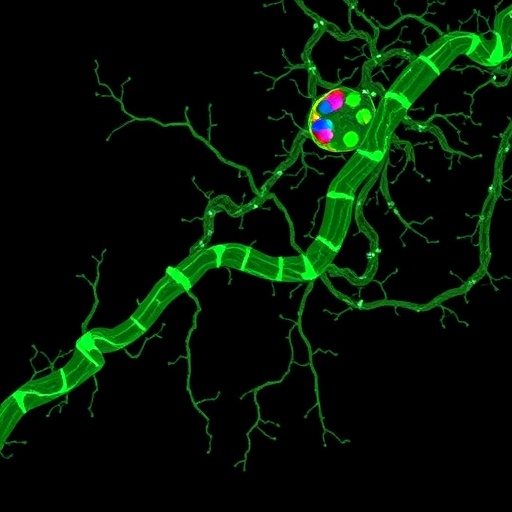
In a groundbreaking study poised to reshape our understanding of pancreatic cancer metastasis, researchers at Johns Hopkins Medicine have uncovered a powerful driving force behind tumor spread that diverges from traditional genetic mutation models. Their research reveals that the gene KLF5 (Krueppel-like factor 5) plays a pivotal role in promoting the growth and invasion of metastatic pancreatic cancer cells not by altering the DNA sequence but through epigenetic modifications. This discovery spotlights the importance of gene regulation at the chromatin level, suggesting that metastasis is fueled by dynamic changes in gene expression control rather than by additional DNA mutations.
Pancreatic cancer, notoriously aggressive and resistant to many treatments, has been linked historically to genetic mutations that enable tumor cells to evade normal cellular controls. However, the latest research led by Andrew Feinberg, M.D., a Bloomberg Distinguished Professor at Johns Hopkins University, challenges this paradigm by demonstrating that epigenetic alterations — chemical modifications to DNA and its packaging that influence gene activity — underlie the metastatic process. Feinberg’s prior work in 2017 had already indicated widespread epigenetic changes in metastatic tumors, but the current study elucidates specific molecular players and mechanisms that enforce these alterations.
Central to the study is the use of CRISPR genome-editing technology to methodically silence candidate genes within laboratory-grown human pancreatic cancer cells. By targeting and disabling genes one by one, the team identified KLF5 as a master regulator whose decreased expression resulted in a significant inhibition of metastatic cell growth and migration. This gene’s heightened activity was observed in metastatic lesions from the majority of patients studied, underscoring its critical role. The findings thus direct attention to KLF5 as a potential therapeutic target for halting the dissemination of pancreatic tumors.
Further experimentation revealed that KLF5 influences the architecture of chromatin—the complex of DNA and proteins that packages genetic material within the nucleus. Chromatin organization dictates whether genes are accessible for transcription or repressed, and KLF5 appears to modulate this packaging to selectively activate genes that enhance cancer cell invasiveness. This epigenetic control mechanism enables metastatic cells to thrive and colonize new tissues despite the absence of new DNA mutations, a revelation that redefines cancer progression models.
Intriguingly, subtle variations in KLF5 expression produced disproportionately large effects on the metastatic phenotype, suggesting a non-linear relationship between gene activity and tumor aggressiveness. Feinberg notes that this characteristic could allow for therapeutic strategies aimed at partial inhibition of KLF5, potentially curbing metastasis without necessitating full gene silencing, which might reduce side effects and resistance emerging from complete blockade.
The researchers also identified downstream targets of KLF5, including two epigenetic modifier genes, NCAPD2 and MTHFD1. These genes contribute to the remodeling of DNA packaging and further enhance the malignant capabilities of metastatic cells. Notably, the differential regulation of these modifiers in metastatic versus primary tumor cells hints at a complex epigenetic cascade orchestrated by KLF5 that drives the transition from localized tumors to widespread disease.
This research amplifies the growing consensus in oncology that cancer metastasis should not be viewed solely through the lens of genetic mutations. Instead, layered epigenetic alterations govern the cellular plasticity required for tumor cells to invade, migrate, and establish secondary tumors. By mapping this epigenetic landscape, the Johns Hopkins team is charting new territory for precision medicine, aiming to develop drugs that disrupt these reversible molecular changes without relying exclusively on targeting immutable DNA mutations.
Graduate researcher Kenna Sherman, the study’s first author, emphasizes that KLF5 functions as a ‘master gene’, coordinating a suite of epigenetic factors critical for cancer cell invasion and resistance to conventional treatments. These insights deepen our understanding of the molecular underpinnings of metastasis and open new avenues for designing therapies that could improve survival rates for pancreatic cancer patients, who currently face grim prognoses.
Funded partly by the National Institutes of Health and supported by collaborations across Johns Hopkins, Yale University, and NYU Langone Health, this study exemplifies integrative efforts to tackle one of the deadliest malignancies. With several KLF5-targeting compounds already in development, the translational potential of these findings is immense, promising novel therapies that might prevent or even reverse metastatic spread.
This research, published in the journal Molecular Cancer, exemplifies the shift in cancer research towards appreciating the epigenetic dimension of tumor biology. It underscores the necessity of multifaceted approaches that address gene regulation complexities, chromatin dynamics, and cellular microenvironments to outmaneuver pancreatic cancer’s lethal progression.
The Johns Hopkins team’s investigation thus unveils an epigenetic master switch driving metastasis, with KLF5 at its core—ushering in a new era where targeted modulation of gene expression patterns may curtail the spread of pancreatic and possibly other cancers, transforming patient outcomes globally.
Subject of Research: Pancreatic cancer metastasis and epigenetic regulation involving the gene KLF5
Article Title: KLF5 Drives Pancreatic Cancer Metastasis through Epigenetic Remodeling of Gene Expression
News Publication Date: Not specified
Web References:
– Molecular Cancer article: https://link.springer.com/article/10.1186/s12943-026-02575-z
– Nature Genetics 2017 research: https://www.nature.com/articles/ng.3753
References: DOI 10.1186/s12943-026-02575-z
Image Credits: Andrew Feinberg laboratory, Johns Hopkins Medicine. Originally published in Molecular Cancer
Keywords: Pancreatic cancer, metastasis, epigenetics, KLF5, chromatin remodeling, gene regulation, CRISPR, NCAPD2, MTHFD1
Tags: breakthrough findings in cancer biologychromatin level gene expression controldynamic changes in gene activityepigenetic modifications in pancreatic cancerJohns Hopkins Medicine cancer studyKLF5 gene regulation in metastasismetastatic pancreatic cancer mechanismsnon-genetic factors in cancer spreadresistance mechanisms in pancreatic cancerrole of epigenetics in cancer researchtumor cell invasion and growthunderstanding tumor metastasis beyond mutations