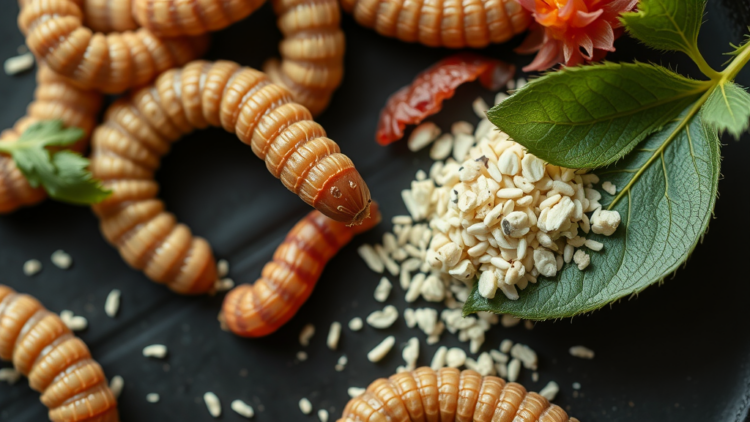
Edible insects have been heralded as one of the most sustainable protein sources on the planet, but there has always been an awkward catch: many people simply do not like the way they smell or taste. Mealworms, the larvae of the darkling beetle Tenebrio molitor, are rich in protein, vitamins, and minerals, and they can be reared with a fraction of the land, water, and feed required by cattle or pigs. Yet raw mealworm powder carries a set of volatile organic compounds that most Western and even many Asian consumers find off-putting, including grassy, fatty, and beany notes reminiscent of oxidized plant oils. A new study from researchers at Sangmyung University in the Republic of Korea now reports that a carefully sequenced combination of enzymatic hydrolysis and lactic acid fermentation can strip away many of these undesirable aroma compounds while simultaneously generating new volatile molecules associated with pleasant, processed-food aromas.
The research, published in Food Science and Biotechnology, was led by Yu Bin Yang, Hyun Jun Seok, and corresponding author Sung Ho Lee of the Department of Food Science and Technology. The team set out to map how volatile organic compounds, or VOCs, in mealworm protein hydrolysates change across a multi-stage processing pipeline that includes enzymatic hydrolysis, lactic acid fermentation, and spray drying based on an alkali-solubilization and precipitation approach. Rather than treating flavor as an afterthought to be masked with seasonings, the researchers treated it as a chemical system that could be deliberately engineered, tracking individual odor-active molecules at each stage of production.
The starting material was raw mealworm powder, and the analytical baseline established from it is telling. The unprocessed powder contained representative off-flavor-related VOCs, most notably hexanal, hexanoic acid, and a cluster of esters associated with raw material character. Hexanal is a classic secondary product of lipid oxidation and is responsible for the green, grassy, cut-plant smell that many consumers associate with damaged seed oils and beany legume products. Hexanoic acid contributes rancid, sweaty, cheese-like notes at even modest concentrations, and raw-material esters add fruity but unripe, solvent-like nuances. Together, this trio of chemical signatures forms much of the sensory barrier that has kept insect protein out of mainstream food formulations despite its impressive nutritional credentials.
To break down mealworm protein and, in the process, disrupt the chemical environment that produces these off-flavors, the researchers compared two sequential enzymatic hydrolysis systems. The first paired Alcalase, a robust alkaline serine protease widely used in industrial protein processing, with Flavourzyme, a fungal enzyme complex that contains both endopeptidase and exopeptidase activities and is often deployed to generate savory, umami-rich hydrolysates. The second system paired Alcalase with Protana Prime, a commercial protease preparation optimized for debittering and flavor applications in protein ingredients. By running two enzyme combinations in parallel, the team could separate the general effects of hydrolysis from the specific effects of enzyme choice, a comparison that proved consequential for downstream flavor chemistry.
After hydrolysis, the protein solutions underwent lactic acid fermentation, a biotechnological strategy with a strong track record in plant protein de-flavoring. Lactic acid bacteria metabolize small carbonyl compounds and acids, and previous work on soymilk and plant-based meat analogues has shown that fermentation can reduce beany aldehydes such as hexanal substantially. In the mealworm system, the results followed the same logic: the off-flavor-related compounds that dominated the raw powder were markedly reduced after hydrolysis and fermentation, with several falling below the detection threshold of the analytical method. This is a critical outcome, because it means the offending molecules are not simply diluted but effectively removed from the volatile profile, a chemically cleaner result than masking with spices or sweeteners could ever achieve.
The two enzyme systems also differed in a way that shaped everything that followed. The hydrolysate produced by the Alcalase-Protana Prime system, designated AP-H, contained higher levels of free amino acids than the Alcalase-Flavourzyme hydrolysate, AF-H. Free amino acids matter enormously in flavor generation because they serve as precursors for volatile formation during subsequent thermal processing. In particular, amino acids participate in the Maillard reaction and in Strecker degradation, pathways that generate pyrazines, aldehydes, and other compounds responsible for roasted, nutty, and cocoa-like aromas. A hydrolysate rich in free amino acids is therefore a richer chemical feedstock for aroma development when the material is heated or dried, effectively stocking the pantry from which desirable smells are later cooked up.
The final stage of the pipeline combined fermentation with spray drying, an industrial technique in which a liquid feed is atomized into hot air to yield a dry powder. Spray drying is prized for shelf stability and convenience, but its thermal component is not flavor-neutral: it drives chemical reactions among amino acids, peptides, and reducing compounds present in the feed. The stand-out sample in the study, AP-HF-SD, which had undergone the Alcalase-Protana Prime hydrolysis, fermentation, and spray drying, was characterized by high levels of 2,3-butanediol, increased benzaldehyde, and the appearance of pyrazines. 2,3-Butanediol is a fermentation-associated compound with a mild, slightly sweet character, while benzaldehyde contributes a familiar almond-like note that is generally regarded as pleasant in processed foods. Pyrazines are among the most valued aroma molecules in the food industry, underpinning the roasted, baked, and nutty scents of coffee, bread crust, and grilled meat.
Together, this pattern of volatile change points to a processing-associated modulation of flavor: the harsh green and rancid notes of the raw material were dismantled, and in their place emerged compounds that consumers typically associate with savory, roasted, or baked foods. The authors themselves are appropriately measured on this point. The study reports chemical profiles rather than human taste-test verdicts, and the paper explicitly notes that sensory evaluation and odor activity analysis, which weigh compound concentrations against their odor thresholds to estimate real perceptual impact, are still required to confirm that the chemical improvements translate into a perceived flavor benefit. Concentration data alone cannot guarantee that a volatile is smelled, since some compounds dominate a profile while contributing little at levels below their thresholds.
Even with that caveat, the implications for the alternative protein industry are significant. Consumer acceptance remains the single largest obstacle to insect protein entering mainstream diets in Europe, North America, and much of Asia, and sensory attributes consistently rank among the top reasons cited for rejection. A processing route that uses food-grade enzymes, generally recognized lactic acid bacteria fermentation, and standard spray drying equipment is compatible with existing industrial infrastructure, meaning manufacturers would not need to invent novel unit operations to adopt it. The finding that enzyme selection propagates all the way through to the final volatile profile also gives formulators a practical lever: choosing a protease system that liberates more free amino acids appears to set up the product for richer aroma generation during drying.
The broader context is a rapidly growing body of work on insect protein as a climate-friendly alternative to livestock. Mealworms convert feed to edible protein with high efficiency, emit comparatively few greenhouse gases, and can even be raised on agricultural by-products. As regulatory approvals for insect-derived foods expand, the technical challenge shifts from production to palatability, and studies like this one demonstrate that flavor is not an immovable property of an ingredient but a designable feature of the process. If follow-up sensory panels confirm that hydrolyzed, fermented, and spray-dried mealworm protein genuinely smells and tastes better, the combination could become a standard pretreatment in insect protein ingredient manufacturing, helping to move mealworms from novelty snack territory into protein bars, meat analogues, savory seasonings, and everyday processed foods.
Subject of Research: Improving flavor quality of mealworm (Tenebrio molitor) protein hydrolysates through integrated enzymatic hydrolysis, lactic acid fermentation, and spray drying
Article Title: Integrated enzymatic hydrolysis and lactic acid fermentation improve off-flavor removal and aroma generation in mealworm (Tenebrio molitor) protein hydrolysates
Article References: Integrated enzymatic hydrolysis and lactic acid fermentation improve off-flavor removal and aroma generation in mealworm (Tenebrio molitor) protein hydrolysates. (n.d.). https://doi.org/10.1007/s10068-026-02300-y
Image Credits: AI Generated
DOI: 10.1007/s10068-026-02300-y
Keywords: mealworm, Tenebrio molitor, edible insects, enzymatic hydrolysis, lactic acid fermentation, volatile organic compounds, off-flavor removal, aroma generation, protein hydrolysates, spray drying, food science, alternative protein
Cite Scienmag News
APA
MLA
Chicago
Brynn Daugherty. (September 12, 2026). Enzymes and Fermentation Team Up to Strip Bad Flavors from Mealworm Protein. Scienmag. https://scienmag.com/enzymes-and-fermentation-team-up-to-strip-bad-flavors-from-mealworm-protein/
Brynn Daugherty. “Enzymes and Fermentation Team Up to Strip Bad Flavors from Mealworm Protein.” Scienmag, 12 September 2026, https://scienmag.com/enzymes-and-fermentation-team-up-to-strip-bad-flavors-from-mealworm-protein/. Accessed 12 September 2026.
Brynn Daugherty. “Enzymes and Fermentation Team Up to Strip Bad Flavors from Mealworm Protein.” Scienmag. September 12, 2026. https://scienmag.com/enzymes-and-fermentation-team-up-to-strip-bad-flavors-from-mealworm-protein/
Copy citation
Download RIS
Tags: alternative proteinaroma generationaroma profile alteration in insect-based foodsedible insectsEnzymatic hydrolysisenzymatic hydrolysis in food processingenzymatic treatment of insect proteinfermentation for aroma enhancementflavor optimization in alternative proteinsfood biotechnology for insect proteinfood scienceInsect protein flavor improvementlactic acid fermentationlactic acid fermentation in foodmealwormmealworm protein taste modificationoff-flavor removalplant-based protein flavor maskingprotein hydrolysatesspray dryingsustainable edible insect proteinsTenebrio molitorvolatile organic compoundsvolatile organic compounds removal